Education
Only thieves demand money they didn’t work for – Education Minister, Opiah blasts ASUU

…Insists ‘no work no pay policy’ stands
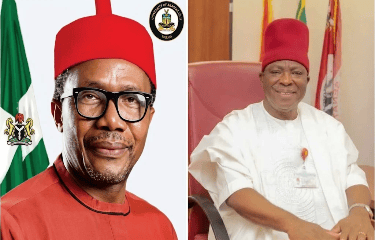
The Minister of State for Education, Goodluck Nanah Opiah has slammed the Academic Staff Union University, (ASUU) over the lingering impasse between the union and the Federal Government.

Opiah while expressing dismay at the 201 days old strike embarked upon by ASUU, said the Federal Government has done its best to resolve the issues raised by ASUU but the union have been adamant to call off the strike.

The minister who spoke when he visited the Federal University Lokoja, (FUL), Kogi State on Friday said, ‘the no work no pay policy’ stands.

He said the federal government cannot pay lecturers for what they did not work for, adding that, the strike has continued to portray a bad image for the country and has succeeded in causing pain for parents and students.
He claimed the federal government has done much on infrastructural development in all higher institutions across the country, charging the Vice-Chancellor of FUL, Prof. Olayemi Akinwumi to appeal to lecturers to come back to work.
He added that the prolonged stay at home has done more harm than good to the future of Nigerian students.
His words “The federal government led by President Muhammadu Buhari has done so much, especially, in infrastructural development in our tertiary institution, because anywhere you go, you will see the presence of TETFUND, buildings, vehicles and all manners of institutional assets.
“Those who think that lack of infrastructure is one of the reasons they went on strike should think again. Mr Vice Chancellor, let me use this opportunity to appeal to you, to also appeal to our lecturers to come back to work because our children are suffering.
“Our country’s image is going lower. Our parents are not happy, and these lecturers are also parents of some of our students. Contrary to what they think, some of us also have our children in Nigerian Universities and they are also suffering.
“Although, if we stay on strike forever, it means our children will be out of school forever. It is not in our own interest. There is nothing that has gone wrong that we cannot get corrected through dialogue. I know that almost everything that ASUU brought forth for discussion between the federal government has been resolved.
“Except that, now that ASUU wants to be paid for all the six months that they were absent from duty. And the Federal Government is saying no we cannot pay for those days you did not work. For once, let us activate the principle of no work no pay which is natural. It is only a thief that goes to eat where he didn’t work.
“And so if there should be any appeal for Federal Government to do otherwise, Lecturers should come back to the classroom to beg and appeal and renegotiate because this thing is no longer funny”
He, however, assured the University that the Federal Government will speedily ensure the provision of perimeter fencing in view of the security challenges bedevilling the nation today.
Earlier in his remarks, the Vice Chancellor of Federal University Lokoja, Prof. Olayemi Akinwumi while appreciating the visit of the minister said the present management has sacrificed a lot to bring development to the institution.



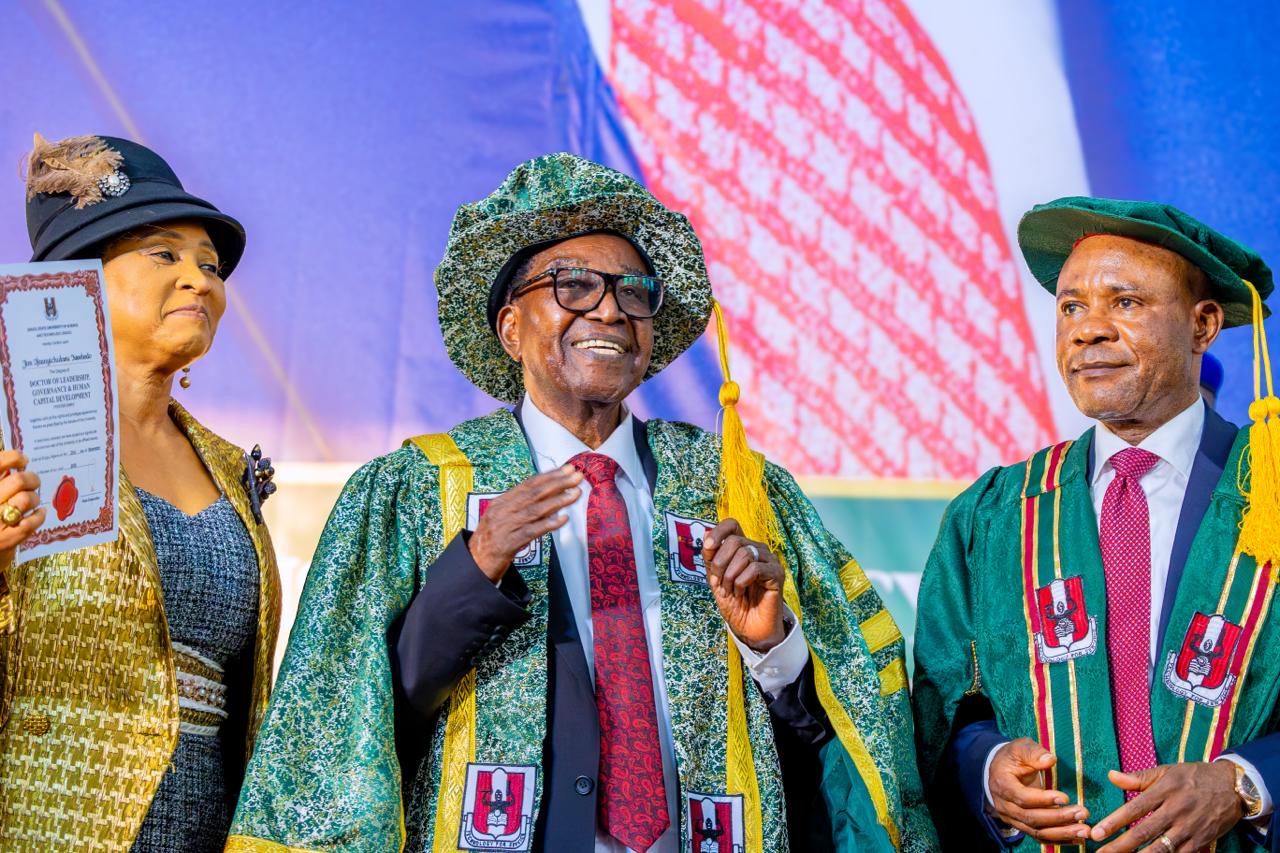
Governor of Enugu State, Dr. Peter Mbah, has unveiled plans to rename the Enugu State University of Science and Technology (ESUT) after a Second Republic Governor of old Anambra State, Senator Jim Nwobodo, subject to stakeholders engagement and legislative due process.
Mbah made this known during the 3rd Distinguished Personality Lecture of the university delivered by Nwobodo at the Barr. Peter Ndubuisi Mbah Multipurpose Auditorium, ESUT, Enugu, on Thursday.
He said the idea, which was first suggested by the ESUT Alumni Association, was in tandem with his thoughts, describing it as a fitting tribute to the elder statesman, who founded the institution in 1980.
The Governor emphasised that the brainchild of the ex-governor had played a critical role in the human capital development of not just Enugu State, but also the old Anambra State and Nigeria as a whole.
“Recently, representatives of the alumni of this university and its associated institutions came to see me.
“They asked that Enugu State University of Science and Technology be renamed in honour of Senator Jim Ifeanyichukwu Nwobodo.
“I told them that I support the proposal. I was particularly encouraged that the request came from the alumni who understand, through their own experience, what the university has meant to people’s lives.
“There is a legal process to follow. ESUT was established by law, and changing its name would require the appropriate legislative steps and engagement with relevant stakeholders.
“I intend to begin those engagements and work with the institutions concerned to advance the proposal through the proper process.
“Your Excellency, I hope that gives you some sense of the regard in which your contribution continues to be held.”
The Governor praised Nwobodo’s vision and courage in leadership, especially for investing heavily in human capital development, taking the bold step to establish ESUT a few years after the civil war, not minding the enormity of the challenges involved.
“I have often wondered what it must have felt like to be governor in 1979. Nigeria had just returned to civilian government after thirteen years of military rule.
“The Civil War had ended less than a decade earlier, and the country was still dealing with its consequences. There was much to rebuild, and enormous pressure on the resources available to government.
“For many families, university education remained beyond their reach. And here was a young governor, who decided that his state should establish a university of science and technology.
“People questioned whether it could be done. Was there enough money? Could a state government sustain such an institution? Shouldn’t this be left to the federal government?
“These were reasonable questions. I suspect some of them would have kept you awake at night.
“But for Jim Nwobodo, the fact that a problem is difficult does not mean we can afford to avoid it.
“In July 1980, Anambra State University of Technology was established. Forty-six years later, we are gathered in one of the institutions that grew from that decision. And generations of young people have gained opportunities that might otherwise have been beyond their reach,” he stated.
Mbah noted that beyond the establishment of ESUT, the Nwobodo Administration encouraged communities to build schools, with government providing teachers and other support.
“He also invested in industry, seeking to create employment and strengthen the state’s productive capacity.
“Some of those industries later fell into decline, and today we are working to bring a number of them back into use.
“The value of such decisions is ultimately found in people’s lives. A child who could attend school in their own community. A young person who became the first in their family to enter university. A household supported by employment in a local industry,” he stated.
He hailed generations of academics, administrators and staff, who have sustained ESUT through changing governments, difficult economic circumstances and the demands of educating successive generations.
“In this regard, I want to assure the university community that the Enugu State Government is committed to the full implementation of the Academic Staff Union of Universities’ agreement with the Federal Government.
“We are already speaking with legislators to firm up its inclusion in the budget for implementation as soon as possible,” he assured.
Meanwhile, a major highpoint of the event was the conferment of an Honorary Doctorate Degree in Leadership, Governance, and Human Capital Development on Nwobodo.
ESUT’s Vice Chancellor, Prof. Aloysius-Michaels Okolie, said it was in appreciation of the ex-governor’s huge contributions to the development of Enugu State, but also the entire old Anambra State, listing his many achievements.
Another highpoint was the unveiling of Senator Nwobodo’s iconic status and the commissioning of a newly constructed road, Dr. Peter Mbah Drive, by the Governor.
Education
Covenant University Retains Africa’s Top Spot as Nigeria Records 27 Varsities in 2027 THE Rankings
Covenant University, Ota, Ogun State, has retained its position as Africa’s highest-ranked institution in the 2027 Times Higher Education (THE) Interdisciplinary Science Rankings, as Nigeria recorded its highest-ever number of universities in the global ranking.
The 2027 edition, released on Wednesday, November 18, featured 27 Nigerian universities, representing a 50 per cent increase from the 18 institutions ranked in 2026.
Covenant University placed joint 49th globally, retaining its position as the only African university among the world’s top 50 for the second consecutive year.
The private institution ranked ahead of Egypt’s Cairo University, which placed joint 52nd globally.
Chairman of the Nigerian Tertiary Education Ranking Advisory Committee (NiTERAC), Professor Emeritus Peter Okebukola, disclosed the figures in a statement issued in Abuja on Wednesday.
He said Nigeria’s performance represented an improvement from the 19 universities ranked in the maiden 2025 edition, while another seven institutions were accorded Reporter status after submitting their data.
This brought the total number of Nigerian universities participating in the 2027 exercise to 34, compared with 30 in 2026 and 27 in 2025.
Okebukola, a former Executive Secretary of the National Universities Commission (NUC), said Nigeria had moved from 16th to 11th position globally in terms of the number of ranked universities, while retaining its second position in Africa behind Egypt, which has 37 institutions.
The ranking, produced by THE in partnership with Schmidt Science Fellows, assessed 1,058 universities across 102 countries and territories.
It evaluates universities’ capacity to fund, support and deliver research cutting across scientific disciplines, using 11 performance indicators grouped into three categories: inputs, processes and outputs.
Inputs account for 19 per cent of the assessment, processes 16 per cent, while outputs carry the highest weight at 65 per cent.
The Massachusetts Institute of Technology retained the global first position for the third consecutive year.
In Nigeria, Landmark University, Omu-Aran, emerged as the second-highest ranked institution, placing in the 251–300 band, while Ahmadu Bello University, Zaria, and the University of Ilorin occupied the 351–400 band.
The University of Calabar, University of Lagos and University of Nigeria, Nsukka, were placed in the 401–500 band.
Ladoke Akintola University of Technology, Obafemi Awolowo University and the University of Benin completed Nigeria’s top 10, placing in the 501–600 band.
Okebukola, a former Chairman of the Governing Board of the National Open University of Nigeria (NOUN), particularly commended Ahmadu Bello University and the University of Calabar for their significant improvements in the latest edition.
According to him, ABU moved from the 601–800 band in 2026 to the 351–400 band, while the University of Calabar improved from the 601–800 band to the 401–500 category.
Eight universities made their debut in the ranking. They are the Federal University of Technology, Minna; Michael Okpara University of Agriculture, Umudike; Joseph Sarwuan Tarka University, Makurdi; University of Jos; Rivers State University; Babcock University; Bells University of Technology; and Nile University of Nigeria.
Osun State University also returned to the ranking after a year’s absence.
Of the 27 Nigerian universities ranked, 14 are federal institutions, seven are state-owned, while six are privately owned.
Reacting to the performance, Okebukola described the growing number of Nigerian universities participating in the exercise as encouraging, particularly with Covenant University maintaining its continental leadership.
He, however, cautioned that increased participation must be matched with improved performance, noting that Nigeria had two universities in the global top 300 in 2027, compared with five in the previous edition.
Similarly, seven Nigerian universities featured in the top 500, against eight in 2026.
The former NUC boss identified inadequate funding for interdisciplinary science research, limited dedicated research facilities, insufficient administrative support and weak institutional policies as some of the areas requiring urgent attention.
According to him, many Nigerian universities recorded low scores in the inputs and processes categories, which assess funding for interdisciplinary research and institutional structures supporting collaboration across scientific disciplines.
He said universities could improve their rankings through proper reporting of research grants, income from industry partnerships and the adoption of clear institutional policies that encourage interdisciplinary research.
Okebukola commended the Minister of Education, Dr Tunji Alausa, for prioritising the global competitiveness of Nigerian tertiary institutions and establishing NiTERAC to drive the agenda.
He disclosed that the committee had submitted a comprehensive report on the latest ranking, alongside recommendations, to the minister.
He added that NiTERAC, working through the League of Directors of Academic Planning and the Virtual Institute for Capacity Building in Higher Education, would support participating universities and prospective entrants in preparing stronger submissions for the 2028 edition.
The chairman also urged research-intensive Nigerian universities yet to participate in the exercise to take advantage of the opportunity.
He further disclosed that the 2026 national ranking of universities, polytechnics and colleges of education was nearing completion, with the results scheduled for unveiling at a national conference on December 15, 2026.
He expressed optimism that the national ranking exercise would strengthen institutional data management and healthy competition, ultimately improving the performance of Nigerian tertiary institutions in international rankings.
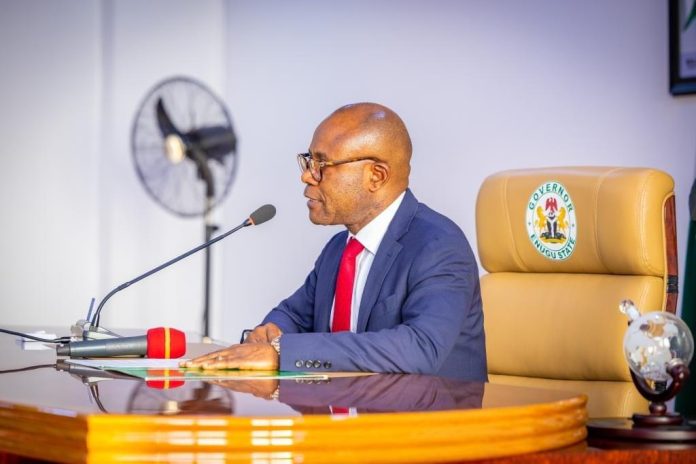
The approval was contained in a letter signed by the Secretary to the Enugu State Government, Prof. Chidiebere Onyia, dated August 11, 2026, and addressed to the Accountant General of the state.
According to the letter, the approval followed a report submitted by the Joint Action Committee on Trade Union (JACTU) in ESUT over issues surrounding a one-month strike ultimatum issued by the university’s unions.
The government also approved an across-the-board increase of N50,000 for all other categories of staff of the university.
The SSG directed the Accountant General to fully implement the approval of Governor Peter Ndubuisi Mbah.
The directive referenced an earlier Government House letter dated August 7, 2026, on the matter.
The letter, which was copied to the Vice-Chancellor of ESUT, Professor Aloysius-Michaels Okolie, for information and necessary action, is expected to take effect from September 1, 2026.
-
 News2 days ago
BREAKING: Enugu Billionaire, Ferotex Boss Festus Oshaba-Onuh Feared Dead in Road Accident
-
News1 day ago
Gunmen Machete Football Legend Segun Odegbami in Abeokuta Home Attack
-
News2 days ago
Festus Onu’s Death: Enugu APC Campaign Council Suspends Activities
-
News2 days ago
Anambra Billboard Saga: Onyima Challenges Soludo Govt to Cite Law Behind Umeh’s Billboard Removal
-
News1 day ago
2027: Obi Urges Nigerians to ‘Sacrifice One Day for Nigeria to Be Good Again’
-
News2 days ago
EFCC Arraigns Socialite Over Alleged ₦603.4m NNPC Appointment Scam
-
Editorial1 day ago
FAKE DRUGS: Nigeria’s Deadly Trade in Human Lives Must End
-
News2 days ago
Rev Chidi Okorafor Emerges New Assemblies of God General Superintendent