


Connect with us

News

25,000 persons, including over 14,000 were children, missing in Nigeria — Red Cross

Published

on

Spread the love

The International Committee of the Red Cross (ICRC) says the latest figures of disappeared persons across Africa is 64,000 cases, with Nigeria recording over 25,000 missing persons.

Mr Yann Bonzon, Head of Delegation for Society in Nigeria, said this in a statement issued to newsmen to commemorate the International Day of the Disappeared, observed every Aug. 30.

The statement was signed by Ms Akpa Esther, Communication Officer, Editor and Analyst of the society in Abuja.

Bonzon said that out of the over 25,000 reported missing in Nigeria, over 14,000 were children.

According to him, there are over 35 active armed conflicts in Africa.

Maduka College Advert

He said that thousands of people, including children, cross borders, the Sahara Desert and the Mediterranean Sea in search of safety and a better life each year.

Bonzon said that such movements often entailed great risk, including the risk of disappearance.

He said that documented cases of missing persons were on the rise as the society warned that the actual figures were much higher.

“Sadly, the almost 14,000 children registered does not capture the full scope of this often-neglected and tragic humanitarian issue.

“There is no doubt that there are more children whose fate remains unknown,” Bonzon said.

He said that during displacement, children faced risks such as exploitation, violence, mental distress and disappearance as many also ended up alone, with no news of their families’ whereabouts.

According to him, the society has more than 5,200 documented cases of unaccompanied children in Africa.

Mr Patrick Youssef, Regional Director for ICRC in Africa, said that having the right policies in place could save lives.

Youssef said that it was an essential step to protect migrants and families of missing persons.

He said that there was a question of humanity and human dignity and that families of the disappeared faced immense pain and obstacles that often transcend generations.

“They are stuck in limbo, unable to move forward or grieve. The search for their loved ones never ends,” Youssef said.

He said that in 2022 from January to June, the society together with the Nigerian Red Cross Society (NRCS), assisted in the exchange of 1,250 Red Cross messages containing family news.

Youssef said that the society reunited 31 separated children and unaccompanied minors with their families, while 440 phone calls were provided to families to maintain family contact.

“In addition, families of 377 persons received information about the whereabouts or fate of their loved ones.

“While 146 families of missing persons received psychosocial, economic, legal and administrative support through the Accompaniment Programme for Families of the Missing,” he said.

News

‘Anyone who attempts suicide and fails will go to jail,’ says Akpabio

Published

on

Senate passes 2024 budget, raises appropriation by N1.2tn
Spread the love

The Senate has passed, for second reading, a bill seeking to establish a national framework for suicide prevention, decriminalise attempted suicide and provide rehabilitation for survivors, despite opposition from Senate President Godswill Akpabio, who insists that the act should remain punishable by imprisonment.

Sponsored by Senator Asuquo Ekpenyong, representing Cross River South, the bill seeks to address what he described as a contradiction in Nigeria’s laws.

Ekpenyong argued that while the National Mental Health Act recognises attempted suicide as a psychiatric emergency requiring treatment, Section 327 of the Criminal Code and Section 231 of the Penal Code still criminalise the act.

He said decriminalisation without accessible care would be incomplete, stressing that suicide has complex causes and requires a humane, health-focused response.

“At the heart of this bill is a simple question: when a Nigerian survives a suicide attempt, should the first response of the state be prosecution or protection?” he asked.

Maduka College Advert
The senator said criminalisation discourages people from seeking help, forces families to conceal suicide attempts and contributes to poor data on the problem.

He warned that continued punishment could create a situation in which people experiencing distress feel compelled to ensure their attempts are fatal to avoid prosecution.

The bill proposes replacing imprisonment with mandatory assessment, referral, treatment and follow-up support. It also provides for crisis helplines, training for police officers, teachers and health workers, public education and a national data system for suicide prevention.

However, Akpabio maintained that attempted suicide should remain a criminal offence, arguing that removing the penalties could encourage the act.

“If you attempt suicide, make sure you die. Anyone who attempts and fails will go to jail,” the Senate President said.

Akpabio added that the issue involves both the Criminal Code and the Penal Code, requiring input from State Houses of Assembly during a public hearing to avoid legal conflicts.

The bill has been referred to the Senate Committees on Judiciary and Health for further legislative action and a public hearing.

Continue Reading

News

Alleged $1bn arms fraud: Funds given to Defence Ministry, not military — Gen. Buratai

Published

on

Spread the love

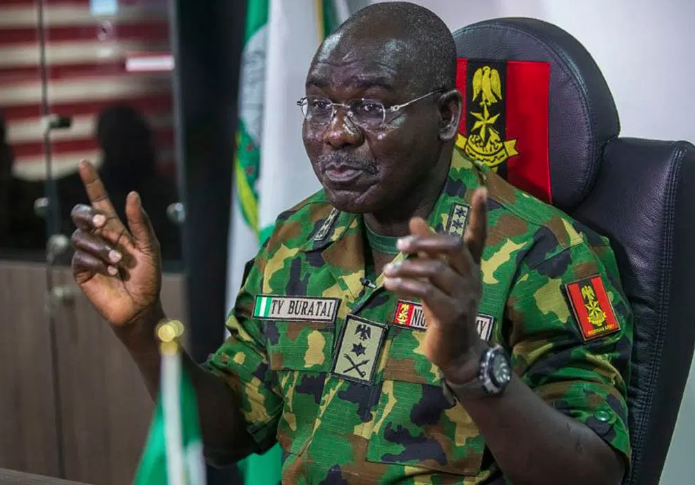
Former Chief of Army Staff, COAS, Lt. Gen Yusuf Buratai, retd., disclosed yesterday that the $1bn approved for defence procurement during his tenure as Army Chief by the federal government was released to the Ministry of Defence and not the services.

Gen Buratai disclosed that the funds, which were approved by the National Economic Council, NEC, did not pass through his hands or the accounts of the Nigerian Army, Navy and Air Force.

He said allegations surrounding the funds turned out to be “political and malicious,” noting that “they first emerged during the 2019 election period when the opposition alleged that the money had been diverted for electoral purposes”

His words:  The $1 billion was approved by the National Economic Council, NEC, for defence procurement. Not a single dollar of that fund passed through my hands or through the accounts of the Nigerian Army, Navy, or Air Force.

“The funds were released to the Ministry of Defence, and the entire procurement process was handled by that ministry. The Army, Navy, and Air Force never had a single dollar from that fund to make procurement directives.

Maduka College Advert

“I have described these allegations as political and malicious. They first surfaced during the 2019 election period when the opposition alleged the funds had been diverted for electoral purposes, a claim the federal government publicly refuted. Yet the stain remained, attached to the service chiefs, rather than the institution that managed the funds.”

The former COAS said the federal government publicly refuted the allegation at the time but lamented that the controversy continued to affect the reputation of service chiefs.

He faulted the ministry for not publicly explaining how the funds were disbursed or how contracts were awarded.

“The ministry, since then on its own, had not publicly explained how the funds were disbursed or contracts awarded. Accountability must be properly located,”he said.

While calling for greater transparency in military procurement, Buratai recommended the establishment of a defence procurement transparency portal to publish information on contracts awarded, contracting entities and delivery timelines, subject to national security considerations.

“The Ministry of Defence must own procurement record. The $1 billion arms procurement controversy festered because the institution that managed the funds, the Ministry of Defence, remained silent while service chiefs absorbed criticism.

“I recommend a Defence Procurement Transparency Portal that publishes, within national security limits, broad categories of contracts awarded, contracting entities, and delivery timelines.

“When the media asks where the money went, the answer should come from the ministry that spent it, not from military officers who never touched it,” he said.

Furthermore, Buratai proposed quarterly accountability bulletins summarising court martial outcomes relating to human rights violations and operational conduct, provided the publications did not compromise the rights of accused personnel or ongoing military operations.

Speaking on alleged human rights violations by members of the Nigerian security forces, Buratai said credible claims should be investigated and, where substantiated, prosecuted.

“I have always maintained that where credible allegations exist, they must be investigated and, where substantiated, prosecuted. The military is not above the law,” he said.

He acknowledged the need for the military to demonstrate that its disciplinary processes were credible, transparent and capable of addressing allegations at all levels.

He said that improved communication by the military and the Ministry of Defence would help address public concerns and ensure that media reports reflected the full context of security operations.

In his remarks, Former Senate President and Chairman Senate Committee on Defence Senator Ahmed Lawan, called  for a dedicated percentage of Nigeria’s revenue to funding of the Armed Forces of Nigeria and other security agencies to procure more platforms.

He noted that the National Assembly had been supporting the Armed forces and other security agencies by way of budgetary approvals.

He said:  “For us in the National Assembly, it is our duty to support the arm of government, to ensure that whatever resources are available and are required, are requested by the arm of government, we support that and we even give more.

‘’As at today, I am over 27 years as a member of the National Assembly, I have not seen any request sent by the executive for the armed forces and other security agencies that has not been approved. In fact, in most cases, they were always approved because we believe that security is first.’’

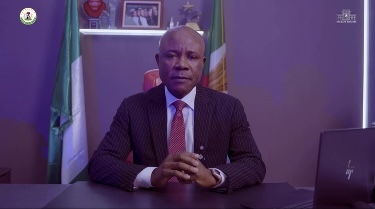
The Minister of Defence, General Christopher Musa, in his remarks, said:  ‘Today’s security threats are increasingly complex, adaptive and interconnected. Terrorist groups, criminal networks and other adversaries exploit information, technology, financial systems and gaps in coordination to pursue their objectives.

Represented by Air Commodore Steven Ogunmodede, retd., Senior Special Assistant on Foreign Relations, the minister said:  “Consequently, our response must combine effective combat operations with timely intelligence, technological capability, sound planning and cooperation among relevant security institutions.

“This is the essence of intelligence-led operations. The ability to identify a threat early, understand its networks, anticipate its intentions and act with precision can make the difference between preventing an attack and responding after lives have been lost.

“Technology can strengthen our surveillance, reconnaissance, communications and analytical capabilities, but it must be supported by trained personnel, reliable systems, effective doctrine and sound operational judgement.

“Technology is a force multiplier, it does not replace the human judgement, discipline and professional competence upon which military effectiveness ultimately depends.

“At the Ministry of Defence and across the Armed Forces of Nigeria, we recognise the importance of these capabilities and continue to pursue approaches that improve situational awareness, intelligence coordination and operational effectiveness.

“We must remain willing to learn, adapt and innovate, while ensuring that investments in technology translate into practical improvements in our ability to protect lives, defend our territorial integrity and respond to emerging threats.

“Equally important is the need to strengthen cooperation across our security architecture, because no single institution possesses all the information or capabilities required to address today’s security challenges.’’
Continue Reading

News

Rochas Okorocha arrested, released after one-hour Interrogation — Police

Published

on

Rochas Okorocha
Spread the love

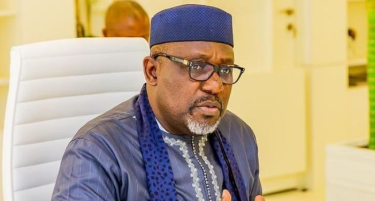
Former Imo State Governor, Senator Rochas Okorocha, was arrested by the Nigeria Police Force (NPF) on Monday night.

The Nigeria Police Force Public Relations Officer, CSP Aniete Iniedu, confirmed the development to Channels Television.

Okorocha, who was arrested at REIZ Continental Hotel in central Abuja, was, however, released on bail by the NPF following an hour of interrogation over allegations of criminal conspiracy, forgery and impersonation.

CSP Iniedu, who confirmed the arrest and subsequent release on bail to our correspondent, noted that the former governor was asked to return to the Force Headquarters on Tuesday for further interrogation as investigations into the allegations continue.

The arrest reportedly followed Okorocha’s failure to honour previous police invitations in connection with the ongoing investigation.

Maduka College Advert

He was initially invited to the Force Headquarters on September 2, but the appointment was rescheduled to September 8 at the request of his lawyers, a date he reportedly failed to honour.

Continue Reading

Trending

Maduka College Advert