






Connect with us

News

Enugu Reps Caucus backs Concessioning of Enugu Airport

Published

on

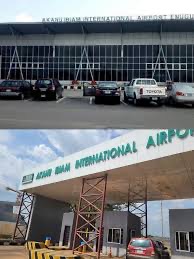
Akanu Ibiam International Airport Enugu
Spread the love

The Enugu State Caucus in the House of Representatives has thrown its weight behind the federal government’s plan to concession the Akanu Ibiam International Airport, Enugu, describing it as a potential catalyst for the South East economy.

The caucus commended the federal government for the initiative and urged it to hasten the concession process to enable the people of the South East and the nation to benefit from it in earnest.

It equally called on the people of the region to support the concessioning as the only way to guarantee sustainable investment to fully develop the airport into a truly international facility.

The caucus made its position known in a statement signed and issued on Monday by the caucus leader, Hon. Nnolim Nnaji, as well as Hon. Martins Oke, Hon. Dennis Agbo, Hon. Anayo Onwuegbu, Hon. Chimaobi Atu, Hon. Sunday Umeha, Hon. Paul Nnamchi, and Hon. Mark Obetta. These are the representatives of all the eight federal constituencies in Enugu State.

“Due to poor capital investment, the Akanu Ibiam International Airport, AIIA, Enugu, remains partially completed and indeed an international airport only in name over two decades since it was designated as such by the federal government. Critical components such as cargo terminal, runway, international terminal, among others, are either non-existent or requiring completion or upgrade.

Maduka College Advert

“Businesses and the people of the South East especially have borne the brunt of these inadequacies, which manifest in the paucity of international flights and intermittent closure of the airport for repair of the runway, as recently witnessed.

“Therefore, we believe that the concessioning of the airport, as currently being processed by the federal government, is the only realistic approach to attracting adequate resources to build the requisite infrastructure and expand existing ones to place AIIA in the league of other international airports around the world,” the caucus said.

The statement explained that concessioning was not the same thing as privatisation or sale of the airport as being peddled by some persons, but a well-known and tenured to Public-Private Partnership (PPP) framework, which pulls private capital investment into public infrastructure while government retains ownership and regulatory or supervisory authority.

“We call on the federal government to hasten this process, for the people of the South East region in particular and Nigeria in general to start benefiting from the huge possibilities and blessings it holds.

“Indeed, we also have faith in federal government through the Federal Airports Authority of Nigeria and the Ministry of Aviation and Aerospace Development to entrust AIIA to a concessionaire with the financial and technical prowess, strong international pedigree and reputation as well as antecedent of verifiable successes to actualise the target. Nothing less than this is acceptable and capable of catalysing the much-needed South East regional economic prosperity and transformation,” the statement added.

News

Troops neutralise 85 bandits, rescue 283 hostages as 1 Brigade intensifies operations in Zamfara

Published

on

1 Brigade Commander, Brig-Gen Mustapha Jimoh
Spread the love

By ZAGAZOLA MAKAMA

The Headquarters 1 Brigade, Nigerian Army, has recorded significant operational successes in its ongoing counter-banditry campaign in Zamfara State, neutralising 85 bandits, rescuing 283 kidnapped victims, recovering a large cache of weapons and destroying several terrorist camps through sustained intelligence-driven operations.

The Brigade Commander, Brig.-Gen. Mustapha Jimoh, disclosed the achievements during an operational briefing, saying the successes were recorded through coordinated kinetic and non-kinetic operations conducted across the brigade’s Area of Responsibility (AOR).

Jimoh said the operations had significantly degraded the operational capability of armed groups operating in Zamfara State, while improving security for residents, farmers and commuters.

He explained that banditry in the North-West, particularly in Zamfara, had evolved over the years from isolated criminal activities such as cattle rustling into organised violent networks engaged in kidnapping for ransom, attacks on communities, highway ambushes, destruction of public infrastructure and attacks against security personnel.

Maduka College Advert

According to him, the proliferation of illicit small arms and light weapons, weak governance in remote communities and the exploitation of expansive forest reserves enabled criminal groups to establish strongholds and expand their operational reach.

He noted that from about 2011, armed groups became increasingly organised, establishing camps within the expansive forests of Kuyambana, Kagara, Kamuku and Gungu, which served as operational bases and mobility corridors for criminal activities.

“As the security situation deteriorated, some of these criminal groups adopted tactics commonly associated with terrorist organisations, including coordinated attacks on communities, the use of improvised explosive devices, sophisticated weapons and deliberate intimidation of civilian populations,” Jimoh said.

The Brigade Commander noted that the Federal Government subsequently intensified military operations and designated several of the armed groups as terrorist organisations under Nigerian law, providing a stronger legal and operational framework for confronting the threats.

He said Zamfara remains one of the country’s major security flashpoints because of its strategic location, vast forested terrain and proximity to neighbouring states, which criminal elements continue to exploit for movement, logistics and concealment.

According to him, the activities of the criminal groups have disrupted farming and commercial activities, displaced thousands of residents, destroyed livelihoods and threatened critical national infrastructure.

Jimoh said Headquarters 1 Brigade, in collaboration with other components of the Armed Forces, security agencies and relevant stakeholders, had sustained intelligence-led operations aimed at dismantling terrorist and bandit networks, destroying their camps, rescuing kidnapped victims, recovering arms and ammunition and restoring civil authority across affected communities.

He said the Brigade’s sustained operational efforts, enhanced inter-agency cooperation and robust civil-military engagements had continued to yield positive results despite the evolving security challenges.

Providing a breakdown of recent operational achievements, the Brigade Commander disclosed that troops neutralised 85 terrorists and bandits, while also recovering 144 motorcycles used by criminal elements for mobility, logistics and attacks.

He said the seizure of the motorcycles had significantly disrupted the operational capability and movement of the criminal groups across the theatre.

Jimoh further revealed that troops recovered a substantial cache of weapons, including 46 AK-47 rifles, one PKT machine gun, two General Purpose Machine Guns (GPMGs), three Rocket-Propelled Grenade (RPG) launchers, and six locally fabricated rifles.

He added that troops also recovered large quantities of ammunition, further weakening the firepower available to the criminal groups.

According to him, additional recoveries included 48 AK-47 magazines, one handgun magazine and one locally fabricated rifle magazine, significantly reducing the terrorists’ operational effectiveness.

In one of the most significant humanitarian outcomes of the operations, Jimoh disclosed that troops rescued 283 kidnapped victims, comprising women, children, students and other civilians held captive by criminal gangs.

He added that several rustled livestock recovered during operations had been returned to their rightful owners, helping affected families rebuild their livelihoods while restoring public confidence in security forces.

The Brigade Commander also disclosed that troops destroyed several terrorist camps, logistics bases and command hideouts during clearance operations, thereby denying criminal elements safe havens from which to launch attacks.

He noted that the Brigade had maintained sustained area domination through offensive clearance operations, fighting patrols, ambushes, long-range patrols, cordon-and-search operations and rapid response missions across identified flashpoints.

Jimoh explained that Headquarters 1 Brigade is responsible for military operations across Zamfara and Kebbi states, adding that while Kebbi remains relatively peaceful, Zamfara continues to experience persistent threats from banditry, kidnapping, cattle rustling and related violent crimes, particularly in the central and western senatorial districts.

To dominate the operational environment, he said the Brigade had established Forward Operating Bases (FOBs), combat locations, checkpoints and fighting patrols across vulnerable areas to ensure rapid response and sustained military presence.

The Brigade Commander described the operating environment as particularly challenging due to the vast forest reserves, rugged terrain and widely dispersed rural settlements, which provide concealment and mobility corridors for criminal elements.

Despite these challenges, he said sustained intelligence-led operations had considerably degraded the capabilities of armed groups, leading to improved freedom of movement for residents and safer conditions for farming, commerce and other socio-economic activities.

Jimoh assured that the Brigade would continue to intensify intelligence-driven offensive operations while strengthening collaboration with other security agencies and local communities to achieve lasting peace across Zamfara and Kebbi states.

“The evolving nature of the threat requires sustained military operations, credible intelligence, responsible media engagement and continuous support from local communities to achieve enduring peace and security,” he said.

He reaffirmed the Brigade’s commitment to protecting lives and property, restoring civil authority and creating a secure environment that would support sustainable socio-economic development across its area of responsibility. (Zagazola)

Continue Reading

News

Japa: 1,429 Nigerians repatriated from Niger Republic – Report

Published

on

Nigerians were repatriated from Niger Republic
Spread the love

At least 1,429 Nigerians were repatriated from Niger Republic in May 2026, the latest data from the Mixed Migration Centre show.

This is as the West African country continues to serve as a major transit corridor for citizens attempting the dangerous journey to Europe through Libya and Algeria.

The figures are contained in the Quarterly Mixed Migration Update for West Africa, Quarter 2 2026 and obtained by Saturday PUNCH as the latest data on stranded Nigerian migrants along the Sahel migration corridor.

The latest data come as Nigeria continues to grapple with a wider japa wave, driven largely by economic hardship that has also pushed hundreds of thousands of citizens toward the UK, the United States, Canada, and other destinations through both regular and irregular channels in recent years.

The data cited a Saturday PUNCH report from May in which the Nigeria Immigration Service confirmed the arrival of at least 1,100 Nigerians who travelled by road from Niger Republic on May 22, 2026.

Maduka College Advert

Two days later, the National Emergency Management Agency received an additional 329 returnees from Agadez, Niger’s main desert transit hub, bringing the total to more than 1,400.

The Mixed Migration Centre, a Geneva-headquartered research body affiliated with the Danish Refugee Council, stated that the mass return “highlight the continued presence of stranded migrants in Niger, many of whom face prolonged stays in IOM (International Organization for Migration) centres or urban areas with limited resources.”

Agadez, roughly 950 kilometres north-east of Niger’s capital, Niamey, has for over a decade functioned as the main northbound staging post for West Africans attempting to cross the Sahara into Libya or Algeria, before onward sea crossings to Italy or Spain.

The report showed that Nigerians remained among the persistent nationalities still attempting the Central Mediterranean Route into Italy.

As of May 2026, 163 Nigerians had arrived in Italy via that route, behind only Mali (193) among West African nationalities, though the figure was down from 196 Nigerian arrivals recorded over the same period in 2025.

The document also showed that Nigerians were also being swept up in a parallel and largely unrecorded expulsion running from Algeria back into Niger.

Citing Alarm Phone Sahara, a Sahel-based migrant rights network, the report disclosed that at least 14,602 people were expelled from Algeria into Niger between January 18 and May 17, 2026 alone.

It said this was equivalent to 43 per cent of the reported 34,000 expulsions recorded through the whole of 2025.

While most of these convoys officially return Nigerien nationals, the report noted that “increasing numbers of Nigeriens have also been included in unofficial convoys, which have primarily affected non-Nigeriens,” with those affected reportedly including nationals of Mali, Guinea, Nigeria, Sudan, and Chad.

The report added that on several occasions, migrants expelled from Algeria into Niger Republic were subsequently pushed back across the border into Algeria by Nigerien police.

It said this cycle of expulsion and re-expulsion has left affected migrants, Nigerians among them, in prolonged limbo along the borders.

Regionally, the report said Spain recorded 12,138 irregular arrivals by sea and land as of June 30, 2026, a 33 per cent decline from the same period in 2025, driven mainly by a 67 per cent drop in Atlantic Route crossings to the Canary Islands.

But the report cautioned that falling number of arrivals “do not necessarily reflect fewer crossing attempts,” noting that recorded deaths and disappearances on that same route fell by just 16 per cent, which was a far smaller decline than the drop in arrivals.

The role of Niger Republic as West Africa’s principal transit corridor dates back more than a decade, but accelerated after the collapse of the Muammar Gaddafi regime in Libya in 2011 and opened new smuggling routes northward.

Agadez, a UNESCO World Heritage desert town, became the last major stopover before migrants crossed hundreds of kilometres of open desert into Libya or Algeria.

Under pressure from the European Union, Niger Republic in 2015 passed a law criminalising migrant smuggling, which reduced visible transit through Agadez for several years but pushed smugglers and migrants onto riskier, less-monitored desert routes.

Niger’s military government, which seized power in a 2023 coup, later repealed the anti-smuggling law, a move rights groups said reopened Agadez as one of Africa’s busiest migration routes and complicated cooperation with European partners on migration control.

Nigeria, under the ECOWAS Protocol on Free Movement of Persons, allows its citizens to travel to Niger Republic without a visa for up to 90 days.

The report said this freedom has long made the neighbouring country both a legitimate trade corridor and an easy first step for Nigerians attempting onward irregular migration to North Africa and Europe.
(Saturday PUNCH)

Continue Reading

News

Police arrest ASP, three inspectors over viral video of ‘ethnic comment’ against motorist

Published

on

The arrested police officers
Spread the love

The Ondo state police command says it has arrested four police officers seen in a viral video making “unprofessional and ethnically insensitive” remarks to a motorist during a roadside stop on the Lagos-Ibadan expressway.

In the viral video, one of the officers appeared to solicit a bribe from the motorist and made an ethnic remark after the driver refused to pay.

The officer is seen repeatedly asking the motorist to leave the scene without stating any traffic offence.

According to a statement on Friday, the arrested officers are: “AP/No. 207454, ASP Elomore Sodayo; AP/No. 332012, Inspector Adefila Adewale; AP/No. 332449, Inspector Olorunfemi Opeyemi; and AP/No. 332369, Inspector Odusola Peter.”

During the exchange, the officer said, “I just see that we are very close. If you were Igbo or another person, I would have just I’d have asked you to park…” before gesturing toward the roadside.

Maduka College Advert

The police command said the officers involved had been taken into custody while a full investigation had commenced.

Speaking at the command headquarters in Akure on Friday, the state Commissioner of Police, Felix Ohagwu, said the police had zero tolerance for indiscipline and unprofessional conduct.

He added that a comprehensive investigation had been ordered to establish the circumstances surrounding the incident and determine the level of culpability of each officer involved.

Ohagwu said the police remained a disciplined and professional institution that would not condone misconduct, incivility or any action capable of undermining public confidence in the Force.

He added that officers were expected to conduct themselves with the utmost professionalism, respect human dignity and comply strictly with the Force’s Code of Conduct and Standard Operating Procedures.

“The Nigeria Police Force is a disciplined and professional institution that does not condone any form of misconduct, incivility, or actions capable of undermining public confidence, promoting ethnic division, or bringing the Force into disrepute,” the commissioner said.

He assured the public that the investigation would be conducted to determine the facts of the case, adding that any officer found culpable would face appropriate disciplinary action.

Continue Reading

Trending

Maduka College Advert