News
First Bank employee absconds after diverting ₦40 billion; bank begins recovery

First Bank, a Nigerian bank with a market capitalisation of ₦829 billion has begun legal action to recover “huge sums of money” allegedly diverted by an employee at a head office team in Iganmu, Lagos.
The employee, now on the run, allegedly diverted those funds to 98 bank accounts classified as first beneficiaries, including his wife’s.

The bank reported the incident to the Nigerian Police Force on March 25, 2024, and obtained three court orders between April 4–8, 2024 to block hundreds of bank accounts believed to have received the stolen funds.
Three people with direct knowledge of the incident revealed that while the initial amount discovered to be diverted was around ₦12 billion, it now stands at around ₦40 billion ($29 million).
As a manager on the electronic products team at First Bank, the employee, identified by court documents as Tijani Muiz Adeyinka was authorised to process reversals for customers, said one First Bank employee with knowledge of the matter. It meant he controlled an account with which he processed those reversals and could credit merchant accounts.

Muiz allegedly used that authority to instead credit customer reversal requests to a merchant he controlled. As the last line of authorisation on the team, he allegedly did not need any further approvals, it allowed him to carry on diverting customer funds for almost two years without detection.
His scheme was eventually discovered when a customer made a complaint that was eventually escalated to the bank’s internal control unit. The control unit discovered several suspicious transactions and reported to the police.
“We hereby bring to your notice the discovery of fraudulent transactions into various transactions within and outside the bank and request your good offices to set up the machinery of investigation in place with a view to unraveling the circumstances surrounding the said fraud and get the culprits apprehending to face the wrath of the law,” read a letter dated May 10, 2024, from First bank to the Lagos State Commissioner of Police.
First Bank did not respond to multiple calls and emails requesting comments.
A spokesperson for The Nigerian Police Force did not immediately respond to a request for comments.
The spokesperson Economic Financial Crimes Commission (EFCC) did not respond to a request for comments.
“I discovered that one Muiz Tijani Adeyinka, a former staff of First Bank was involved in the nefarious posting of fraudulent transactions,” read a statement from the investigating Police officer in charge of the case signed March 26, 2024.
“It was discovered that he made some fraudulent transactions to his wife’s account number (name withheld) domiciled with Zenith Bank, which in turn transferred to other beneficiaries totaling thirty-four accounts which also gave birth to second beneficiaries domiciled with other banks totaling 1,190 accounts,” the statement added.
Across multiple court documents and complaints, First Bank did not state how much money was stolen. It was also silent on how the money was obtained while asking the Police to “unravel the circumstances surrounding the fraud.”
Despite a decline in reported cases in Q1 2024, fraud remains a big issue in Nigeria’s financial services industry. While fintech startups receive disproportionate scrutiny, the country’s biggest banks are often on the receiving end of fraud attacks too. In 2023, Access Bank lost ₦6.15 billion to fraud and Fidelity Bank lost ₦2.5 billion in three incidents, according to a report by BusinessDay.
First Bank obtained an order on April 8 to block the bank accounts of the first and second beneficiaries of the illegally obtained funds from a Federal High Court in Lagos.
The bank also obtained additional orders dated April 8 and May 5 from a Jalingo and a Lagos high court to block additional accounts believed to be involved in the incident.
One first beneficiary account reportedly used some of the stolen funds to buy the stablecoin USDT from several crypto traders, according to sources.
Those traders claimed their only involvement was selling USDT and denied knowing the funds they received were proceeds of fraud. They have now been drawn into a legal battle with the bank with restrictions on their accounts at the time of this report.



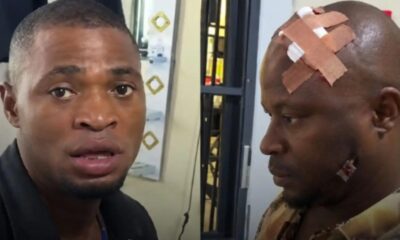









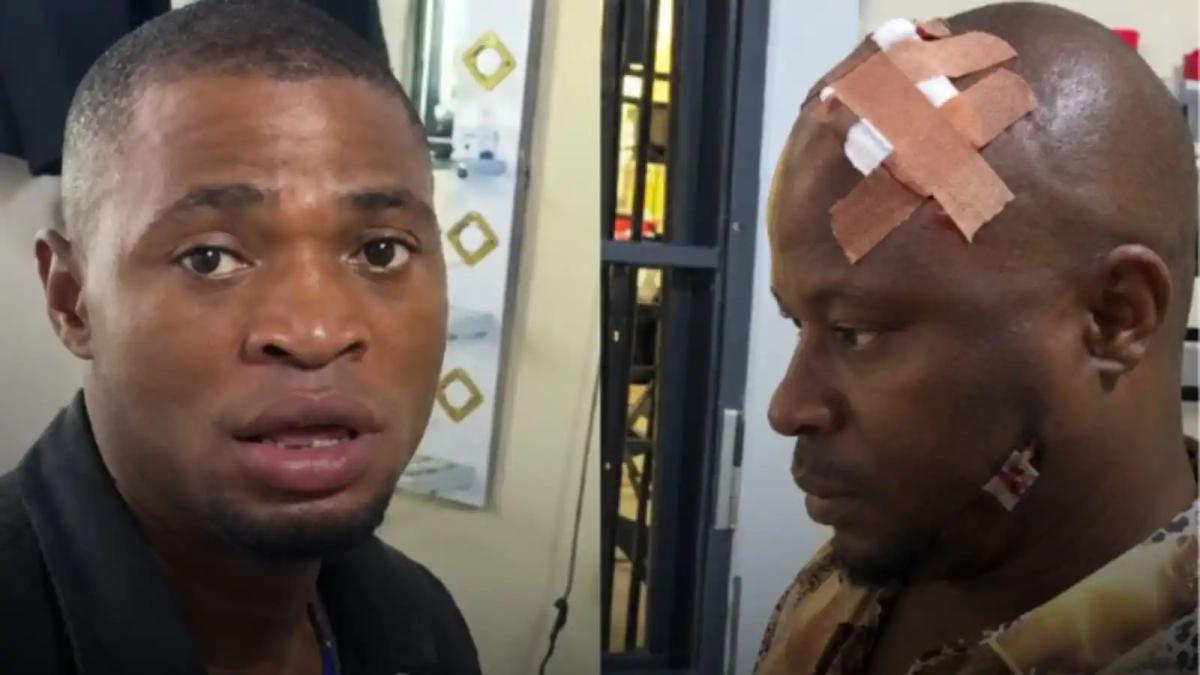
A tenant has reportedly smashed his landlord’s head during a violent altercation in Benin City, Edo State, following a disagreement over an alleged rent increase from ₦300,000 to ₦1 million.
In a video shared online by Edo TV on Friday, October 30, 2026, the tenant narrated how the disagreement began and escalated into a physical confrontation.
According to the tenant, the incident occurred in the morning when his landlord confronted him over tiling work he had carried out in the apartment using his personal funds to improve the property for his business.
He alleged that the landlord demanded additional payment for the renovation before subsequently increasing his rent from ₦300,000 to ₦1 million.
The tenant further claimed that the situation turned violent after the landlord slapped him during their confrontation, prompting him to retaliate by hitting the landlord on the head.
Narrating his side of the incident, the tenant said, “He slapped me first and out of my defence, I smashed his head. It wasn’t intentional.”
The altercation reportedly left the landlord with serious head injuries.
However, further details about the landlord’s condition and whether the police had intervened were not immediately available as of the time of filing this report.
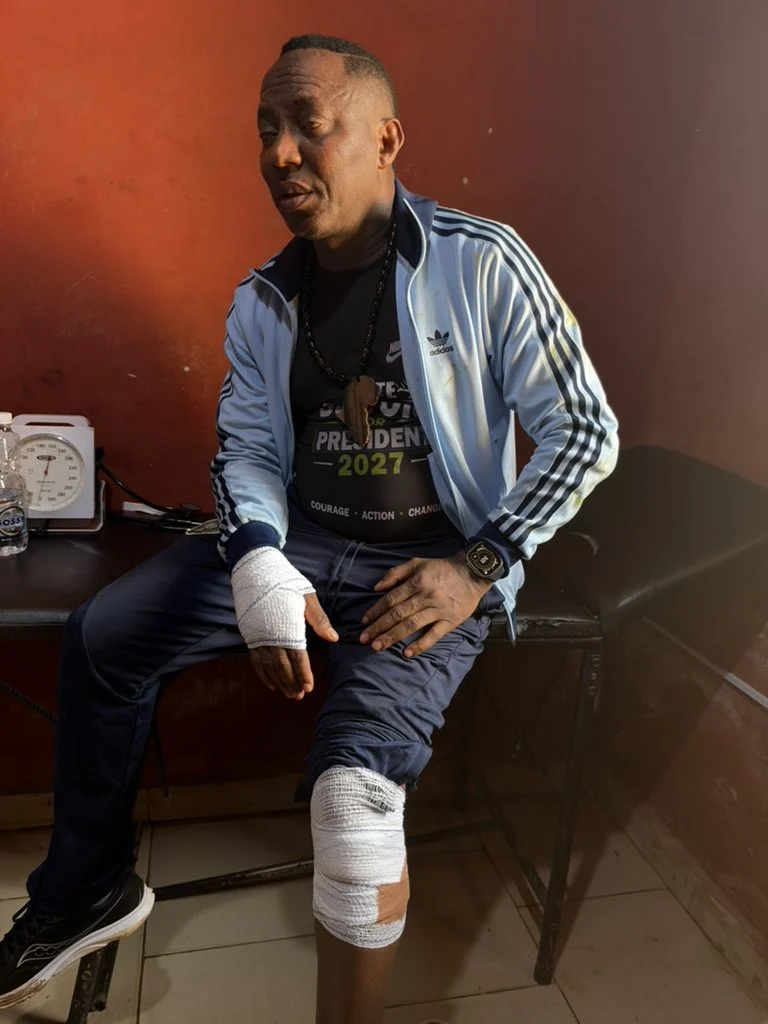
The presidential candidate of the African Action Congress (AAC), Omoyele Sowore, has been hospitalised after sustaining injuries during an incident involving some individuals at a restaurant in Ado-Ekiti, Ekiti State.
The Ekiti State Police Command confirmed the incident on Friday, saying Sowore was receiving treatment at the Police Hospital in Ado-Ekiti. However, the activist and his associates have disputed the police account, insisting that they were attacked rather than involved in an altercation.
The incident followed a message posted on Sowore’s X handle alleging that he had been kidnapped by armed thugs in Ado-Ekiti and that his whereabouts were unknown.
The post also alleged that the attackers were government-sponsored and accused the Department of State Services (DSS) of providing them with the group’s location. The allegations have not been independently verified.
“We have been brutally attacked and injured by armed government-sponsored thugs in Ado Ekiti, Ekiti State,” the post stated, adding that the group would not back down.
However, the police dismissed reports that Sowore had been kidnapped, explaining that officers received an alert about an incident involving him and some individuals at a restaurant and moved in to intervene.
The Police Public Relations Officer in Ekiti State, Sunday Abutu, said preliminary information indicated that Sowore had an altercation with the individuals before the police were alerted.
According to Abutu, Sowore was subsequently taken to the Police Hospital, where he was receiving treatment for what the command described as a minor injury.
“The command wishes to categorically clarify that Mr Omoyele Sowore was not kidnapped. Rather, preliminary information indicates that he had an altercation with some individuals at a restaurant in Ado Ekiti, following which the police were immediately alerted,” Abutu said.
The police spokesperson added that the Commissioner of Police, Michael Falade, had ordered a discreet investigation into the incident.
“The Commissioner of Police, Michael Falade, has ordered a discreet investigation into the incident to establish the full circumstances surrounding the altercation, identify all individuals involved and ensure that anyone found culpable is brought to justice,” he stated.
However, Sowore subsequently challenged the police description of the incident, rejecting the suggestion that it was an altercation.
In a post on his X handle on Friday, the AAC presidential candidate insisted that he and his associates were attacked.
“There was no altercation! We were attacked!” he declared.
Sowore also accused the police command of downplaying the seriousness of the incident, alleging that the commissioner visited the scene and saw the injuries sustained by those involved.
He questioned why the command would describe the injuries as minor despite what he characterised as the severity of the violence.
Sowore further alleged that suggestions had emerged linking the police commissioner to the incident, describing the development as unacceptable. However, the allegation has not been independently established.
He also shared a video purportedly showing the commissioner leaving an emergency room after observing the injuries sustained by those affected.
The police have yet to establish publicly the full circumstances surrounding the incident, while Sowore’s account differs from the command’s preliminary description of what happened.
The investigation ordered by the commissioner is expected to determine the circumstances leading to the confrontation, identify those involved and establish whether any offences were committed.
As of Friday, the police maintained that Sowore was not kidnapped and was receiving medical treatment, while the AAC presidential candidate continued to insist that he and his associates were victims of a violent attack.
The circumstances surrounding the incident, including the identities of those involved and the allegations of political involvement, remain subject to investigation.

The Independent National Electoral Commission (INEC) has blamed some of its registration officers for irregularities involving photographs suspected to have been generated by artificial intelligence (AI) in the commission’s preliminary register of voters.
Dr Lawrence Bayode, INEC’s Director of Information and Communication Technology (ICT), disclosed this during an appearance on Arise TV, explaining that some registration officers allegedly used their login credentials to introduce questionable records into the voter database.
The development follows public concerns over the credibility of the voter registration process after INEC published its preliminary register on October 26, with suspicious photographs and other irregularities reportedly identified in some entries.

Among the disputed records were entries linked to a polling unit in Etsako West Local Government Area of Edo State, where some photographs appeared to have been generated using AI.
The discovery triggered widespread reactions on social media, with questions raised about how the questionable images and other irregularities passed through the commission’s registration system.
Explaining the circumstances surrounding the entries, Bayode said registration officers deployed across the country had login credentials that allowed them to access the system and register voters.
He said the commission’s findings indicated that some officers across different states had introduced irregularities into the database, stressing that the problem did not involve all registration officers.
“We have registration officers on the field. And these registration officers, they have login details to log into the system.
“So what we have found is that some of these registration officers, not all of them now, some of them across the states nationwide, they’ve done different things to bring these irregularities onto the register,” Bayode said.
The ICT director explained that not all the questionable photographs were AI-generated, as some of the irregularities resulted from what he described as poor registration practices.
“Some of these pictures are AI-generated. Some of them not AI-generated, but very bad registration. And this thing got into the register by the registration officers and because they have access to register people,” he said.
Bayode said INEC identified the questionable entries through its Automated Biometric Identification System (ABIS), which the commission used to examine the registration database.
According to him, the system enabled the commission to identify problematic records and establish how some of the irregularities occurred, although he said he could not determine the reasons behind the actions of the officers allegedly involved.
“When the ABIS was run on the system, we saw these people. We know what they did. We know how they did it. But honestly, I don’t know why,” he added.
The disclosure has raised fresh questions about compliance with voter registration procedures and the effectiveness of safeguards designed to prevent unauthorised or improper entries from entering the voter database.
However, Bayode’s explanation did not establish the motives behind the alleged actions or clarify whether all the questionable records had been conclusively resolved.
He said INEC had been working to clean up the register before publishing the preliminary version, noting that the exercise was being conducted within the statutory 90-day period.
The publication of the preliminary register on October 26 brought the disputed entries into public view, prompting renewed scrutiny of the commission’s procedures for collecting, verifying and maintaining voters’ information.
-
 News3 days ago
FG kicks off $100m Southeast gas pipeline project
-
News2 days ago
Mbah Denies Alleged Order to Block Opposition Town Hall Meeting
-
News1 day ago
Amadeo Event Centre Explains NDC Event Controversy, Denies Enugu Govt Interference
-
News14 hours ago
Man Arrested Over Alleged Rape, Killing of Young Girl in Imo
-
News2 days ago
Governor Bago’s Convoy Accident Kills Four University Students, Driver
-
International2 days ago
Spain Train Crash Kills at Least 64, Leaves 80 Injured
-
Politics3 days ago
Why South-East Should Support Tinubu: Mbah Cites Gas Pipeline, Airport Development, SEDC
-
News2 hours ago
Sowore Hospitalised After Ekiti Incident, Disputes Police Account of Attack