News
Ban on sit-at-home in Enugu: Markets, malls, banks open, Gov. Mbah hails level of compliance


…We’re tired of sitting at home, traders, residents tell Mbah
• Ogbete to fully reopen next Monday

It was relatively a beehive of activities as the governor of Enugu State, Dr. Peter Mbah, toured various parts of the state capital on Monday to monitor compliance with the ban on the illegal sit-at-home declared by some non-state actors.
This was even as Enugu traders and residents told the governor that they were tired of sitting at home, describing it as a plague killing their businesses and household economies.
While commending the level of compliance in most places visited, Mbah, who was at the Spar Mall, Roban Stores at Bisalla Road, Market Square, Shoprite, Zenith Bank at Ogui Road, Celebrities, Ogbete Market, Garki Awkunanaw Market, Mayor Market, Abakpa Market, and the State Secretariat, among others, however warned that traders, who continue to sit at home from Monday, 24th July stood to lose their shops to serious-minded businessmen.

He said adequate security had been provided, observing that there had not been any incident of attack since the ban on sit-at-home in June.
Mbah, who took time to interact with business owners, shoppers, traders as well as civil servants at the State Secretariat, said “it should never be heard that we were cowed because of the threat of violence by these criminals”, noting that “the poverty that will befall us for sitting at home will kill us even faster”.
“We are losing over N10bn every Monday that we sit at home. Enough is enough. This foolishness must end and it must end now. We cannot be marginalising ourselves and still complain of marginalisation.
So, we must say no to sit-at-home because what it means is that we are destroying our employment, our economy, and our GDP. We must erase it from our memories. We should see it as our shameful past, which we do not want to remember. We must put it behind us and forge ahead, ensuring that we work every working day of the week”, he urged Enugu people.
To the traders at Ogbete, Garki, and other markets, he however warned that locking shops on Mondays would no longer be condoned.
“But you know, there are also consequences for not heeding our orders. Going forward, I want to put you on notice. I will go around the state again on Monday next week. We are going to come with the Enugu Capital Territory Development Authority to put a seal on any shop that is found locked on Monday because of the illegal sit-at-home. We will take it that you are not ready to do business.
“We are going to revoke your license to operate. We will revoke your shop title and reallocate it to someone else, who is ready to do business. This is something we must enforce with effect from Monday next week”, he forewarned.
Meanwhile, the market leaders and business owners have assured the governor that they were now ready for full compliance, saying they were already sick and tired of the Monday-sit-at home.
At the meeting with the Ogbete traders, President of Enugu State Amalgamated Traders Association, Comrade Stephen Aniagu, assured the governor that they had already agreed to commence full business, saying all shops would be open from next Monday.
Also, the leader of Abakpa Nike Market, Bernard Anike, also assured the governor that they had since started complying with the ban of sit-at-home
Meanwhile, a development economist, Richard Emeka Ezeh, lamented the high cost of sit-at-home and commended Dr. Mbah’s determined efforts to bring it to an end.
“I’m surprised to see the governor here. I like it that he is going round to sensitise the people on why they should come out.
“Employers of labour were losing so much money to sit-at-home. The economy cannot grow when we are losing N10 billion every Monday. As a development economist, I know that the private sector drives every economy, but the private sector cannot thrive in a place where people sit at home.
“So, let’s continue to convene town hall meetings, engage the youths, engage the artisans, and continue to sensitise the market women”.
On her part, Chioma Nwagu, said the sit-at-home was killing the economy.
“We have to come out to do our business. We can’t feed ourselves while staying at home. We have to come out and do our businesses”, she stated.
In the meantime, public and private schools monitored by journalists in Enugu were open, most of them for the first time on a Monday since the beginning of sit-at-home.
At the Spring of Life International Schools, where full academic activities were on, Mr. Dominic Okoro, who came to complete his child’s registration, told reporters that “restoring academic activities on Mondays will help the children”, expressing happiness at the development.



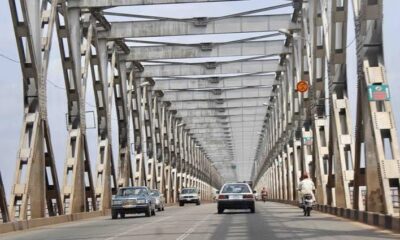






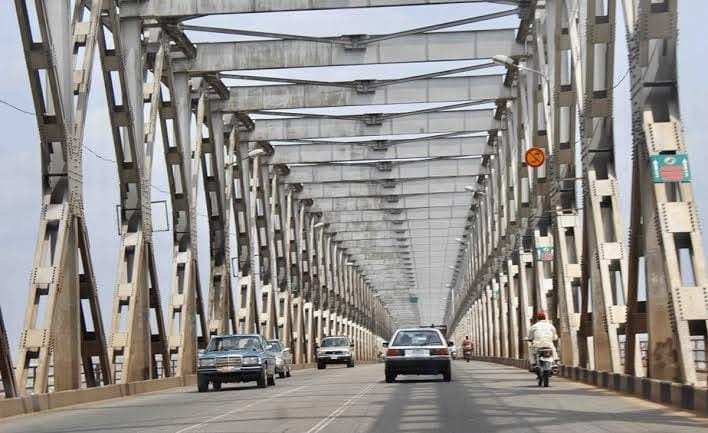
The Federal Government is considering diverting heavy-duty vehicles and trucks to the Second Niger Bridge as part of measures to ease persistent traffic gridlock on the First Niger Bridge.
The Anambra State Federal Controller of Works, Timothy Emenike, disclosed this in an interview with our correspondent on Tuesday, saying the government might install barriers at both ends of the First Niger Bridge to prevent heavy-duty trucks from accessing it.
The development follows another weekend of severe traffic gridlock on the bridge linking Onitsha, Anambra State, and Asaba, Delta State, with motorists and commuters reportedly stranded for several hours.
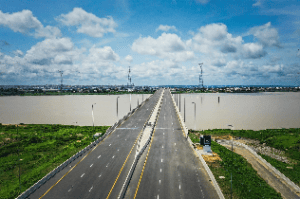
Second River Niger Bridge
The traffic congestion has persisted since the bridge was reopened on October 15, following its temporary closure on September 7, 2026.
The bridge was initially shut after the Minister of Works, Dave Umahi, during an on-the-spot inspection, discovered extensive structural vandalism, including missing bolts, severed steel components and damaged expansion-joint steelwork.
Following its reopening, new road demarcations and concrete median barriers were installed, effectively narrowing the available lanes.
However, motorists have complained that the new arrangements have created difficulties for vehicles, particularly heavy-duty trucks and trailers, which frequently break down or become trapped within the narrowed lanes, obstructing traffic.
They said the situation becomes particularly challenging whenever a vehicle develops a mechanical fault, as the limited space makes it difficult for other motorists to manoeuvre around it.
The resulting blockages have reportedly left commuters stranded for hours, triggering widespread complaints and criticism of the newly installed concrete dividers.
Speaking on the recurring gridlock, Emenike said the proposed diversion of heavy-duty vehicles to the Second Niger Bridge would free up space on the First Niger Bridge and improve traffic flow.
He, however, urged motorists, particularly truck drivers, to ensure that vehicles developing mechanical faults were moved to positions where they would not obstruct other road users.
He said: “The gridlock on the First Niger Bridge is noted, and the ministry is exploring a lot of measures to ensure ease of traffic, especially as we approach the Yuletide season. This gridlock can be prevented if motorists are intentional.
“A vehicle does not just develop a problem on the road; before a problem occurs, it does not just stop the vehicle automatically. If a vehicle is in motion and a problem happens, at least the driver can narrowly clear the vehicle properly to allow other vehicles to move without blocking them. But our people don’t clear off the road whenever they notice a fault on their vehicle while driving.
“Those road demarcations were done to ensure ease of movement, and before we did them, we tested and ensured that two vehicles could pass at a time. The problem is that some drivers park intentionally and obstruct others’ movement whenever their vehicle breaks down.
“We know that a heavy-duty truck and a small vehicle can pass on one lane of the First Niger Bridge at the same time. But two heavy-duty vehicles cannot pass at the same time on the bridge.
“That is why the ministry is considering diverting the heavy-duty trucks to the Second Niger Bridge, which is wide enough to accommodate them.
“So, for now, we are carrying out a lot of measures, and one of the things we are considering is to divert heavy-duty trucks to the Second Niger Bridge, which is wide enough to accommodate as many vehicles as possible.
“The Second Niger Bridge is wide enough to accommodate all of them, but we don’t know why that place is underutilised.”
Meanwhile, motorists and drivers have expressed divergent opinions over the new demarcations, with some blaming the concrete barriers for worsening traffic congestion.
A driver, who identified himself as Emeka, said the new arrangement had made it difficult for motorists to navigate around vehicles that break down on the bridge.
“Since the installation of the concrete demarcations, whenever a car, bus or truck breaks down or stalls, it completely blocks that single lane, triggering severe traffic standstills.
“As it is, a single lane cannot accommodate two vehicles at a time, and that is where the problem lies. Whenever a vehicle, especially a heavy-duty vehicle, breaks down, other vehicles are left stranded as no other vehicle can pass through.
“The ministry promised to provide towing vans at both ends of the bridge for the easy removal of broken-down vehicles, but till date, that has not been done. Each time a vehicle breaks down, other vehicles are left stranded for several hours until a solution is found,” he said.
A truck driver, Sanni, blamed the situation partly on the inability of some drivers to adapt to the new road design, urging them to ensure their vehicles were in good condition before using the bridge.
“It is unfortunate that my colleagues still find it difficult to adapt to the new design on the bridge. I urge them to always ensure their vehicles are in order before plying the road to avoid breakdowns.
“Whenever a heavy-duty vehicle breaks down, it takes over the space on the single lane and prevents other vehicles from passing. However, everything boils down to the authorities. They should provide towing vans at both ends of the bridge for the easy removal of broken-down vehicles,” he said.
However, a civil servant, who identified herself as Amaka, described the new demarcation as a positive development intended to discourage reckless driving, particularly among commercial motorists.
She said the arrangement had nevertheless contributed to traffic congestion because of frequent vehicle breakdowns.
“The demarcation is a good development intended to ward off bad driving habits, especially from commercial drivers. But as it is, it has been creating gridlock for motorists due to frequent vehicle breakdowns.
“In order not to make it a situation of solving one problem and, at the same time, creating multiple problems, a barrier should be placed at both ends of the bridge to prevent heavy-duty trucks from plying it,” she said.
• Abia, FCT, Bayelsa top states with highest tax contributions to IGR
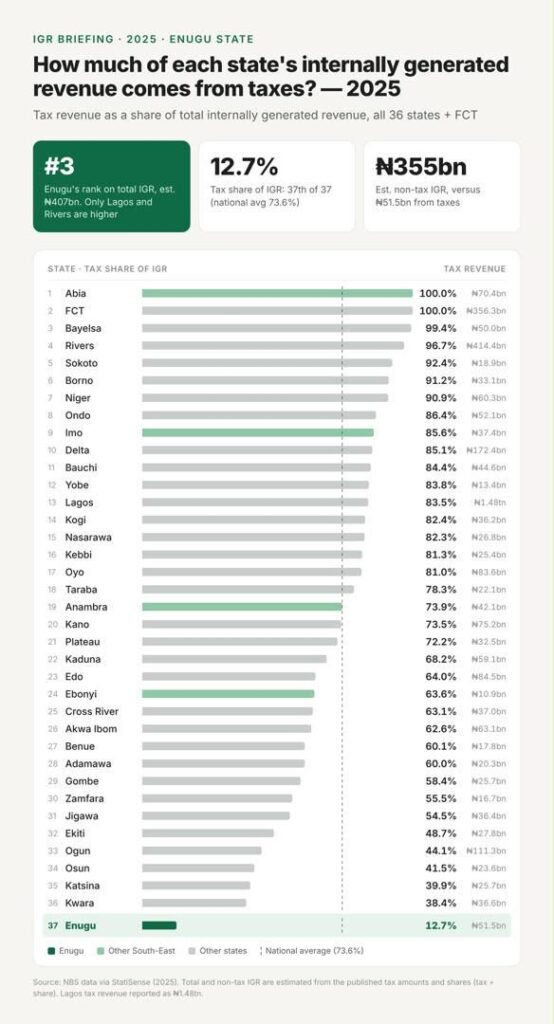
Enugu State recorded the lowest tax revenue-to-Internally Generated Revenue (IGR) ratio among the 36 states and the Federal Capital Territory in 2025, according to figures from the National Bureau of Statistics (NBS), as reported by StatiSense.
Data published on StatiSense’s verified X handle showed that Enugu generated N51.52 billion in tax revenue, representing 12.67 per cent of its total IGR of N406.7 billion in 2025. The remaining revenue came from non-tax sources.
The figures indicate that taxation accounted for a relatively small proportion of Enugu State’s total internally generated revenue, with income from other sources making up the bulk of its earnings.
This comes after the NBS earlier ranked Enugu among the leading states in IGR growth, placing it third nationally, behind Lagos and Rivers states.
In the breakdown of tax contributions to IGR, Abia State ranked first, with 100 per cent of its N70.41 billion IGR coming from tax revenue.
The Federal Capital Territory (FCT) also recorded a 100 per cent tax contribution to its N356.34 billion IGR, according to the figures.
Bayelsa ranked third with 99.39 per cent, followed by Rivers with 96.72 per cent and Sokoto with 92.44 per cent, completing the top five states with the highest tax-to-IGR ratios.
Apart from Enugu, other states with relatively low tax contributions to their IGR included Kwara (38.42 per cent), Katsina (39.93 per cent), Osun (41.53 per cent) and Ogun (44.10 per cent).
The figures come amid public debate over the revenue policies of Governor Peter Mbah’s administration, which has repeatedly dismissed allegations of overtaxation in the state.
Speaking at a recent town hall meeting in Enugu, which was televised live by some national television stations, Mbah attributed the allegations to opposition narratives and resistance from individuals who benefited from the irregularities and sharp practices that characterised the state’s revenue collection system before his administration introduced reforms.
The governor maintained that the growth in Enugu’s IGR was driven by improved revenue collection, the deployment of technology to block leakages, economic diversification and the activation of previously dormant government assets, rather than increased taxes.
He also argued that taxation falls under the Exclusive Legislative List of the Constitution, noting that states do not have the authority to independently determine or increase federal tax rates such as Personal Income Tax, Company Income Tax, Value Added Tax and Withholding Tax.
According to him, his administration’s strategy has been to expand the tax net by bringing more eligible individuals and businesses into the system, rather than increasing existing tax rates.
“This is one falsehood that has been so peddled that it’s even beginning to take a semblance of a truth.
“Meanwhile, overtaxation does not exist, and I think those who think we may be taxing more are essentially looking at the sort of growth we have recorded in our IGR.
“Because they couldn’t have imagined such growth happening within the period it happened, they felt perhaps the only justification is that we have burdened the people of Enugu to realise that. But that’s far from the truth,” he said.
Explaining the measures responsible for the increase in revenue, Mbah said the government had eliminated cash-based revenue collection on its behalf to improve transparency and accountability.
“So, what did we do to grow our IGR? First of all, we plugged all the leakages. We ensured that nobody makes payments in cash on behalf of the state government.
“But, importantly, we have so far activated a whole lot of our dormant assets. We now earn quite a lot from those assets, and we built new ones,” he stated.
The governor listed the Hotel Presidential, Enugu United Palm Products Limited, Nigergas, Nike Lake Resort and the International Conference Centre, among others, as government assets his administration had recovered, completed or resuscitated and subsequently optimised for revenue generation.
He also identified newly established revenue-generating ventures, including Enugu Air, as part of the administration’s strategy to diversify the state’s income sources.
Mbah acknowledged, however, that the contribution of tax revenue to the state’s IGR was expected to increase as economic activities expanded and more businesses became operational.
The governor further said some payments made by residents for government services were often wrongly classified as taxes.
He cited payments for the processing of Certificates of Occupancy (C-of-O) and waste disposal services provided by the Enugu State Waste Management Authority (ESWAMA), explaining that such charges were payments for services rather than taxes.
He said the administration had also consolidated several charges and service costs to reduce the financial burden on residents and businesses.
“How much did we say they should pay? N36,000 annually for businesses. And that includes business premises and other rates and services. So, it’s N100 per day.
“We also had the complaints about people going to the market, I’m sure maybe from the local governments, to collect money. I made an announcement to stop that; that nobody should collect N100 or N200 from our market women,” he explained.
News
NDC Spokesperson Dismisses Concerns Over Peter Obi’s Health, Attributes Condition to Exhaustion
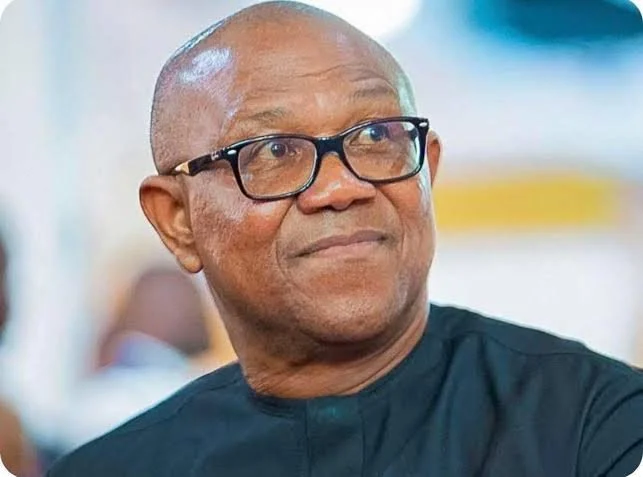
The Deputy Campaign Spokesperson of the Nigeria Democratic Congress (NDC), Dr Sam Omale, has dismissed concerns over the health of the party’s presidential candidate, Peter Obi, insisting that he is in good health and is only experiencing exhaustion from his demanding schedule.
Omale made this known during an interview on Channels Television, where he attributed Obi’s physical exhaustion to his hectic political engagements and frequent travels across different locations.
He explained that Obi’s commitment to his political activities often sees him undertake multiple engagements within a short period, leaving him with little time to rest.
“Sometimes I wonder where he gets his energy from. He is in London today and the following morning in Enugu. I’m wondering how he does it. Exhaustion comes in; he is a human being,” Omale said.
The NDC spokesperson, however, maintained that there was no cause for alarm over Obi’s health, stressing that the presidential candidate was not suffering from any known medical condition.
“He is in perfect health. There’s nothing wrong with him. It’s just exhaustion, and we are trying to calm him down to take a sleep. He is fine,” he added.
Omale further assured that the temporary exhaustion would not affect the party’s ongoing political activities and campaign engagements.
Background
Omale’s comments come amid recent speculation about Obi’s health following the circulation of viral reports and photographs on social media claiming that the former Anambra State governor had been hospitalised after allegedly breaking his neck in a gym accident.
However, Obi’s spokesman, Idris Zekeri, had on Sunday dismissed the report as false, describing it as a fabricated story allegedly designed by the candidate’s political opponents to score cheap political points ahead of the 2027 presidential election.
Zekeri, who said he was with Obi at about 7 am on Sunday before the latter boarded a flight for an international engagement, insisted that the presidential candidate was in good health.
“There is zero iota of truth in that rumour. No such thing happened. I was with His Excellency, Mr Peter Obi, at about 7 am today (Sunday) when he got on a flight for an international engagement.
“But I can assure you that he is safe, sound and in the finest state of health, mind, body, soul and spirit. He is ready to continue to engage with Nigerians as we prepare to kick out the faceless and lying APC,” he said.
He also described the photographs circulating on social media as doctored images, insisting that Obi remained physically and mentally fit.
Zekeri added that the campaign team was not perturbed by the reports, maintaining that Obi was in sound health and prepared to continue his political engagements.
-
 News3 days ago
APC Supporters Attacked, Campaign Vehicle Set Ablaze in Katsina
-
News2 days ago
Former Enugu Lawmakers Endorse Mbah for Second Term, Back APC Candidates
-
News2 days ago
Power Belongs To Allah, He Can Take It From Me And Give Another Person, Tinubu Says During Mecca Visit
-
News17 hours ago
Forgery Trial: NYSC Disowns Nnaji’s Certificate, Identifies Four Discrepancies
-
Editorial2 days ago
MANIFESTO: Mbah Presents Governance Scorecard, Highlights Enugu’s Progress, Sets $30bn Economic Growth Target
-
Politics3 days ago
UNMASKING THE ALARMISM OF NDC: A CLARION CALL FOR ENUGU’S EXTRA VIGILANCE
-
News16 hours ago
NDC Spokesperson Dismisses Concerns Over Peter Obi’s Health, Attributes Condition to Exhaustion
-
News3 days ago
Enugu APC Accuses NDC of Spreading False Claims Over Amadeo Event Centre Dispute