…Lists achievements in security, education, healthcare, infrastructure, aviation, agriculture; urges Ndi Enugu to sustain transformation
By Tony Edike
Enugu State Governor, Dr Peter Mbah, has reaffirmed his administration’s commitment to transforming the state into one of Nigeria’s leading economies, citing progress in security, infrastructure, education, healthcare, aviation and industrial development.
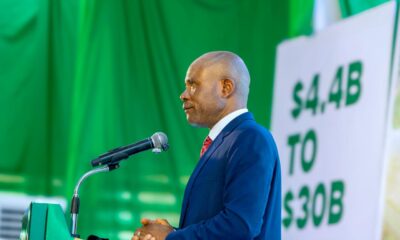
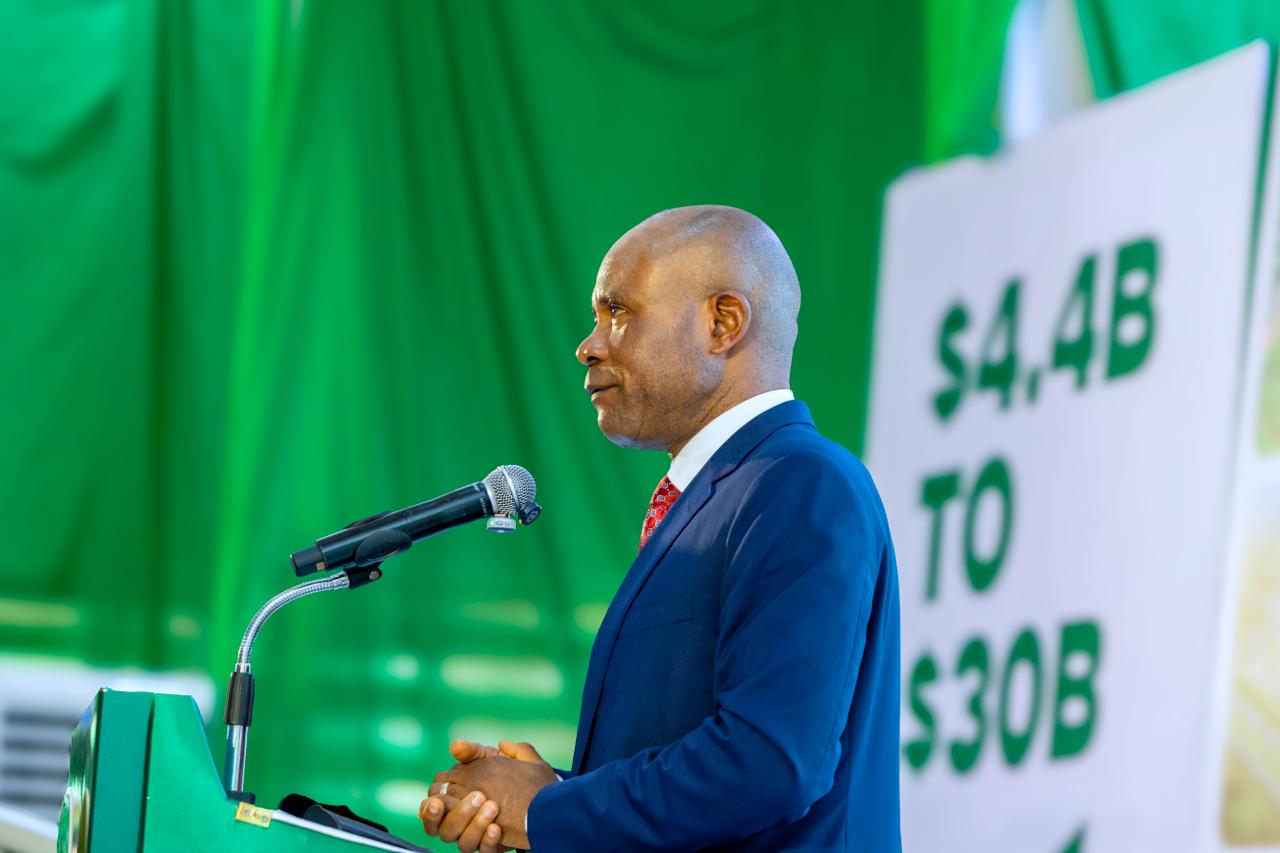
Mbah said his administration had set a target of growing Enugu’s economy from approximately $4.4 billion to at least $30 billion within eight years, alongside a long-term ambition to eliminate poverty.
The governor stated this while presenting his administration’s manifesto performance scorecard at Godfrey Okoye University, Enugu, where he reviewed the state’s development journey since his assumption of office in May 2023 and outlined priorities for the years ahead.
In his address titled Our Commitment to Ndi Enugu: The Journey So Far, Mbah said his administration had taken deliberate steps to address the challenges inherited in 2023 while laying the foundation for sustainable economic growth.
He identified security, education, healthcare, infrastructure, productive industries and effective public institutions as the pillars of the administration’s development agenda.
According to him, the government remains committed to measurable performance, accountability, transparency and public participation in governance.
1. Mbah Recalls Enugu’s Challenges in 2023, Says State Has Made Significant Progress
Reflecting on the circumstances surrounding his assumption of office in May 2023, Mbah recalled a period when economic activities were disrupted by sit-at-home restrictions, infrastructure was in poor condition, public services had deteriorated, and businesses were gradually losing confidence in the state.
He said the situation affected traders, small-business owners, students and other residents who depended on daily economic activities for their livelihoods.

The governor noted that Enugu, which had historically served as a major commercial, political and cultural centre in the South-East, was gradually losing its position as businesses and major events moved to other cities.
“Our greatest resource was already here: the people of Enugu. What was missing was a clear direction, the determination to pursue it, and a government prepared to take responsibility for the results,” he said.
Mbah explained that his administration had prioritised addressing the underlying challenges while creating conditions that would enable residents and businesses to maximise their potential.
He added that the government had adopted a development strategy designed to address interconnected problems rather than treating them in isolation.
2. Enugu Sets $30bn Economic Growth Target, Eyes Nigeria’s Top Three Economies
Mbah said his administration’s original Statement of Purpose established an ambitious target of growing Enugu’s economy from approximately $4.4 billion to at least $30 billion within eight years.
He said the objective was to position the state among Nigeria’s three leading economies while pursuing the long-term goal of eliminating poverty.
The governor acknowledged that achieving the target would require substantial investment in infrastructure, education, security, energy, agriculture, technology and industrial development.
He explained that economic growth could not be achieved sustainably without reliable electricity, accessible roads, secure business environments and a workforce equipped with relevant skills.
According to him, the administration’s development strategy is designed to create an environment in which businesses can expand, investors can operate with confidence, and young people can access meaningful employment opportunities.
Mbah stressed that the government would continue to assess its performance against measurable objectives rather than relying solely on public announcements.
He said projects and policies must produce tangible benefits that residents could see and experience.
3. Mbah: Restoring Security Was Essential to Reviving Enugu’s Economy
The governor identified security as one of the fundamental conditions necessary for restoring economic activity and attracting investment to Enugu State.
He said businesses could not thrive where residents were afraid to travel, traders could not open their shops, and parents were apprehensive about sending their children to school.
Mbah explained that the administration therefore prioritised restoring normalcy and creating a safer environment for residents, businesses and investors.
According to him, security improvements were necessary to support the broader development agenda, including road construction, education, agriculture, tourism and industrial expansion.
He noted that a functioning economy depends on the ability of people to move freely, transport goods, provide services and conduct business without unnecessary disruption.
The governor said restoring confidence in the state was essential to encouraging investment and repositioning Enugu as a destination for commerce and enterprise.
He added that security would remain a critical component of the administration’s efforts to sustain economic growth and improve residents’ quality of life.
4. Sit-at-Home: Mbah Highlights Restoration of Monday Economic Activities
Mbah cited the restoration of economic activities on Mondays as one of the significant changes since his administration assumed office.
He recalled that sit-at-home restrictions had affected traders, workers, students, transport operators and small-business owners, many of whom lost income whenever economic activities were suspended.
The governor illustrated the impact with the example of a market woman whose goods could deteriorate while customers remained at home, leaving her unable to earn money to support her family.
He also highlighted the difficulties faced by young entrepreneurs who had borrowed money to establish businesses but lost an entire working day each week.
According to him, the restrictions also disrupted education, including the academic progress of students whose compulsory external examinations coincided with Mondays.
Mbah said the restoration of normal economic activities had enabled traders to plan their working weeks, businesses to receive customers and children to attend school.
“It may seem strange that we should celebrate something as ordinary as being able to go to work on Monday. But anyone who lived through those years understands its importance,” he said.
He described the restoration of normalcy as an important foundation for the state’s economic recovery.
5. Roads, Transport: Mbah Highlights Infrastructure Development Across Enugu
The governor said his administration had undertaken substantial road development and initiated improvements to the state’s transport system to facilitate movement and connect communities to economic opportunities.
He explained that the importance of road infrastructure should be measured not only by the kilometres constructed or the value of contracts awarded, but also by its impact on people’s daily lives.
According to him, good roads reduce travel difficulties, improve access to markets, facilitate the movement of agricultural produce and help businesses operate more efficiently.
Mbah also highlighted the introduction of new buses and terminals as part of efforts to develop a more organised transport system.
He said the administration’s ambition was to make transportation safer, more comfortable and more dependable while improving connectivity across the state.
The governor added that infrastructure development would continue to focus on linking communities with emerging commercial centres and expanding access to economic opportunities.
He noted that improved transportation would support other sectors, including agriculture, tourism, manufacturing and commerce.
6. Enugu Air: Governor Cites Growth in Flight Operations, Pledges Stronger Global Connections
Mbah said Enugu had recorded an increase in flight operations, noting that the state had moved from barely two incoming flights daily when he assumed office to more than 15, according to the administration’s recent review.
He attributed the development to renewed interest in the state and efforts to strengthen its aviation connections.
The governor said Enugu Air and the administration’s wider aviation plans were intended to improve connections between Enugu, other parts of Nigeria and international markets.
He explained that improved air connectivity would make it easier for investors to visit the state, businesses to reach customers and partners, and residents living outside the country to return home and participate in economic activities.
Mbah, however, acknowledged that aviation development alone would not transform the lives of residents in rural communities.
He said the government must ensure that opportunities generated by increased connectivity extended to other sectors and reached more people.
According to him, aviation infrastructure and services form part of the broader economic framework required to position Enugu as a competitive destination for business, tourism and investment.
7. 260 Smart Green Schools: Mbah Targets Quality Education Across All Wards
The governor reaffirmed his administration’s commitment to education, describing investment in children’s abilities as one of the most important contributions government could make to the state’s future.
He highlighted the administration’s plan for 260 Smart Green Schools, designed to bring improved educational opportunities to every ward in Enugu State.
Mbah said the initiative was intended to bridge educational gaps between urban and rural communities and ensure that children from different backgrounds had access to quality learning.
He explained that changes in technology and the global economy required a new approach to education, with greater emphasis on independent thinking, problem-solving, communication and adaptability.
According to him, children entering school today must be prepared for a future in which technology will transform existing occupations and create entirely new industries.
The governor said the Smart Green Schools initiative was designed to provide a stronger foundation for children to pursue careers in engineering, software development, agriculture, healthcare, teaching and other fields.
He added that the government’s education investment must be matched by economic opportunities capable of absorbing skilled graduates.
Mbah stressed that educating young people without creating opportunities for them to apply their knowledge would undermine the state’s long-term development ambitions.
8. Agricultural Industrialisation: Mbah Seeks Greater Value for Enugu Farmers
Mbah said agriculture remained an important sector for Enugu’s economic development but noted that farmers continued to face challenges involving equipment, storage, processing facilities and market access.
He explained that many farmers worked hard and assumed considerable risks but received only a limited share of the final value generated by their produce.
The governor said the administration wanted to develop an agricultural economy in which more value was created and retained within the state through local processing and related industries.
Using cassava production as an example, he explained that processing agricultural produce locally could create additional employment opportunities beyond farming.
According to him, such activities could generate jobs for equipment operators, technicians, packaging workers, transporters and traders.
He said similar opportunities could emerge from other crops and agricultural products across Enugu, strengthening rural economies and increasing household incomes.
Mbah described agricultural industrialisation as a strategy for connecting farming with manufacturing, processing, logistics and commerce.
He added that developing these connections would help create a more productive economy while expanding opportunities for farmers, entrepreneurs and young people.
9. Power Supply, Industrial Investment Key to Enugu’s Economic Transformation — Mbah
The governor identified reliable electricity and industrial investment as essential components of his administration’s economic transformation agenda.
He said inadequate power supply could undermine the productivity of small businesses, food processors, manufacturers and other enterprises that depended on electricity to operate efficiently.
Mbah noted that reliable electricity could enable tailors to work more efficiently, food processors to preserve agricultural produce and manufacturers to operate equipment without constantly relying on expensive alternative power sources.
He said the administration had set out major ambitions for increasing electricity generation and attracting industrial investment.
According to him, these interventions were necessary to create the conditions for businesses to expand and new industries to emerge.
The governor acknowledged that some of the undertakings were long-term projects whose benefits would develop over several years.
He, however, maintained that the state could not afford to postpone investments required to strengthen its productive capacity.
Mbah said the administration would continue to pursue infrastructure and industrial policies capable of supporting economic diversification, job creation and improved living standards.
10. Healthcare: Mbah Pledges Improved Medical Services, Acknowledges Gaps
Mbah said his administration was working to improve healthcare delivery by strengthening primary healthcare facilities and investing in the wider systems needed to make medical services more effective.
He said the quality of healthcare should be assessed by the experiences of residents who need medical attention, particularly children, expectant mothers and elderly people.
According to him, access to medical services should not require families to travel unreasonable distances or shoulder financial burdens they cannot afford.
The governor acknowledged that more work remained to be done to ensure that healthcare improvements reached every community.
He also recognised that some residents were still waiting for completed roads, fully operational facilities and new economic opportunities.
“I understand that frustration. A government must be judged by the experiences of all its citizens, including those who have yet to see the full benefit of its work,” he said.
Mbah assured residents that the administration would continue its development programme while listening to public concerns and making necessary adjustments.
He stressed that healthcare investments must translate into practical improvements in the availability and accessibility of medical services.
11. Tourism, Hospitality, New City Projects to Create Jobs, Attract Investments — Mbah
The governor highlighted the administration’s plans to expand aviation connections, develop tourism destinations, attract major hospitality investments, improve electricity supply and establish new areas for business and residential development.
He said such projects were intended to strengthen Enugu’s attractiveness to investors, visitors and businesses while creating employment opportunities.
Mbah explained that tourism and hospitality investments could stimulate demand for services such as food supply, transportation, maintenance, laundry, construction and other related activities.
He said tourism destinations could also support local businesses and create opportunities for residents to participate in the wider economy.
According to him, improved electricity supply would further make the state more attractive for manufacturing and other productive enterprises.
The governor, however, stressed that government must do more than expect the benefits of major projects to spread automatically.
He said residents needed access to relevant skills, finance and business opportunities to participate meaningfully in the economic activities generated by such investments.
Mbah maintained that the objective was to ensure that major developments created opportunities for smaller enterprises and households across the state.
12. Mbah: Government Must Ensure Benefits of Major Projects Reach Communities
Mbah said the success of the administration’s development agenda would depend partly on its ability to ensure that the benefits of large investments extended to ordinary residents.
He explained that major projects should create opportunities for smaller businesses, entrepreneurs and communities rather than operate in isolation from the wider economy.
According to him, a new hotel should generate demand for local suppliers and service providers, while tourism destinations should support transportation businesses, food vendors and other enterprises.
Similarly, improved roads should enable farmers to reach markets more easily, while better electricity supply should support the growth of small and medium-sized businesses.
The governor said the administration must help residents acquire the skills, access the finance and establish the businesses required to take advantage of these opportunities.
He added that the government would continue to pursue policies intended to strengthen the relationship between large-scale investment and community-level economic development.
Mbah said the ultimate objective was to ensure that economic transformation produced tangible improvements in household incomes, employment and living standards.
13. Governor Identifies Technology, Manufacturing, Agriculture as Drivers of Future Growth
The governor said Enugu must prepare for changes in the global economy by investing in sectors capable of generating productivity, employment and sustainable growth.
He identified technology, modern agriculture, manufacturing, tourism and other productive industries as important areas for future development.
Mbah noted that technological advances were changing how food was produced, goods were manufactured, businesses were managed and knowledge was shared.
He said states that invested in education, infrastructure, skills and productive enterprises would be better positioned to benefit from these changes.
According to him, Enugu’s young population, talented workforce, natural resources and entrepreneurial traditions provided a foundation for future growth.
He, however, warned that these advantages would not automatically translate into prosperity without deliberate planning and investment.
The governor said the administration’s priority was to strengthen the connections between education, skills development, business and industry.
He added that schools, training institutions, private businesses and government agencies must work together to prepare residents for emerging economic opportunities.
14. Mbah Urges Investment in Youth Skills to Prepare Enugu for Emerging Industries
Mbah called for greater investment in skills development to prepare young people for employment and entrepreneurship in emerging industries.
He said young people seeking to establish businesses needed more than encouragement, stressing that they also required relevant skills, access to finance, customers and dependable infrastructure.
The governor explained that the changing nature of work made it necessary for educational institutions and businesses to equip young people with practical and adaptable skills.
He said the development of technology, modern agriculture, manufacturing and tourism would require a workforce capable of meeting new demands.
According to him, the next phase of the administration’s development programme would focus on deepening existing investments, bringing projects into full operation and extending their benefits to communities still waiting for improvements.
Mbah maintained that creating opportunities for young people to participate in the industries of the future was essential to achieving sustainable economic growth.
He also warned that the state could not afford to lose talented young people because of a lack of opportunities at home.
15. ‘We Cannot Afford to Lose Another Generation’: Mbah Highlights Urgency of Development
The governor emphasised the urgency of accelerating development, warning that delays in education, employment and economic opportunities could have lasting consequences for the state’s population.
He noted that children who received inadequate education could lose opportunities that might be difficult to recover later in life.
Similarly, businesses forced to close because of unfavourable operating conditions might never reopen, while talented young people could move elsewhere in search of better prospects.
“We cannot afford to lose another generation of potential,” Mbah said.
He argued that the foundations already being established through investments in infrastructure, education, security and economic development provided an opportunity for the state to accelerate progress.
According to him, decisions made over the coming years would determine how widely the benefits of transformation were shared and how firmly the gains became established.
The governor said the administration remained committed to creating an economy in which residents could develop their abilities, establish businesses and build sustainable livelihoods.
He stressed that the state’s development agenda must deliver opportunities that would improve the prospects of present and future generations.
16. Mbah Calls for Greater Public Participation, Accountability in Governance
Mbah urged residents to become more actively involved in the state’s development process, stressing that government alone could not sustain the transformation Enugu needed.
He said progress also depended on the contributions of teachers, business owners, farmers, community leaders and other residents.
According to him, teachers must take responsibility for the children in their classrooms, business owners should train young employees, and farmers should be encouraged to adopt improved production methods.
The governor also called on citizens to participate in identifying community problems and proposing practical solutions.
He said public participation and accountability were central commitments in the administration’s original Statement of Purpose.
Mbah explained that citizens were more likely to take responsibility for development projects when they understood them and had a meaningful voice in decisions affecting their communities.
He encouraged residents to demand accountability, ask difficult questions and draw the government’s attention to areas requiring improvement.
The governor maintained that a stronger relationship between government and citizens would contribute to the development of effective institutions and more responsive public services.
17. Enugu’s Next Development Phase Must Deliver More Jobs, Opportunities — Mbah
the next phase of Enugu’s development must focus on consolidating existing progress, completing ongoing projects and ensuring that more residents benefit from economic opportunities.
He explained that while the administration had made progress in several areas, the ultimate objective was to create a productive economy that improved the lives of ordinary people.
Mbah said the government would continue to strengthen education, infrastructure, healthcare and the business environment while encouraging investment in productive sectors.
He stressed that economic growth must be accompanied by employment opportunities, particularly for young people entering the workforce.
According to him, the administration’s long-term ambition would require sustained cooperation between government, investors, businesses and residents.
He added that the state must continue preparing for technological and economic changes while ensuring that the benefits of development were not concentrated in a few areas.
Mbah said Enugu had the potential to become one of Nigeria’s major centres of economic and social progress if the state sustained its development efforts.
18. ‘The Morning Is Upon Us’: Mbah Urges Ndi Enugu to Sustain State’s Transformation
Using the imagery of dawn and morning, Mbah described Enugu as a state moving from the initial stages of transformation towards a period requiring sustained effort and greater productivity.
He recalled that when his administration assumed office in May 2023, there was uncertainty about the future, but the government had committed itself to changing the state’s development trajectory.
According to him, the progress made so far had begun to demonstrate what was possible when government and residents worked towards a common objective.
The governor, however, cautioned that the journey was far from complete, noting that the foundations established needed to be strengthened through continued investment and collective effort.
He urged Ndi Enugu to recognise the importance of the current period and contribute to the state’s development.
Mbah said the opportunities before Enugu would require the commitment of government, the confidence of investors, the enterprise of businesses and the active participation of residents.
He maintained that the decisions taken in the coming years would shape the state’s future and determine the opportunities available to subsequent generations.
19. ‘Tomorrow Is Here’: Mbah Reaffirms Commitment to Enugu’s Economic Transformation
Concluding his address, Mbah called on Ndi Enugu to bring their ideas, skills, enterprise and experience into the development of the state.
He encouraged residents to take an interest in developments within their communities, help identify problems and contribute practical solutions.
The governor also urged young people to embrace learning, innovation and entrepreneurship while preparing themselves to take advantage of emerging opportunities.
He said the administration wanted to leave behind a state with stronger institutions, a more productive economy, better opportunities for children and communities whose residents could take pride in their collective achievements.
Mbah maintained that the transformation of Enugu required shared responsibility and a sustained commitment to the common good.
He expressed confidence that the state could realise its development ambitions through continued cooperation between government and the people.
“That is the Enugu I want us to build. And I believe we have reached the point in our history when we can begin to make that ambition real,” he said.
The governor concluded with his administration’s rallying message: “Ndi Enugu, Tomorrow Is Here.”
He urged residents to remain committed to building a state that would provide greater opportunities for present and future generations.