News
FAAC shares N954 b to FG, states, LGs

The Federation Account Allocation Committee (FAAC) has shared a total sum of N954.085 billion Federation Account Revenue to the Federal Government, States and Local Government Councils.
This was contained in a communiqué issued at the end of the FAAC meeting, in Abuja, yesterday.

According to the committee, N954.085 billion total distributable revenue comprised distributable statutory revenue of N776.918 billion and distributable Value Added Tax (VAT) revenue of N177.167 billion.
Nigeria Customs Service and the Federal Inland Revenue Service received N47.254 billion as cost of collection, while total deductions for transfers, savings and refunds was N255.762 billion.
The balance in the Excess Crude Account (ECA) stood at $470,599.54

Out of the N954.085 billion, the Federal Government received N406.610 billion, the State Governments N281.342 billion, while the Local Government Councils received N210.617 billion.
The sum of N55.515 billion was shared to nine oil producing states as 13% derivation revenue.
Details of the revenue put gross statutory revenue at N1. 066 trillion for the month of July 2022.
The revenue in the period under review was higher than the sum of N1. 02 trllion received in the previous month by N54.780 billion.
In the month of July 2022, the gross revenue available from the Value Added Tax (VAT) was N190.256 billion. This was lower than the N208.148 billion available in the month of June 2022 by N17.892 billion.
From the N177.167 billion distributable Value Added Tax (VAT) revenue, the Federal Government received N26.575 billion, the State Governments received N88.584 billion and the Local Government Councils received N62.008 billion.
The FAAC said that Companies Income Tax (CIT), Petroleum Profit Tax (PPT), Excise Duties and Oil and Gas Royalties recorded significant increases, while Import Duty and Value Added Tax (VAT) decreased considerably.



News
2027 Elections: IPC Trains Online Publishers on Fact-Checking, Accountability, Inclusive Reporting
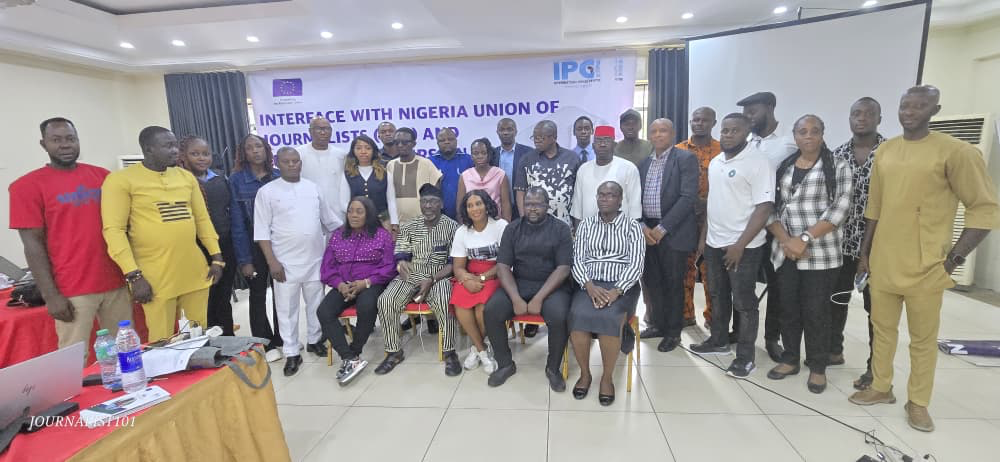
The International Press Centre (IPC), Lagos, has urged journalists and online publishers to strengthen fact-checking, professional ethics, accountability and inclusive reporting ahead of the 2027 general elections.
The centre also called on media organisations to move beyond partisan political coverage and prioritise issues affecting citizens, including insecurity, unemployment, education, healthcare, electricity, transportation and access to public services.
The call was made during a two-day media interface with the Nigeria Union of Journalists (NUJ) and editors and publishers on the Democratic Scorecard (Enugu State Edition), held from November 4 to 5, 2026, at BON Hotel Platinum, Independence Layout, Enugu.
The initiative was organised under the European Union Support to Democratic Governance in Nigeria (EU-SDGN) programme, aimed at strengthening the capacity of journalists in credible electoral reporting, combating corruption and promoting informed citizen participation in democratic processes.
Speaking at the workshop, the Executive Director of IPC, Dr Lanre Arogundade, represented by the programme manager, Stella Nwofia, stressed the need for journalists to prioritise accuracy over speed, uphold professional standards and hold political office holders accountable through credible and independent reporting.
He urged online publishers and editors to ensure inclusive electoral coverage by giving adequate attention to women, young people, persons living with disabilities, internally displaced persons and other underrepresented groups.
Arogundade observed that while digital platforms had expanded opportunities for information sharing and public participation, they had also accelerated the spread of misinformation, manipulated content, hate speech and divisive narratives.
He, therefore, urged online publishers to strengthen their fact-checking and verification skills, particularly when reporting politically sensitive issues, warning against the pressure to break stories at the expense of accuracy.
He maintained that fact-checking and verification must remain integral to responsible electoral journalism rather than optional additions to the profession.
The IPC executive director also emphasised the need to protect the safety and professional independence of journalists, insisting that media practitioners must be allowed to discharge their legitimate responsibilities without intimidation, harassment or unlawful interference.
In a presentation titled, “2027 General Elections in the Context of Democratic and Accountability Reporting: Scanning the Electoral Environment and Reporting Citizens’ Priority Concerns,” Professor Ifeoma Dunu, Director of UNIZIK Radio, Nnamdi Azikiwe University, Awka, challenged journalists to place citizens’ interests at the centre of electoral reporting rather than focusing predominantly on politicians and their activities.
Dunu observed that media coverage often gives prominence to political rallies, campaign promises and party differences, while critical issues affecting ordinary citizens receive insufficient attention.
She urged journalists to interrogate campaign promises, scrutinise government budgets, track the implementation of public projects and evaluate the performance of elected officials.
She identified insecurity, unemployment, education, healthcare, electricity, transportation and access to public services as key issues that should dominate the media agenda ahead of the 2027 elections.
The university don also highlighted the importance of monitoring the electoral, legal, political, institutional, economic, social inclusion, public service, security and information environments to ensure comprehensive electoral coverage.
Another presentation, delivered by Mr Olusola Oludiran, focused on fact-checking and the utilisation of digital tools in journalism.
Oludiran examined the growing challenge of misinformation, manipulated information and artificial intelligence-generated content, stressing the importance of verification and responsible dissemination of information in protecting public trust and the credibility of the media.
The workshop also examined the Democratic Scorecard as a tool for measuring democratic performance and strengthening accountability.
Participants were encouraged to scrutinise the obligations of public institutions, examine the management of public resources and budgets, monitor government promises against actual delivery and assess government interventions through measurable outcomes.
The engagement further emphasised the importance of community participation and sustained investigations into citizens’ concerns, urging journalists to translate public priorities into editorial decisions and consistent accountability reporting.
In her opening remarks, Nwofia acknowledged the importance of the capacity-building initiative, noting that the growing demand for speed and visibility in online publishing sometimes undermined accuracy.
She observed that many online publishers in Enugu were experienced journalists who had moved from established media organisations to establish their own platforms, making continuous professional development necessary.
She expressed optimism that the training would improve participants’ professional capacity, create better opportunities for online publishers in the state and strengthen their visibility in the national media space.
Nwofia urged participants to take the lessons seriously, share the knowledge acquired with their staff and incorporate the best practices into their daily newsroom operations.
Also speaking, the Chairman of the Corporate Online Chapel of the NUJ, Enugu State Council, Clinton Umeh, pledged that online publishers in the state would translate the lessons from the workshop into improved newsroom practices.
Umeh described the initiative as an important intervention for independent online media practitioners, many of whom had acquired years of experience in established media organisations before establishing their own platforms.
He acknowledged the intense competition for speed and visibility in digital publishing, noting that the pressure to break stories first could sometimes compromise accuracy.
He said the training would help participants consolidate their existing knowledge, improve their professional output and strengthen the visibility of Enugu-based online publishers.
Umeh particularly welcomed the opportunity for practitioners in the state to benefit from professional exposure and networking opportunities available to online publishers in major media centres such as Lagos and Abuja.
He assured the organisers that participants would put the knowledge acquired into practice and extend its benefits to their employees and other members of their respective organisations.
The NUJ chapel chairman also noted that independent online publishers largely depend on their capacity and productivity to earn a living, making professional competence and commitment essential to the sustainability of their media businesses.
He called for the continuation of similar interventions, stressing that opportunities to interact with media practitioners across the country would promote networking, collaboration and professional growth.
Arogundade, in his remarks, urged participants to make the engagement practical by sharing experiences from their respective media organisations, asking critical questions and developing ideas that would improve electoral reporting across print, broadcast and online platforms.
He said the success of the engagement should not be measured merely by the quality of discussions or the number of participants, but by the stories published, claims verified, citizens’ concerns amplified, accountability questions raised and professional standards upheld in the months leading to the 2027 elections.
He appreciated the NUJ Enugu State Council for supporting the engagement, as well as the resource persons who accepted the invitation to lead the deliberations. He also acknowledged the European Union for providing funding support for the project.
The Advocate reports that the initiative is expected to translate into stronger verification practices, more inclusive electoral coverage and sustained public-interest journalism as media organisations prepare for the 2027 general elections.

The Federal High Court in Abuja has nullified the leadership of the African Democratic Congress (ADC) led by Senator David Mark, declaring its actions and decisions on behalf of the party invalid.
The ruling also affects the emergence of former Vice President Atiku Abubakar as the ADC’s presidential candidate for the 2027 general election, as the party’s primary was conducted under the leadership declared unlawful by the court.
Atiku, whose name had earlier appeared on the list of presidential candidates published by the Independent National Electoral Commission (INEC), had reportedly picked former Rivers State Governor, Rotimi Amaechi, as his running mate.
Delivering judgment on Thursday, Justice Peter Lifu declared unlawful the caretaker committee led by Mark, which organised the party’s presidential primary that produced Atiku as its candidate.
The judgment followed a suit filed by Nafiu Bala Gombe, a former ADC National Deputy Chairman (North-East), who challenged the process through which the Mark-led group assumed control of the party.
Gombe argued that following the resignation of the former National Chairman, Chief Ralph Nwosu, he was constitutionally entitled to assume leadership of the party.
He consequently approached the court, seeking to invalidate the activities and decisions taken by the Mark-led leadership on behalf of the ADC.
The defendants in the suit, marked FHC/ABJ/CS/1819/2025, included the ADC, INEC, Senator David Mark, former Osun State Governor, Rauf Aregbesola, and Chief Ralph Nwosu.
The plaintiff also sought an order restraining Mark and Aregbesola from parading themselves as the party’s National Chairman and National Secretary, respectively, insisting that their appointments violated the ADC constitution and relevant provisions of the Electoral Act.
Justice Lifu upheld the plaintiff’s arguments and granted the reliefs sought.
The decision is expected to trigger fresh political uncertainty within the ADC, particularly as political activities intensify ahead of the January 16, 2027 presidential election.
However, the party has indicated its intention to challenge the judgment at the Court of Appeal.
The ADC National Welfare Secretary, Nkemakolam Ukandu, who was subsequently joined in the proceedings as an interested party, confirmed that the party would appeal the ruling.
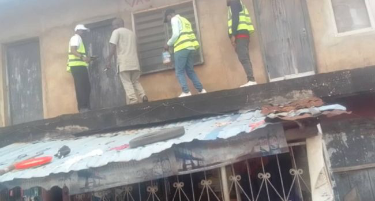
The Ebonyi State Government has issued a 30-day ultimatum to occupants of a structurally defective building at No. 10 Aguluezechukwu Street, Abakaliki, directing them to vacate the premises over serious safety concerns.
The directive was issued by the Ministry of Capital City and Urban Planning following an on-site assessment led by the Commissioner, Richard Ugo Idike, alongside the Head of the Town Planning Department, Esther Nwite, other town planners and the ministry’s enforcement task force.
During the inspection, Idike expressed concern over visible structural defects and substandard construction, describing the building as an imminent threat to lives and property.
“The state government will not compromise on the safety of residents. Our ministry remains committed to ensuring that all structures across Ebonyi State strictly adhere to approved building codes and regulatory standards,” Idike said.
He explained that the 30-day notice would give the property owner time to undertake the necessary structural remedial works to prevent a possible collapse, while allowing occupants sufficient time to secure alternative accommodation.
“This notice is necessary to avert building failure and protect human lives. Occupants must make alternative arrangements before the expiration of the deadline to avoid tragic outcomes,” the commissioner added.
Idike said the ministry would intensify monitoring and enforcement activities across the state capital to identify unsafe structures, warning that properties found to be in violation of building regulations would face prompt regulatory action.
He said the exercise was in line with the urban renewal and public safety agenda of the Ebonyi State Government under Governor Francis Ogbonna Nwifuru to ensure an orderly and secure capital city.
The ministry’s task force also urged property owners, developers and builders across the state to adhere strictly to approved building plans, engage certified professionals and use quality construction materials to prevent structural failures.
Occupants of the affected building are expected to comply with the evacuation directive within the stipulated 30-day period.
-
 News19 hours ago
BREAKING: Court Nullifies Atiku’s ADC Presidential Ticket, Removes David Mark-Led Leadership
-
News3 days ago
Forgery Trial: NYSC Disowns Nnaji’s Certificate, Identifies Four Discrepancies
-
News2 days ago
NDC Spokesperson Dismisses Concerns Over Peter Obi’s Health, Attributes Condition to Exhaustion
-
News1 day ago
Presidency Reacts as NDC Opens Up on Peter Obi’s Health Challenge
-
News3 days ago
Police Rescue Seven Officers, Recover Five Bodies After Deadly Bandit Ambush in Zamfara
-
News1 day ago
‘19 Years of Waiting!’ Enugu Pensioner Breaks Down in Joy as Mbah Pays Long-Overdue Gratuity [VIDEO]
-
News1 day ago
Enugu Air to Begin Lagos–London Flights in December – Official
-
News3 days ago
Gunmen Abduct Two Visually Impaired Persons in Plateau, Demand N50m Ransom