Connect with us

News

Banditry is God’s punishment for the North — Archbishop Chukwuma

Published

on

Banditry is God’s punishment for the North — Archbishop Chukwuma
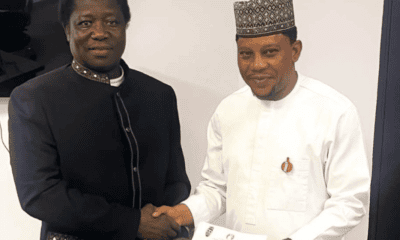
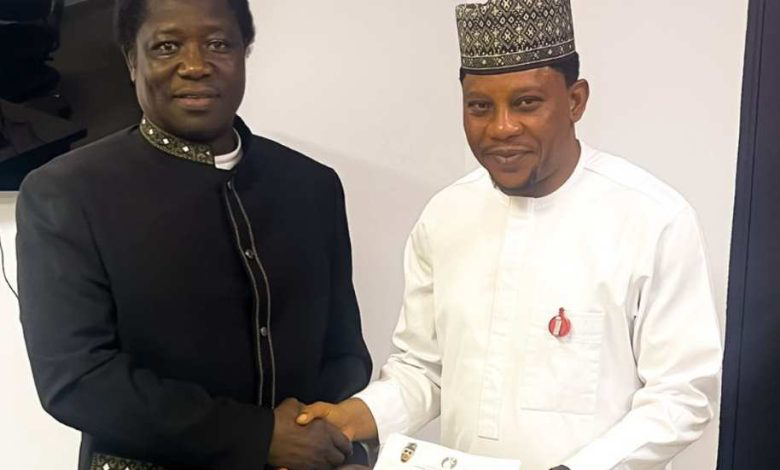
• Emeritus Archbishop Emmanuel Chukwuma
Spread the love

Emeritus Archbishop of Enugu Anglican Diocese, Most Rev Prof Emmanuel Chukwuma, who, just retired from priesthood, in an interview with Vanguard, said what is happening now in the whole of northern Nigeria – banditry, kidnappings etc – is God’s punishment for what they did to Igbo people.

What do you think is the reason General Yakubu Gowon is yet to say something about the Civil War?

Gowon is very apologetic and that was why he started ‘Nigeria Praise’ and we have to commend him for that. That ‘Nigeria Praise’ was to revive the spirit of the people back from the Civil War and to reconcile people back to God and to go on with one Nigeria.

Igbo people say they expect Gowon to tender an open apology and he has not done that…

Well, he has done it many times when he was doing ‘Nigeria Praise’; when he was moving around, he apologized but that’s not enough. The thing is that the Nigeria government should do that because the Nigeria Civil War dealt with us in Asaba, it was a real genocide and we’re asking for apology and more compensation as they do in other places.

Maduka College Advert

What is happening now in the whole of northern Nigeria – the banditry, kidnappings etc – is God’s punishment for what they did to us, yes! And until they apologize and ask for forgiveness, at no time will this banditry, kidnapping and killings stop. The blood of innocent people is crying and that’s what you are seeing there. So until they apologize and make some restitution, the banditry and mayhem you have in the North will not stop.

What is your message to Nigeria as you bow out of priesthood?

Nigeria should be a country for all of us, not a country for just one person. There should be no segregation, nobody should be neglected, and there should be equal rights and justice. Equity and justice must prevail. The Igbo must be given the same opportunity to serve Nigeria and corruption must cease. We must stop deceit in government. Parliament has been turned into a self-centered composition; there should be no sycophancy in government. Something must be done to save Nigeria from calamity.

Vanguard

News

EFCC Recovers $3m, ₦1.3bn From Aiteo, Newcross Over Unremitted Oil Revenues

Published

on

Spread the love

The Economic and Financial Crimes Commission (EFCC) has recovered $3 million and ₦1.303 billion from Aiteo Exploration and Production Limited and Newcross Exploration & Production Limited over outstanding statutory payments owed to the Federation.

The recovered funds were formally handed over to the Revenue Mobilisation Allocation and Fiscal Commission (RMAFC) on Monday, November 10, 2026, by the Acting Zonal Director of the EFCC’s Lagos Zonal Directorate 2, ACE I Bawa Usman Kaltungo.

The recovery followed an investigation launched by the EFCC after receiving a petition from a consulting firm engaged by RMAFC. The petition alleged conspiracy, tax evasion and economic sabotage through the failure of the two companies to remit revenues accruable to the Federation.

Specifically, the companies were accused of failing to remit statutory revenues arising from stamp duties and pipeline transportation fees into the designated accounts of the Federation.

The affected facilities included Escravos, Pennington, Trans-Forcados, Odudu, Amenam and Nembe Creek Trunkline, with the alleged non-remittances resulting in substantial revenue losses between 2010 and 2019.

Maduka College Advert

In response, RMAFC secured a presidential fiat dated December 20, 2021, authorising it to recover all outstanding revenues due to the Federation from the affected public and private entities.

Following the commencement of investigations, Aiteo and Newcross submitted relevant documents detailing their respective remittances from their operations.

However, a review and analysis of the documents revealed that Aiteo failed to remit $38.43 million, representing 1.5 per cent stamp duty arising from its acquisition of Oil Mining Lease (OML) 29 and the Nembe Creek Trunkline (NCTL).

Similarly, investigations established that Newcross failed to remit $22,841,662.03 in crude oil transportation fees for its use of the Nembe Creek Trunkline, which is operated as a joint venture between the Federal Government and Aiteo.

The two companies subsequently acknowledged their respective liabilities and commenced payments towards settling the outstanding obligations through the EFCC’s recovery accounts domiciled with the Central Bank of Nigeria (CBN).

Further recovery efforts resulted in additional payments between January 28 and August 24, 2026.

During the period, Aiteo paid $1.5 million and ₦750 million into the EFCC recovery account towards settling its outstanding stamp duty obligations.

Newcross, on its part, paid $1.5 million and ₦553.128 million towards settling outstanding pipeline transportation and terminal fees.

The payments brought the total recovery from the two companies to $3 million and ₦1,303,128,000, representing the funds formally handed over to RMAFC.

The recovery is expected to strengthen the Federation’s revenue base and underscores the importance of enforcing statutory payment obligations in the oil and gas sector, particularly in safeguarding public revenue from transactions involving petroleum assets and infrastructure.

Continue Reading

News

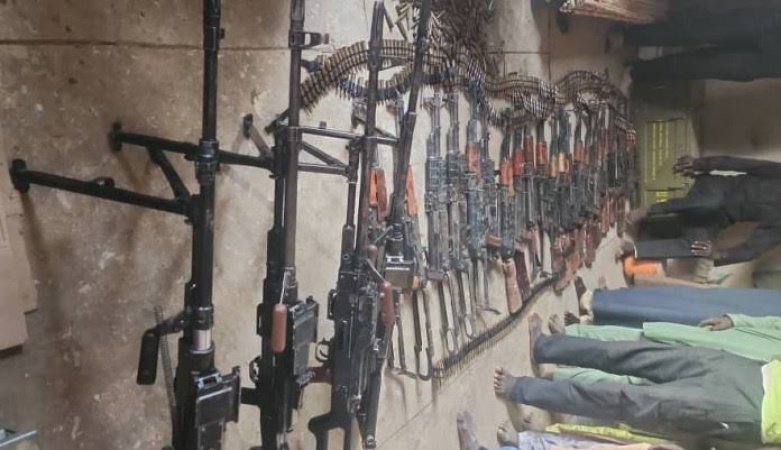
DSS intercept weapons shipment from Niger Republic, recover 21 AK-47 rifles, four PKT Machine Guns in Sokoto

Published

on

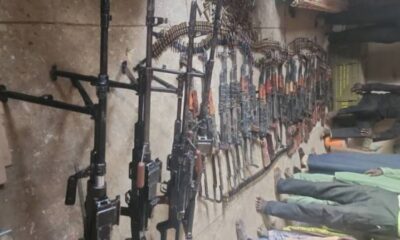
The intercepted weapons
Spread the love

The Department Of State Security Service (DSS) have intercepted a large consignment of weapons and ammunition allegedly being smuggled from the Niger Republic to armed bandits operating in north-western Nigeria.

The interception, which took place on Tuesday, November 10, at Dawakawa in Goronyo Local Government Area of Sokoto State, followed a security operation targeting suspected weapons trafficking networks across the Nigeria-Niger border.

Security sources said the suspected smugglers were allegedly attempting to transport the weapons into Nigeria using camels, apparently exploiting remote routes and difficult terrain to evade security surveillance.

The operation led to the recovery of 21 AK-47 rifles, four PKT machine guns and 825 magazines.

The interception represents a significant disruption of an alleged cross-border weapons supply network suspected of facilitating the operations of armed bandit groups in the North-West.

Maduka College Advert

The use of camels to transport the weapons highlights the increasingly unconventional methods employed by criminal networks to move arms and ammunition across porous border corridors.

The development also underscores the importance of sustained intelligence surveillance coordinated border security operations in preventing the movement of illicit weapons from neighbouring countries into Nigeria.

The recovered weapons are expected to provide security agencies with valuable leads towards identifying the suppliers, transporters and intended recipients of the consignment.

Zagazola report that several border communities along the Nigeria–Niger Republic frontier have emerged as vulnerable corridors for cross-border arms trafficking, bandit movements and other criminal activities, raising concerns over the security of Nigeria’s North-West.

The affected areas include Illela, Sabon Birni, Isa, Gudu and Tangaza in Sokoto State; Jibia, Kaita, Mai’Adua and Kongolam in Katsina; Zurmi and Shinkafi in Zamfara; as well as Kamba and Arewa Dandi in Kebbi State.

Security concerns around these border regions are linked to porous boundaries, informal trading networks and difficult-to-monitor rural terrain, which criminal networks like Bandits, Lakurawa and Boko Haram exploit for illicit activities.

The development reinforces the need for enhanced border surveillance, intelligence-sharing and coordinated operations to dismantle cross-border weapons supply networks.

Security agencies must also target the financiers and suppliers behind the trafficking networks rather than focusing solely on couriers. (Zagazola)

Continue Reading

News

Chad: 23 soldiers killed, including company commander, in fierce fighting over gold mines

Published

on

Spread the love

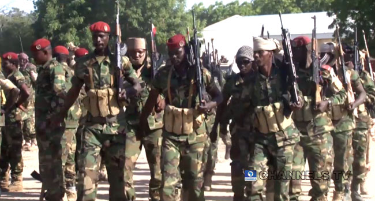
At least 23 soldiers of Chad’s elite Directorate-General of Special Services and Special Institutions (DGSSIE) have reportedly been killed in fierce fighting in Arkinya, in the Tibesti region, as clashes over control of gold mining areas intensify.

The fighting, which reportedly occurred on November 10, also left about 10 other soldiers injured, including several said to be in critical condition and requiring evacuation to Faya, according to a report by TchadOne, citing military sources.

Among those reportedly killed was a commander of the Command, Support and Assistance Company (COM/CCAS) attached to a DGSSIE regiment, indicating the severity of the confrontation.

The latest casualties underscore the growing human cost of the struggle for control of mineral-rich territories in northern Chad, where gold mining has increasingly become intertwined with armed conflict, military operations and competing economic interests.

According to sources the Chadian military has suffered hundreds of casualties, including dead and wounded personnel, since the beginning of the campaign to control gold-rich areas in Tibesti.

Maduka College Advert

The report described the confrontation as a deadly conflict linked to the mining interests of the administration of President Mahamat Idriss Déby Itno, popularly known as Mahamat Kaka.

Tibesti, a vast and strategically sensitive region bordering Libya and Niger, has long been associated with gold mining, informal commercial networks and armed groups competing for influence over mineral-rich territories.

The region’s difficult terrain, remote settlements and porous borders have also complicated government efforts to establish effective security and administrative control.

The latest fighting raises fresh questions about the militarisation of mineral extraction in the Sahel, where gold has increasingly become both an economic lifeline and a source of violent competition.

Across Chad, Niger, Mali, Sudan and parts of northern Nigeria, the struggle over mineral resources has created overlapping interests involving armed groups, criminal networks, informal miners and state-linked economic actors.

The reported deaths in Arkinya further illustrate how mineral wealth, instead of generating prosperity for communities, can become a catalyst for prolonged military confrontation. (Zagazola)

Continue Reading

Trending

Maduka College Advert