News
Clark to CJN: Correct grave anomalies in judiciary


Ijaw leader, Chief Edwin Clark has urged the Chief Justice of Nigeria (CJN), Justice Olukayode Ariwoola to reorganise the judiciary.
Clark in an open letter to the CJN, said it has become necessary to halt the slide of the judiciary.

He pleaded with the CJN to use his good office to change the trajectory around the judiciary.
The one time national commissioner also urged the CJN to address the issue of embarrassing, conflicting and contradicting judgement.
He advised Justice Ariwoola to use his authority as the CJN too reorganize the judiciary.

He also reminded the CJN of his role in the famous petition against the immediate past CJN, Justice Tanko Muhammad.
The judges had raised issues around vehicles, electricity tariff, supply of diesel, Internet services to (Justices’) residences and chambers, and epileptic electricity supply to the court.
The judges also complained about stoppage of trainings under the last CJN.
He said: “My Lord, I have decided to write this open letter to your Lordship as Chief Justice of Nigeria (CJN) because the alleged corruption and the malpractices in the Judiciary amounting to the naked abuse of the office can no longer be tolerated because it is a big dent to the image of the noble profession to which we all belonged.
“I have seen the Judiciary and the legal profession at it best. It was the pride of the then legal practitioners and the most revered Justices of the various courts of Nigeria and the posture of our most revered Justices that attracted some of us to study law in the United Kingdom.
“My Lord, who led the Supreme Court Judges in the historic petition or memorandum is now in the saddle as Chief Justice of Nigeria (CJN), and you have every authority and responsibility to correct these grave anomalies in the above historic letter written by the Hon. Justices of the Supreme Court under your leadership.”
He also warned against “socialization between the judiciary and some Senators who are facing criminal charges in their courts.
He added: “One of the easiest way that the Judges could be influence when some of these Senators facing trials in the court freely meet with the CJN and other Judges at parties, occasions or at government functions and other public gatherings.
“One of my motivations for study law was the respect and honour given to Judges and Lawyers in the society was that they were indeed placed after God. Today, where is that honour and dignity? I’m not suggesting that the Judges should be isolated from society and other people.
“However, by the nature of their confession and calling, judges should not comonalize themselves with execise discretion in the circles of people they make up with.”
The elderstateman, who also frowned against contradicting judgment by same court, urged the CJN to take action so as to curb the slide.
He said: “Embarrassing, conflicting and contradicting judgement by the same court sitting in various states in the country have now become the order of the day which have now extended to the Court of Appeal.
“It should be noted that the Federal High Court Act and the Court of Appeal Act created only one Federal High Court, and also the Act establishing Court of Appeal also created one single Court with several Divisions, and this conflicting judgements are traceable to these Divisions as if they are independent Court in this modern technological age.
“I repeat, as Chief Justice of Nigeria, you have every authority to reorganize the Judiciary.”
Clark therefore challenged the CJN to do the needful.
The Ijaw leader also suggested that the CJN should “investigate the activities of both the judicial and non-judicial officers of these courts seriously involved in these corrupt practices and even some of the Senior Advocates of Nigeria who are handling these cases who have also helped to perpetrate these evil after collecting huge professional fee.
He added: “The necessary laws and rules of procedure involving all corruption cases in the country should be amended so as to shift the burden of proof to the accused or corrupt officers for him to prove how he acquired his wealth or assets and not the prosecution.”











News
Police Arrest Three, Including Governor’s Wife’s Orderly, Over Her Unauthorised Departure from Kano Government House
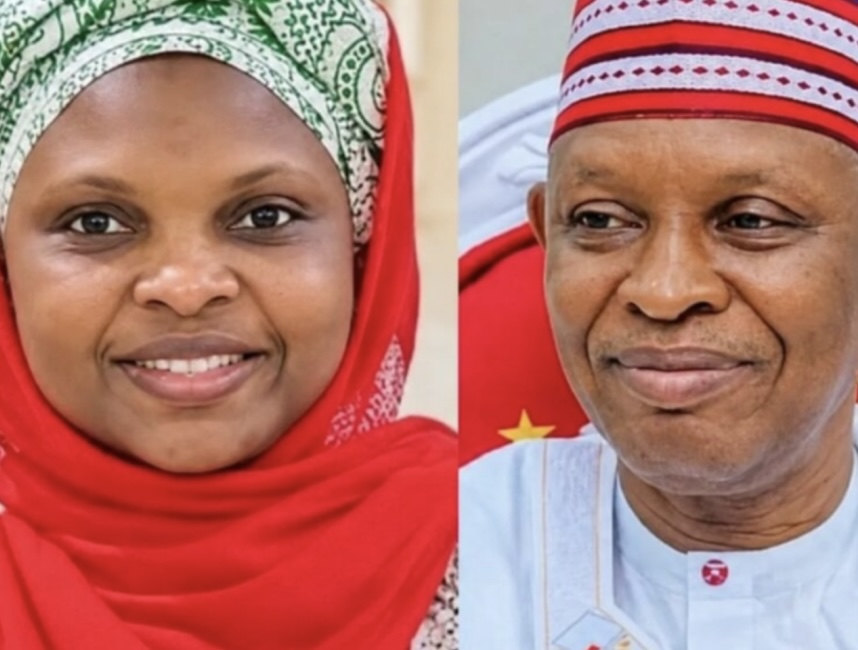
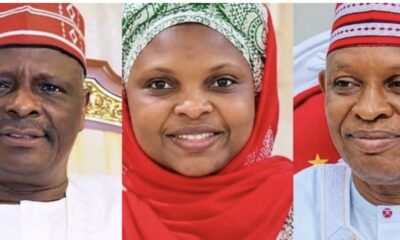
The Kano State Police Command has arrested three persons, including a police orderly attached to Zainab Kwankwaso, the second wife of Governor Abba Kabir Yusuf, over the circumstances surrounding her reported departure from the Kano Government House without the knowledge of the governor or her security aides.
Reports indicate that Zainab, identified as the daughter of former Kano State Governor and Senator Rabiu Musa Kwankwaso, reportedly left the Government House and travelled to Abuja without informing her husband or members of her security detail.
The state Commissioner of Police, Dr Ibrahim Adamu Bakori, was said to have ordered an investigation to establish how she was able to leave the Government House and travel outside the state without the knowledge of security personnel assigned to her.
Sources disclosed that Zainab had reportedly moved out of the Government House on October 28 amid alleged marital disagreements. She was said to have initially relocated to her father’s residence on Miller Road, Kano, before subsequently travelling to Abuja by air without her police orderly or other security operatives.
Her absence reportedly triggered concern after her orderly discovered that she was no longer at her residence and raised the alarm, prompting security officials to investigate the circumstances surrounding her movement.
The arrested persons are reportedly being investigated over their alleged roles in facilitating or failing to prevent her departure. There were also reports that some family members, including her brother, Ado Kwankwaso, were invited for questioning over allegations that they assisted her movement.
The development comes amid reports that Zainab has instituted divorce proceedings against Governor Yusuf at an Upper Area Court in Gudu, Abuja, in a suit reportedly marked CV/97/26.
The court is said to have summoned the governor to appear on November 17, 2026, following the petition in which Zainab is seeking dissolution of the marriage through the Islamic divorce procedure known as khul’i. She has reportedly indicated her willingness to refund the dowry.
The couple got married on July 29, 2006, and have six children together.
The unfolding developments also come against the background of the strained political relationship between Governor Yusuf and his former political benefactor and father-in-law, Senator Kwankwaso.
Yusuf was elected governor in 2023 on the platform of the New Nigeria Peoples Party (NNPP) before defecting to the All Progressives Congress (APC), a move that further widened the political differences between the two former allies.
As of the time of filing this report, the Kano State Government and the Kwankwaso family had yet to issue comprehensive official statements on the reported incident. Police authorities have reportedly confirmed the arrests and ongoing investigation.
The circumstances surrounding Zainab’s departure, the alleged involvement of the arrested persons and the reported marital dispute remain subjects of public interest as investigations continue.
News
Ebonyi Government Accused of Restricting Submission of Correspondence After Newspaper’s FOI Request

• National Issue Newspapers seeks clarification on state revenue accruals from June 2023 to October 2026
The Ebonyi State Government has been accused of restricting the submission of official correspondence at the Government House, Centenary City, following a Freedom of Information (FOI) request by National Issue Newspapers seeking details of the state’s total revenue accruals.
The alleged development comes after the newspaper formally requested comprehensive information on the total revenue received by the state government between June 30, 2023, and October 2026, pursuant to the Freedom of Information Act, 2011.
The request was reportedly followed by a pre-action notice issued to the state government over its handling of the information request.
Sources at the Government House alleged that clerical officers had become reluctant to receive memoranda and other official correspondence from members of the public who are not government officials.
According to the sources, even documents presented by government officials are subjected to preliminary scrutiny before they are accepted.
The alleged restriction has reportedly left some visitors and members of the public stranded at the Government House, raising concerns about public access to government offices and the channels through which citizens can communicate with the state administration.
Although it remains unclear whether the development resulted from an official directive by the state government or an administrative decision by officials at the Government House, the situation has generated questions about the accessibility of public institutions.
Meanwhile, legal consultants to National Issue Newspapers have reportedly cautioned the state government against any action that could obstruct the lawful submission of correspondence.
They maintained that the issuance of a pre-action notice should not be used as a justification for restricting members of the public from submitting official documents through established government channels.
The legal consultants also noted that there are several lawful procedures for serving court processes and other legal documents on government institutions, stressing that refusing to receive ordinary correspondence would neither prevent legal proceedings nor resolve the outstanding FOI request.
The controversy has renewed attention on transparency, accountability and the public’s right to access information concerning the management of public resources.
The Freedom of Information Act, 2011, was enacted to promote transparency in governance and ensure that public institutions are accountable for their activities and the utilisation of public funds.
Under the law, citizens and organisations are entitled to request information held by public institutions, subject to the exemptions provided by the Act.
The newspaper’s request specifically seeks details of the revenue that accrued to Ebonyi State within the period under review, an issue of public interest given the state’s statutory allocations and internally generated revenue.
As the controversy unfolds, attention is expected to focus on whether the Ebonyi State Government will clarify the alleged restrictions at the Government House and provide a response to the newspaper’s request.
The state government has yet to issue an official clarification on the alleged restriction as of the time of filing this report.
The central question remains whether the government will make the requested revenue information available in the spirit of transparency and accountability.
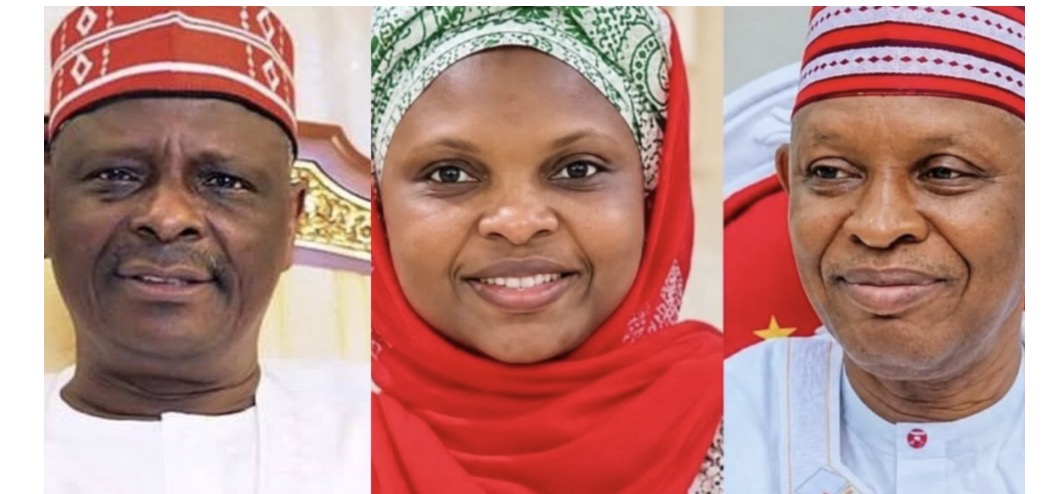
Zainab Musa Kwankwaso, the second wife of Kano State Governor, Abba Kabir Yusuf, has reportedly filed for divorce at an Upper Area Court in Abuja and indicated her willingness to refund the dowry paid during their marriage.
According to court documents obtained by Daily Nigerian, Zainab, a daughter of former Kano State Governor and Senator Rabiu Musa Kwankwaso, instituted a civil suit, referenced CV/97/26, at the Upper Area Court, Gudu, Abuja.
The court has reportedly summoned Governor Yusuf to appear on November 17, 2026, in connection with the case.
Zainab married Yusuf on July 29, 2006, when she was serving as an aide to her father. The marriage has produced six children.
The divorce filing comes against the backdrop of a prolonged political fallout between Governor Yusuf and his former political mentor and father-in-law, Senator Kwankwaso.
Yusuf, who became governor in 2023 on the platform of the New Nigeria Peoples Party (NNPP) with Kwankwaso’s political support, subsequently defected to the All Progressives Congress (APC), triggering a major rift between the two political allies.
The political disagreement, which reportedly began about a year ago, is also said to have placed considerable strain on their family relationship.
Further reports indicated that Zainab left the Kano Government House on October 28 and moved to her father’s residence on Miller Road, Kano, before travelling to Abuja by air.
She reportedly travelled without her police orderly or other security personnel attached to her.
The development has attracted attention amid the deepening political differences between the governor and Senator Kwankwaso.
-
 News1 day ago
UNN Party Horror: ‘I Woke Up At 9pm To Find My Friends Lying Lifeless’ – Survivor
-
News3 days ago
DSS intercept weapons shipment from Niger Republic, recover 21 AK-47 rifles, four PKT Machine Guns in Sokoto
-
News2 days ago
Tragedy As Six UNN Graduates Found Dead In Nsukka Apartment After Graduation
-
News3 days ago
Police Uncover ‘Phone Farms’, Arrest Suspect Over Election Misinformation
-
News2 days ago
UNN Tragedy: Police Recover Alcoholic Drinks, Probe Deaths of Four Students in Nsukka
-
News2 days ago
Angry Nigerians Confront INEC Chairman’s Convoy In UK Protest
-
News2 days ago
UNN Deaths: Gov Mbah Mourns, Orders Investigation
-
Politics1 day ago
Obi Defies Lagos Attack, Vows To Campaign Across Every Part Of State As Reps, Police Launch Probe