Uncategorized
Group urges FG, States to memorialise Nigeria/Biafra war, honour victims, veterans

The Federal, State and Local Governments as well as relevant stakeholders have been urged to institutionalize memorialisation of the 30-month Nigeria/Biafra War (July 6, 1967-January 15, 1970).
This formed the thrust of the communique of the second edition of Nzuko Umunna monthly dialogue on the topic: “Memorializing the Nigerian – Biafran War- A Catalyst to Better Civic Engagement and Sustainable Development in Southeast Nigeria.”

In the monthly Webinar held on 30th May, 2024, stakeholders from different sectors including academics, traditional, civil society organizations, community leaders and policymakers, reflected on memorialising the Nigeria-Biafra War and its implications for civic engagement and sustainable development in the region.
A communique by President of Nzuko Umunna, Professor Chinedu Nebo and Executive Secretary, Dr. Uju Agomoh said participants deliberated and reminiscence on the devastating effects of the war on Igbo land as a whole including the lives lost, people displaced along with economic devastation.
They extolled the resilience and determination of the Igbo people of Nigeria in the face of all the adversity which brought about the significant progress made in rebuilding and reconstructing Igbo land despite all the social, economic, and political challenges that tried frustrating sustainable development in the region.

The session called on the government and stakeholders to establish memorial museums, digital archives and online platforms dedicated wholly to the history of the Nigerian-Biafran War, showcasing personal stories, artifacts, photographs and historical documents with interactive exhibits and multimedia presentations to engage visitors and educate them on the impacts of war.
As part of the memorialisation, they called for the erection of monuments in key locations to honour the victims and veterans of the war.
Other recommendations by the session were to “develop school curriculum that includes comprehensive lessons on the Nigerian-Biafran War with emphasis on the importance of peace and reconciliation.
“Organize workshops and seminars with historians, survivors and scholars to facilitate deeper understanding and dialogue.
“Annual commemorative events in forms of memorial services, peace walks and cultural festivals on significant dates related to the war.
“Implement policies and programmes that address the lingering effects of the war.
“Support initiatives that promote civic engagement and sustainable development in the region.
“Encourage community participation in these events to foster a sense of collective memory and solidarity.”
Government was also urged to collaborate with non-governmental organizations like Nzuko Umunna, Ohanaeze Ndigbo etc, international bodies to fund and implement memorialization projects, ensuring that initiatives reflect the experiences and perspectives of all affected groups to foster inclusivity and ownership.
Government should identify and preserve significant sites related to the war, such as battlefields, refugee camps and historical buildings; to support initiatives that will bring solutions to the root causes of conflict and encourage sustainable and remarkable development in Alaigbo.
Participants said the communique when implemented will not only help in memorializing the dead war veterans but also help to promote healing and educate the future generations and bring about sustainable development and peace in the Southeast and Nigeria in general.
Continuing, the communique noted the resolve of participants to nurture a culture that enhances peace, tolerance, and understanding in the midst of the diverse communities in Alaigbo.
Other resolutions taken were: “To sponsor and encourage a participatory and inclusive governance to ensure that all citizens have a voice.
“Encourage massive investment in vital areas of the economy like health, infrastructure and education which will lead to massive human capital and economic growth.”
The keynote speaker, Barrister Adaeze Anah, the Managing Principal at The Anah Law Practice, made an incisive and engaging presentation where she highlighted human rights violations especially genocide committed against the Biafra side by the Federal Government of Nigeria and its agents.
According to her, despite the intense agitation discourses on the war rouses, there has been a reluctance to examine violations suffered by the people of the defunct Biafra through a human rights lens.
Anah said: “In essence, analysing Nigerian – Biafran War through the human rights lens is the most viable way to disrupt the denialism of the Nigerian Government and the International System regarding the violations suffered by the people of defunct Biafra. It opens up the possibility of reparations and remedies for victims of violations and gives room for demand for accountability. With this being said, two pertinent questions beg to be answered; “Did the Federal Government of Nigeria commit acts constituting violations of humanitarian and human rights laws against the people of the defunct Biafra? And is there a legal basis for the Nigerian Government to be held accountable for these violations?
“The Federal Government of Nigeria committed acts that unequivocally violated humanitarian and human rights laws. These violations trigger an obligation on the part of the Nigerian Government to provide remedies. These obligations are anchored on remedy as required by Article 2 (3) of the ICCPR. These obligations remain undischarged and the violations against the people of the defunct Biafra continue to date producing a more complicated problem that stunts the corporate growth of the region.”
Citing the Genocide Convention, Anah stated that the actions of the Nigerian Government and its military amounted to genocide against the Igbo people in the war. It does not matter that the heavyweights do not acknowledge it, it is what it is. Fifty-two years later, the Rwandan Genocide which happened more than three decades after the Genocide in the Nigerian-Biafran War and recorded considerably lower casualties (800,000 as opposed to the about 2,000,000 deaths in defunct Biafra) have not only received massive attention from the global human rights system and the International Community at large and has become the ultimate symbol of justice, it has become the universal symbol of the fight against genocide.
“Whilst I find this certainly questionable, it would be dishonest not to give the Rwandan people for this “success” because we can all agree that they have done a good job of memorializing that genocide,” she opined.
The Nigerian – Biafran war ended in 1970 but the effect of that war continues to rear its head and affect the experiences of Ndigbo as Nigerians. She listed some of the ways the politics and violations from the war continue to affect the lives of Ndigbo to include stigmatization, marginalization, crime and misplacement of the Igbo moral standards, displacement of Ndigbo as well as undying secessionist agitation.
“Another profound manifestation of this stigmatization is the reluctance and, in some cases, outright refusal of some Igbo communities in the minority in the south-south to identify as Igbos. This is against unimpeached history showing that these communities are of Igbo descent. These disassociations became popular after the war showing how inelegant it is perceived to be Igbo in the Nigerian space…
“One of the legacies of the Nigeria-Biafra war that does not get as much attention as it should be is the displacement of many children during the war. For this discussion, I specifically highlight the children who were airlifted and sent to different African countries to save them from dying of starvation during the war. Some of these children were air-lifted by the Joint Church Aid, the International Committee of the Red Cross, the French Red Cross, and Caritas and were taken to countries like Gabon, Sao Tome and Principe, Ivory Coast. etc. Many of these children never returned. This is one of the sad yet seldom talked about legacy of the war,” Anah stated.
In his opening remarks, the Obi of Onitsha, Igwe Alfred Nnaemeka Achebe (Agbogidi) who chaired the event, urged Ndigbo to always do a retrospection of their trajectory, noting that he who did not know where the rain started pouring on him might not know where it would stop.
Describing Ndigbo as creative, enterprising, industrious, and God-fearing, the monarch urged them not to let down the guard but continue to keep the Igbo spirit alive.
The two panel discussants-Dr. Okey Anueyiagu and Mazi Sam Ohuabunwa, harped on the need for Ndigbo to always ‘know themselves’ given their peculiar situation in Nigeria which calls for eternal vigilance and tact.











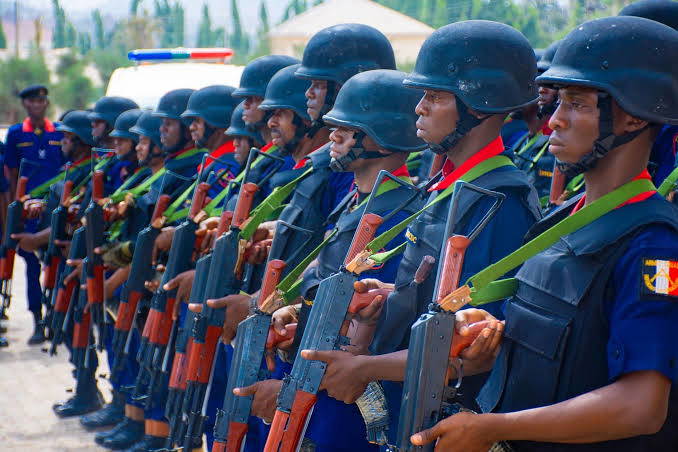
The Nigeria Security and Civil Defence Corps has commenced an investigation into the deaths of some suspected illegal miners arrested during enforcement operations in Niger State.
The suspects were arrested during coordinated operations conducted by the Niger State Command in the M.I. Wushishi/Lukoto axis on September 15 and 16, 2026, as part of efforts to curb illegal mining activities in the state.
The development followed reports that no fewer than 33 suspected illegal miners were feared dead after being detained at an NSCDC facility in Minna.
The deaths were reportedly discovered in the early hours of Thursday, with the Niger State Commandant, Suberu Aniviye, attributing them to a suspected outbreak of disease.
However, the NSCDC National Headquarters said the cause of the deaths had yet to be established, stressing that reports linking them to any specific disease remained subject to medical and laboratory confirmation.
In a statement on Thursday, the Corps’ National Public Relations Officer, Babawale Afolabi, said the Commandant General, Ahmed Abubakar Audi, had directed the constitution of a high-powered investigative team to determine the circumstances surrounding the deaths.
Afolabi said the team, to be led by the Deputy Commandant General in charge of Intelligence and Investigation, had been mandated to conduct a comprehensive inquiry into the incident.
According to him, the investigation would cover the condition of the suspects upon arrest, their period in custody, the conditions of detention, medical attention provided to them and other circumstances surrounding the deaths.
The statement partly read, “NSCDC has confirmed the death of some suspected illegal miners who were arrested during enforcement operations conducted in parts of Niger State on September 15 and 16, 2026.
“Following the development, the Commandant General, Ahmed Abubakar Audi, has directed the constitution of a high-powered investigative team, led by the Deputy Commandant General in charge of Intelligence and Investigation, to immediately look into the circumstances surrounding the incident.
“The team has been mandated to undertake a comprehensive investigation into the circumstances leading to the deaths, including the condition of the suspects upon arrest, their period in custody, the conditions of detention, medical attention provided, and other relevant circumstances surrounding the incident.”
Afolabi also directed that the health and welfare of all persons currently in custody be prioritised, while measures were being taken to protect personnel who might have had contact with the affected persons.
The Corps expressed condolences to the families of the deceased and assured them that the circumstances surrounding the incident would be thoroughly investigated and appropriately addressed based on established facts.
Afolabi added, “The NSCDC wishes to clarify that reports attributing the deaths to any specific disease remain subject to medical and laboratory confirmation. The Corps will therefore refrain from speculation until the outcome of the medical examination is established.
“The Corps extends its condolences to the families of the deceased and assures them that the circumstances surrounding the incident will be thoroughly investigated and appropriately addressed based on established facts.”
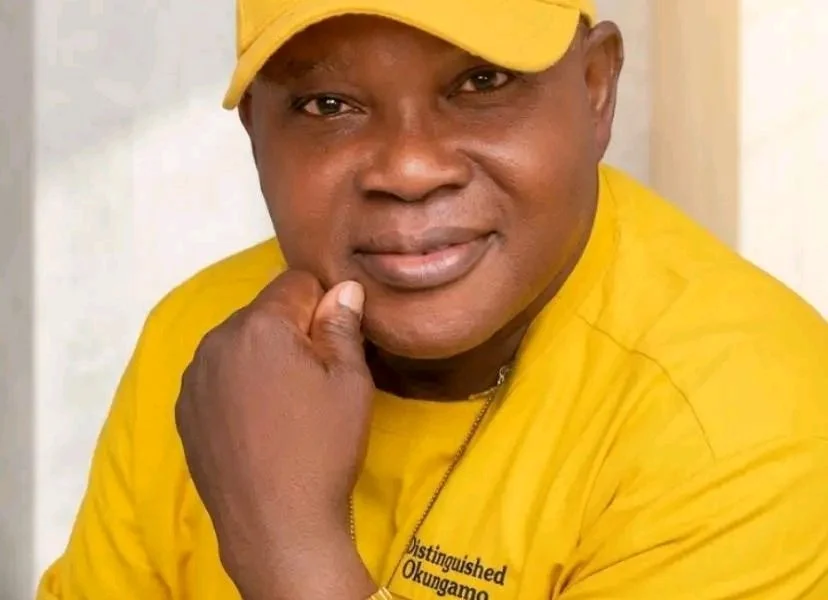
A popular Enugu State politician, Prince Ikechukwu Oloto, also known as Okanga Moo, has reportedly been killed by unknown gunmen in Nsukka Local Government Area of the state.
Oloto was allegedly attacked at his residence in the Odenigbo area of Nsukka on Thursday evening.
The attackers reportedly invaded the politician’s home and killed him during the incident.
The reports also alleged that a knife was used in the attack.
Details surrounding the killing remain unclear, as the circumstances that led to the incident have not been fully established.
The identities of the attackers and their motive were also unknown as of the time of filing the report.
The death was also reported by social media influencer, Sen. Chijinkem Ugwuanyi, in a Facebook post.
Ugwuanyi said the politician was killed at his residence in Odenigbo, Nsukka.
The reported killing comes as political activities and preparations for the 2027 general elections continue to gather momentum across the country.
However, it was not immediately clear whether the incident was connected to Oloto’s political activities.
By press time, the Enugu State Police Command had yet to issue an official statement confirming the killing or providing details of any investigation into the incident.
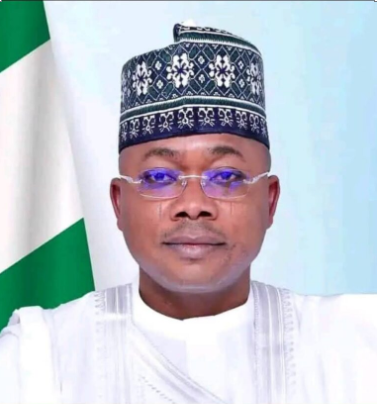
By Tony Edike
How successive governments have repeatedly promised to open up Kogi’s agricultural powerhouse — and why residents are tired of waiting
For decades, the people of Ibaji Local Government Area of Kogi State have watched politicians arrive with promises of development, particularly the construction of the roads that would finally connect their isolated communities to the rest of Nigeria.
Then the elections come.
Campaigns are held. Political leaders visit. Road projects are announced or flagged off. Contracts are mentioned. Hope rises among the people.
And, according to residents and repeated reports about abandoned projects, the construction often disappears from the political radar once the election is over.
For Ibaji, this has become more than a problem of bad roads. It has become a question of political accountability.
The most enduring symbol of this frustration is the long-promised Otuocha–Ibaji–Idah road corridor, which residents believe could fundamentally transform the local government by opening it to commerce, investment, agriculture and social development.
A food basket trapped behind bad roads
Ibaji occupies a strategically important position along the River Niger and has enormous agricultural potential.
The local government is known for farming and fishing, producing crops including rice, yam and cassava. Yet the same geographical and agricultural advantages that could make Ibaji a major economic hub have been undermined by inadequate transportation infrastructure.
The contradiction is stark: a community capable of contributing significantly to Nigeria’s food supply continues to struggle with the basic infrastructure required to move its agricultural products to markets.
Poor roads increase transportation costs, discourage investment and make it more difficult for farmers to get their produce to consumers.
During the rainy and flooding seasons, the problem becomes even more severe.
Reports have documented the extent to which flooding and damaged roads have isolated communities in Ibaji, with residents sometimes relying on bicycles, motorcycles and waterways where roads become impassable.
For a predominantly agrarian community, this is not simply an inconvenience.
It is an economic handicap.
The promise that keeps returning
The history of the Otuocha–Ibaji–Idah corridor illustrates the frustration.
In 2009, the Federal Government reportedly awarded the approximately 90-kilometre Otuocha–Ibaji–Idah road to Nigercat Nigeria Limited for about N7.2 billion, with reports putting the mobilisation payment at about N2.5 billion.
Yet the project subsequently stalled.
Years later, the road remained a subject of complaints by Ibaji residents and community groups.
The road was still being discussed when another promise came from the Kogi State Government.
Yahaya Bello’s 2017 flag-off
In April 2017, then Kogi State Governor Yahaya Bello visited Ibaji and flagged off the construction of the 40-kilometre Idah–Onyedega road.
The contract was reported to be worth more than N5 billion.
At the ceremony, Bello said the road would be asphalt-overlaid and that its completion would boost the economy of the area.
The message was significant because even the then Deputy Governor, Simon Achuba, an indigene of Ibaji, acknowledged that the local government had long been neglected and that roads were its major problem.
The state’s Works Commissioner at the time described Ibaji as the state’s “Food Basket” and said the lack of roads was an impediment to its development.
The people had every reason to hope.
But according to subsequent reports, the promise did not translate into the completed road residents were expecting.
By 2021, a report on the project stated that work had still not commenced and described the road as practically impassable. The report recalled that Bello had promised that the construction would take 24 months.
In 2023, a motion before the House of Representatives also raised concerns about the condition and neglect of the road, stating that since the flag-off of its rehabilitation, no work had commenced.
The election-cycle question
This is where the political frustration in Ibaji becomes difficult to ignore.
Residents have seen one administration after another return to the same fundamental problem: the road.
The criticism from the community is not that politicians should not promise infrastructure.
It is that promises should be followed by construction.
For a community that has heard road promises repeatedly, the real measure of government commitment is not another flag-off ceremony, another speech or another campaign visit.
It is asphalt on the ground.
Then came another governor
After Yahaya Bello’s tenure, his successor, Governor Ahmed Usman Ododo, also visited Ibaji.
In July 2026, Ododo met with traditional rulers, community leaders, women, youths and other stakeholders in the local government and announced that the design for a proposed Ibaji Road Project had been completed and was available for public review before construction.
The Federal Ministry of Information described the proposed road as a strategic intervention that could improve access to markets, schools and healthcare while unlocking Ibaji’s economic and agricultural potential.
The announcement was naturally welcomed.
But it also raises an unavoidable question:
How many more times will Ibaji hear that its road is about to be constructed?
Because for residents who remember previous promises, the existence of a design is not the same thing as the existence of a completed road.
And now, the Federal Government
Just as the controversy surrounding the road continues, another major development emerged in July 2026.
Anambra State Governor Chukwuma Soludo announced that President Bola Tinubu had approved the Otuocha–Anam–Abaji road for design and procurement, alongside another major South-East highway project.
The Federal Government’s announcement describes the Otuocha–Anam–Abaji corridor as approximately 108 kilometres and says it will link Anambra with Kogi and North-Central Nigeria.
Kogi-based reports subsequently described the project as the Otuocha–Nzam–Ibaji Road and connected it to the long-standing demand for the Otuocha–Ibaji–Idah corridor.
The development has understandably generated excitement.
After all, this is precisely the type of regional infrastructure Ibaji residents have been demanding for years . This is similar to the age long clamor for the provision of electricity in the local government, which has remained in the dark since its creation. The entire people of Ibaji have not enjoyed public power supply for decades yet the area has remained a vote-hunting hub for politicians in all elections.
This has also raises a question that government officials should answer clearly:
Is this move by Ododo finally the road Ibaji has been waiting for — or will it become another announcement that disappears after the political season?
That question is not an accusation of wrongdoing against any individual.
It is a legitimate question arising from the history of abandoned and repeatedly announced road projects in the area.
The Hope Uzodinma connection
The announcement has also attracted attention in the wider South-East, including from political leaders in neighbouring states.
The involvement of Anambra and Imo in the wider regional road agenda is significant because the Otuocha corridor is not merely an Ibaji road.
It has the potential to connect agricultural communities in Anambra and Kogi and strengthen commercial links between the South-East, North-Central and South-South regions.
That is precisely why the project deserves to be treated as an economic corridor rather than merely another local political promise.
Can Ibaji afford another disappointment?
For the people of Ibaji, the issue is bigger than party politics.
The community wants a road.
A real road.
An asphalted, durable and properly engineered road capable of remaining accessible during the rainy season and capable of carrying agricultural produce, commercial vehicles and passengers.
They want the road to connect farmers to markets.
They want businesses to be able to come into Ibaji.
They want easier access to hospitals and schools.
They want young people to have opportunities beyond leaving or dumping their communities because of infrastructural isolation.
They want their agricultural wealth to become economic wealth.
And they want the government to understand that a road can change the destiny of an entire local government.
The politics of promises
The suspicion among some Ibaji residents that politicians remember the road mainly during election seasons is therefore understandable in the context of the project’s long history.
But suspicion is not proof.
If politicians want to demonstrate that the latest promise is different, the answer is straightforward: publish the documents and build the road.
Let the public know the contract sum.
Let the contractor be identified.
Let the scope of work be published.
Let the commencement date be known.
Let the completion date be known.
Let payments and milestones be transparently accounted for.
And, most importantly, let the people see continuous construction activity on the ground.
That is how another campaign promise becomes a development project.
Ibaji is asking for development, not political rhetoric
The people of Ibaji have waited long enough.
They have watched governments come and go.
They have listened to flag-off speeches.
They have heard promises of economic transformation.
They have watched projects stall.
They have endured roads that become almost impassable during the rainy season.
Yet the potential of Ibaji remains enormous.
With adequate infrastructure, the local government could become an important agricultural and commercial corridor between Kogi and the South-East.
The River Niger should be an economic advantage.
Its fertile agricultural land should be an economic advantage.
Its proximity to Anambra and other markets should be an economic advantage.
But without roads, those advantages remain severely constrained.
Enough of promises — let the road be built
The latest federal approval may provide a new opportunity.
But Ibaji residents have heard enough promises to know that approval alone is not the destination.
Design of the road is not construction.
Construction is not completion.
And a flag-off is not a road.
What the people are asking for is simple: an asphalted road that will finally open Ibaji to commerce, investment, agriculture, education, healthcare and the wider Nigerian economy.
They do not want another road project to become an election slogan.
They want to see the bulldozers arrive.
They want to see the earthworks completed.
They want to see bridges and drainage structures constructed.
They want to see asphalt laid.
And they want to drive on a completed road.
For a local government described by its own political leaders as a food basket, the continued infrastructural isolation is a contradiction that can no longer be ignored.
Ibaji does not need another promise. Ibaji needs a road.
President Bola Ahmed Tinubu should please note that there is a place known as Ibaji bordered by four states of Enugu, Anambra, Delta and Edo (across the River Niger). And this local government is being administered by the ruling All Progressives Congress, APC.
Ibaji people have strongly supported his government and they deserve the attention of his government.
-
 News3 days ago
Ojukwu Property Dispute: OTL petitions IGP over demolition, construction at Macpherson Avenue Property
-
News1 day ago
Fuel Price Hike: Workers to begin strike in October
-
News2 days ago
‘I’m strong, ready to work’ – Tinubu speaks after return from vacation
-
News1 day ago
We can’t erase decades-long problems in 4 years, says Tinubu
-
News2 days ago
Xenophobia: Nigerian Consulate condemns killing of three Nigerians in South Africa
-
News9 hours ago
Police confirm NYSC members among abducted passengers on Owerri-Onitsha Road, rescue 10
-
News2 days ago
Military records 367 attacks, kills 52 terrorists in September
-
News9 hours ago
NYSC members, other travellers ‘abducted’ along Owerri-Onitsha Expressway