
News
Access Bank acquires Kenya’s major bank


Access Bank Plc, the flagship subsidiary of Access Holdings Plc, has entered into a binding agreement with Kenyan-based KCB Group Plc (KCB) for the acquisition of the entire issued share capital of National Bank of Kenya Limited (NBK) from KCB.
NBK is one of Kenya’s major banks with total assets in excess of $1.1 billion. KCB is also the holding company of KCB Bank Ltd, Kenya’s largest commercial bank.

The parties will be working together in the coming months to fulfil the conditions precedent relating to the Transaction, which include the regulatory approvals of the Central Bank of Nigeria (CBN) and the Central Bank of Kenya.

Sequel to the completion of the transaction, NBK would be combined with Access Bank Kenya Plc to create an enlarged franchise in the pursuit of Access Bank’s strategic objective for the Kenyan and East African markets.

In a regulatory filing yesterday, Access Holdings, stated that the proposed acquisition was in furtherance of its African expansion strategy and will reposition Access Bank as a stronger and significant player in the Kenyan market whilst serving as a regional hub for the East African bloc anchored by a solidified balance sheet.
Acting Group Chief Executive Officer, Access Holdings Plc, Ms. Bolaji Agbede said the proposed acquisition marks a significant step in the execution of the group’s five-year strategic plan aimed at positioning the bank as Africa’s gateway to the world.
“The deal with NBK, a historically strong and well-known bank in Kenya with a balance sheet in excess of $1.1 billion, presents a compelling opportunity to scale up our growth in the East African market. We remain confident that our investments towards diversifying and strengthening the bank’s long-term earnings profile will deliver significant value for our shareholders, customers, and wider stakeholder groups,” Agbede said.
The latest transaction comes on the heels of recent other acquisitions talks. Access Bank had sealed a deal to acquire the majority equity stake of about 80 per cent in Uganda’s Finance Trust Bank (FTB).
The deal will see Access Bank concurrently acquiring the shares held by FTB’s Institutional Shareholders who have sought to exit to a strategic, long-term shareholder.
The transaction is, however, subject to regulatory approvals by the Central Bank of Nigeria (CBN) and Bank of Uganda. It is expected to close in the first half of the year, following the fulfilment of customary conditions precedent.
Following the anticipated closing of the transaction, Access Bank would own an estimated 80 per cent shareholding in FTB.
Access Bank had earlier this year completed the acquisition of Atlas Mara Zambia in a major move that uplifted the Access Bank Zambia to one of the top five banks in Zambia.
With the completion of acquisition, Atlas Mara Zambia, otherwise known as African Banking Corporation Zambia Limited, became a wholly owned subsidiary of Access Bank Zambia (Access Zambia).
Access Zambia is a subsidiary of Access Bank Plc, the flagship subsidiary of Access Holdings Plc.
Access Holdings had indicated that the integration of Atlas Mara Zambia into the operations of Access Zambia is underway. The integration of the two banks will make Access Zambia one of the top five banks in the country.
Access Bank had also recently partnered with Visa, the world leader in digital payments, to enhance the efficiency of cross-border business-to-business payments, a partnership that will facilitate cross-border payments to some 110 countries globally.
Access Bank’s corporate, commercial and small and medium enterprises (SMEs) customers will be able to adopt Visa B2B Connect platform to send and receive payments to and from 110 countries worldwide in a faster, more efficient and more secured way, thus facilitating seamless global business operations.













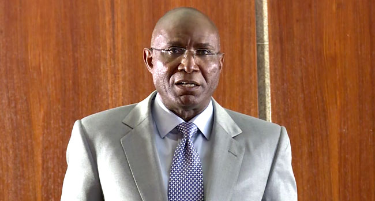
The Federal High Court sitting in Warri, Delta State, on Tuesday reportedly nullified the nomination of former Deputy President of the Senate, Senator Ovie Omo-Agege, as the Nigeria Democratic Congress (NDC) candidate for Delta Central Senatorial District in the 2027 general elections over alleged non-compliance with the provisions of the Electoral Act.
The court, presided over by Justice Hyeladzira Ajiya Nganjiwa, ordered the Independent National Electoral Commission (INEC) to remove Omo-Agege’s name from its list of candidates for the election and restrained him from parading himself as the NDC senatorial candidate.
In a further setback for the party, the court held that the statutory period for conducting fresh primaries to nominate another candidate had elapsed, noting that the Electoral Act prescribes a timeline of 180 days before the general elections.
The judgment followed a suit instituted by Prof. Alexander Osondu Akpodiete, marked FHC/WR/CS/120/2026, challenging the validity of Omo-Agege’s nomination on grounds bordering on his resignation from the All Progressives Congress (APC), membership of the NDC and eligibility to participate in the party’s senatorial primary.
Delivering the judgment, Justice Nganjiwa dismissed all five preliminary objections raised by Omo-Agege, the NDC and INEC challenging the competence of the suit before proceeding to determine the substantive issues.
The court held that the NDC failed to comply with the mandatory provisions of the Electoral Act concerning the submission of its membership register to INEC ahead of its primary election.
Specifically, Justice Nganjiwa found that Omo-Agege’s name was not contained in the NDC membership register submitted to INEC at least 21 days before the party conducted its primary election.
The judge also held that the NDC failed to provide credible evidence showing that the membership register was subsequently updated and submitted to INEC within the statutory period preceding the primary.
Relying on INEC’s revised electoral timetable, the court further noted that Omo-Agege participated in the APC senatorial primary held on May 18, 2026, which, according to the judge, established that he was still a member of the APC at the material time.
Justice Nganjiwa maintained that only persons whose names appeared in a political party’s membership register, in accordance with the provisions of the Electoral Act, were eligible to participate in its primary elections.
On the admissibility of a previously withdrawn affidavit, the court held that a party was entitled to withdraw an affidavit already filed in a proceeding. It added that once withdrawn, such an affidavit ceased to form part of the court’s records and could no longer be relied upon in determining the matter.
The judge stressed that a valid nomination could not be based on a process that failed to satisfy statutory requirements, adding that INEC could not include a candidate on the ballot where the political party failed to comply with the Electoral Act in nominating the individual.
Consequently, the court invalidated Omo-Agege’s nomination, directed INEC to remove his name from its list of candidates and restrained him from presenting himself as the NDC candidate for Delta Central Senatorial District in the forthcoming general elections.
The judgment marks a significant development in the political contest for the Delta Central senatorial seat and raises questions about the NDC’s prospects of fielding a candidate for the constituency in the 2027 general elections.

No fewer than four persons have been killed following an attack by gunmen on the campaign convoy of former Deputy Senate President, Senator Ovie Omo-Agege, in Uduere Community, Ughelli North Local Government Area of Delta State.
The attack, which occurred on Sunday during a campaign visit by members of the Nigeria Democratic Congress (NDC), also left several persons injured, including a former member of the Delta State House of Assembly, Chief Evans Ivwurie.
Omo-Agege is the NDC’s Delta Central Senatorial candidate in the 2027 National Assembly elections.
Following the incident, the Delta State Government imposed a curfew on the entire Ughelli North Local Government Area from 6 p.m. to 6 a.m. daily until further notice.
The Secretary to the State Government, Dr Kingsley Emu, announced the restriction, urging residents to comply with the directive to prevent further breakdown of law and order.
Among those reportedly killed in the attack was Moses Anaughe, a former Federal Commissioner representing Delta State at the Federal Character Commission and an aide to Omo-Agege. Another victim was Akima Umukoro, popularly known as Akhima.
Ivwurie and other victims, including Chuks Erhire, Tobore Agba and Ayodo Wanogho, reportedly sustained gunshot injuries and were rushed to hospital for treatment.
The incident has triggered a war of accusations between the NDC and the ruling All Progressives Congress (APC), with both parties blaming each other for the violence.
NDC alleges assassination attempt
Omo-Agege’s campaign organisation described the attack as an assassination attempt on the former Deputy Senate President, alleging that armed men opened fire on him and members of his entourage at close range during what it described as a peaceful campaign visit.
In a statement issued by his Media Adviser, Sunny Areh, the campaign organisation said Omo-Agege narrowly escaped death when bullets reportedly flew past his head while he was addressing supporters.
It said four persons, including two campaign aides, Moses Anaughe and Akima Umukoro, were killed, while several others sustained critical injuries.
The organisation further alleged that witnesses identified Ughelli North Council Chairman, Olorogun Jaro Egbo, as the person leading the attackers.
Describing the incident as a targeted attempt to eliminate the NDC candidate, the campaign organisation called on Governor Sheriff Oborevwori to condemn the attack and ensure that those responsible were arrested and prosecuted.
It also called on the Inspector-General of Police to take over the investigation, alleging that officers deployed to the area failed to prevent the killings despite being present at the scene.
The organisation, however, urged its supporters not to retaliate or take the law into their own hands.
Egbo rejects allegations, blames Omo-Agege’s camp
However, Egbo rejected the allegations, insisting that members of Omo-Agege’s entourage were responsible for the violence.
According to the council chairman, his supporters had gone to the community to prepare for a scheduled event when they learnt that Omo-Agege’s campaign team intended to use the same venue.
He claimed that disagreements over the use of the community hall and intelligence reports about the alleged movement of armed men into the area prompted him to contact the Area Commander, the Divisional Police Officer and the military to maintain peace.
Egbo alleged that members of Omo-Agege’s entourage opened fire on his supporters as the former senator’s convoy was leaving the community.
He claimed that three of his supporters were killed, while others sustained critical injuries.
The council chairman also accused Omo-Agege’s camp of bringing armed men into the community to disrupt the political activities.
His account, however, contrasts sharply with the allegations by the NDC campaign organisation, which accused him of leading the attackers.
Omo-Agege: It was a premeditated attack
Speaking during an interview on Channels Television via Zoom, Omo-Agege described the incident as a premeditated attempt on his life, alleging that it was part of a series of developments aimed at eliminating him politically.
He said four members of his campaign organisation were killed, while about 15 others sustained critical injuries during the attack.
According to him, the gunmen opened fire less than five minutes after he started addressing supporters at the campaign venue.
He alleged that the attackers repeatedly shouted that they wanted to kill him while shooting was ongoing.
Omo-Agege said he survived because of the intervention of his Department of State Services (DSS) security personnel.
He called on the Inspector-General of Police to take over the investigation, expressing reservations about the ability of the Delta State Police Command to ensure justice.
The former Deputy Senate President also appealed to his supporters to remain calm and avoid retaliation, insisting that the attack would not stop him from continuing his political campaign.
NDC condemns attack, demands investigation
The national leadership of the NDC also condemned the attack, describing it as another attempt to intimidate its members and silence opposition voices in Delta State.
In a statement issued by its National Publicity Secretary, Osa Director, the party accused suspected APC agents of attacking Omo-Agege’s campaign convoy.
The party said four persons had reportedly been killed, while several others sustained varying degrees of injuries.
It called on the Nigeria Police Force and other security agencies to investigate the incident, identify the perpetrators and their alleged sponsors, and ensure they were brought to justice.
The NDC maintained that political disagreements should not degenerate into violence, insisting that no life should be lost in the struggle for political power.
Police begin investigation, warn against political violence
The Delta State Police Command condemned the killings and said it had commenced investigations to establish the circumstances surrounding the incident and identify those responsible.
The Police Public Relations Officer, SP Bright Edafe, said the command was working to restore normalcy in the affected area.
He said the Commissioner of Police, CP Samuel Erale, had directed intensified security operations in Ughelli North to prevent further violence and maintain law and order.
The police also urged residents to comply with the curfew imposed by the state government and cooperate with security personnel.
Eralé reportedly warned political actors and their supporters against thuggery, intimidation and the unlawful use of firearms, stressing that political differences must not be allowed to result in the loss of lives.
The command assured residents that anyone found culpable would face the full weight of the law, irrespective of political affiliation or status.
From Warri-Effurun to Asaba: Rising political violence in Delta
The Uduere attack is the latest in a series of violent incidents linked to political activities in Delta State ahead of the 2027 general elections.
On September 18, supporters of rival political interests reportedly clashed during a political procession in the Warri-Effurun axis. The incident generated allegations of armed involvement, with an AK-47 rifle reportedly recovered afterwards.
Barely two months later, on November 7, another political procession in Asaba involving supporters of the NDC and the Obedient Movement ended in violence, leaving one person dead and several others injured.
The police had said they received intelligence about the planned procession and advised against a road march, while political actors subsequently traded accusations over responsibility for the incident.
With the latest bloodshed in Ughelli North, concerns are mounting over the safety of political activities and the possibility of further violence as the 2027 general elections approach.
The conflicting accounts surrounding the Uduere attack, including the actual number of casualties and the identities of those responsible, have heightened calls for an independent and impartial investigation.
Political stakeholders and security agencies are now under pressure to ensure that political campaigns across the state are conducted peacefully and that those responsible for the killings are brought to justice.
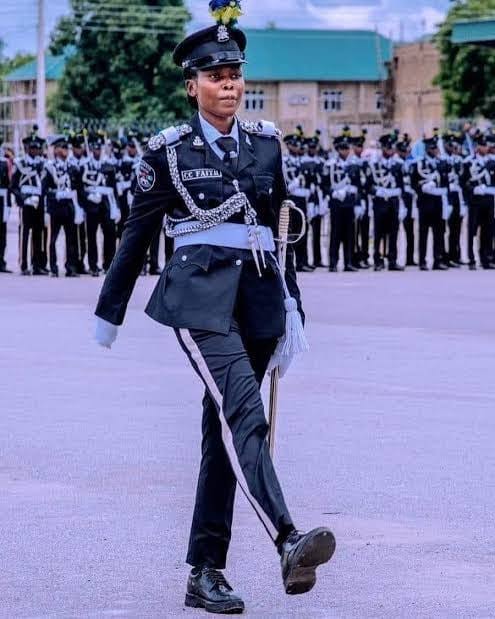
The National Economic Council (NEC) has approved an additional ₦130 billion for the rehabilitation and upgrading of police training institutions across Nigeria, bringing the total funding commitment to ₦230 billion ahead of the proposed establishment of state police.
The fresh allocation is expected to accelerate the renovation of police colleges, upgrade training facilities and strengthen the capacity of the institutions to accommodate increased recruitment and training requirements.
The Council also endorsed two major development programmes involving proposed World Bank financing of $850 million to strengthen disaster preparedness, climate resilience and early childhood development across the country.
These decisions were reached at the 162nd virtual meeting of the NEC, held on Monday and presided over by Vice President Kashim Shettima.
The Council had approved an initial ₦100 billion for the rehabilitation of police training institutions last October, following the establishment of an ad hoc committee on the recommendation of President Bola Ahmed Tinubu.
Presenting an update at the meeting, Enugu State Governor Peter Mbah, who chairs the NEC Ad-Hoc Committee on Police Training Institutions, disclosed that rehabilitation work was ongoing at 13 locations nationwide, with approximately 30 per cent of the work completed.
He assured the Council that the additional ₦130 billion would accelerate the ongoing projects, improve training facilities and strengthen the capacity of police institutions to meet the country’s growing security needs.
The intervention is also expected to support preparations for the proposed recruitment of 50,000 police personnel and provide the necessary training infrastructure ahead of the anticipated transition to a decentralised policing system.
Economy records growth, but household pressures persist
Meanwhile, the Minister of Finance and Coordinating Minister of the Economy, Taiwo Oyedele, presented an update on the country’s economic performance, reporting improvements in several key indicators.
Oyedele said Nigeria’s real Gross Domestic Product (GDP) grew by 4.43 per cent in the second quarter of 2026, compared with 4.23 per cent in the corresponding period of 2025.
He also disclosed that inflation had declined for the fifth consecutive month to 14.06 per cent in October 2026, its lowest level since September 2020, while external reserves stood at $54.87 billion as of November 12, 2026.
According to the minister, Nigeria’s trade surplus increased from ₦10.2 trillion in the first half of 2025 to ₦20.1 trillion in the corresponding period of 2026.
He added that net revenue distributed through the Federation Account Allocation Committee (FAAC) rose by 44 per cent, from ₦15.2 trillion in 2024 to ₦21.9 trillion in 2025.
However, the minister acknowledged that the improving economic indicators had yet to translate sufficiently into relief for households and businesses, particularly in food prices, electricity costs, access to affordable credit and employment opportunities.
He expressed concern that food inflation remained elevated at 19.13 per cent in October, while high lending rates and energy costs continued to put pressure on businesses and household incomes.
NEC considers $850m World Bank-supported projects
The Council also considered two memoranda on disaster management and early childhood development presented by the Minister of Budget and Economic Planning, Senator Atiku Bagudu.
The first concerned the proposed $350 million Accelerating Resilience through Investment Systems and Engagement (ARISE-Nigeria) Project, a six-year World Bank-supported programme designed to strengthen Nigeria’s capacity to anticipate, prepare for and respond to floods, droughts, fires and other natural disasters.
The programme is expected to improve emergency operations centres, early warning systems, weather monitoring and disaster response financing at both federal and state levels.
Between five and 10 states are expected to participate in the initial phase, with selection based on exposure to disaster risks, institutional readiness and commitment to emergency preparedness.
The second memorandum concerned Nigeria’s State-Led Early Childhood Development Programme, which seeks to improve children’s access to healthcare, nutrition, early learning and protection services across the 36 states and the Federal Capital Territory.
The programme is expected to receive funding through a proposed $500 million World Bank financing arrangement, with the Global Financing Facility indicating potential additional grant support of $30 million.
Under the initiative, early childhood development hubs will link primary healthcare facilities with childcare services, preschool education and other essential social services, particularly in underserved communities.
State governors are expected to provide leadership in implementation, resource mobilisation and accountability, while existing institutions will coordinate service delivery.
NEC seeks stronger national identity registration
On the proposed National Identity Management Commission (NIMC) Act 2026, the Council called for stronger collaboration between the commission and state governments to accelerate the registration of Nigerians and improve the integration of the National Identification Number (NIN) into public services.
The initiative is expected to strengthen public service delivery, improve tax administration, eliminate duplicate records and reduce fraud in government payrolls, pension administration and social intervention programmes.
The Council also urged state governments to accelerate identity registration and data capture to ensure wider coverage of the national identity system.
Shettima calls for stronger institutions
In his opening remarks, Vice President Kashim Shettima said Nigeria’s economic future and the long-term success of President Bola Tinubu’s reforms depended on building strong institutions and strengthening cooperation between federal and state governments.
He stressed the need for ministries and state governments to address practical responsibilities while considering the interests of citizens affected by government policies.
Shettima said: “While His Excellency, President Bola Ahmed Tinubu, GCFR, makes the difficult reforms to stabilise the economy, we must all participate in establishing institutions capable of sustaining the benefits of those reforms. This requires ministries and States to settle practical responsibilities without losing sight of the people affected. To achieve this, we must cooperate.
“We must allow a sound practice in one jurisdiction to inform decisions elsewhere, while respecting the differences in capacity and circumstance across the country. The quality of our cooperation will shape the inheritance we leave.”
The Vice President urged Council members to consider the needs of future generations when taking decisions, stressing that the quality of governance and intergovernmental cooperation would determine the country’s institutional legacy.
-
 News23 hours ago
INEC selects 520 polling units for mock election in Enugu
-
News3 days ago
Pomp, Pageantry as 37th NAFEST Opens in Enugu; Mbah Champions Cultural Economy
-
Editorial2 days ago
Fake Drugs: NAFDAC Seeks Death Penalty as Counterfeit Products Flood Nigerian Markets
-
News2 days ago
Police Take Over Fountain of Life Church as Jimmy Odukoya’s Leadership Crisis Deepens
-
News2 days ago
South-East Policy and Impact Conference to chart pathway from economic reforms to regional prosperity
-
News2 days ago
2027 Elections: Controversy Trails Inauguration of 200-Man Security Outfit by Umahi’s Son
-
News1 day ago
How My Wife Was Taken Away From My Home – Gov. Abba Yusuf
-
Politics21 hours ago
BREAKING: 2027: Tinubu woos Lagos-based Igbos, seeks support for re-election