News
Nnamdi Kanu writes British House of Lords over continued detention


In his renewed bid to regain freedom, the leader of the Indigenous People of Biafra, IPOB, Mazi Nnamdi Kanu, has, through his Special Counsel, Aloy Ejimakor, filed a petition to the United Kingdom’s International Relations and Defence Committee of the House of Lords.
The six-page petition to the House of Lords dated January 18, 2024, not only reminded the House that Kanu is a British national and was “renditioned, tortured and imprisoned by the Federal Government of Nigeria, since June 19, 2021.”

Part of the petition read: “Mr. Kanu, a British national, is a political activist, advocating self-determination for the people of Biafra (Eastern Nigeria), with the singular aim of creation of the sovereign State of Biafra from Nigeria through a referendum.
“He is the leader of the Indigenous People of Biafra, IPOB, which he founded in 2012, for actualisation of the creation of the State of Biafra.
“IPOB is registered as a legal entity in the United Kingdom and it has numerous offices and chapters around the world. It operates in the open as a non-violent group, including in Nigeria, before the Government of Nigeria, GON, unfairly proscribed/declared it a terrorist group in 2017.

“However, in October 2023, a High Court in Nigeria declared as unconstitutional, the executive actions of the GON in the proscription of IPOB and its declaration as a terrorist group.
“The court awarded significant damages against the GON and ordered it to apologize to Mr. Kanu.
“Over time and after 18 months in detention without trial, Mr. Kanu was released on bail, due mainly to domestic and international pressure.
“Following this, Mr. Kanu returned to his ancestral home in Umuahia, Abia State, South-East Nigeria, where he stayed and awaited his next court date scheduled for October 20, 2017.
“From September 10 to 14, 2017, Nigerian security forces led by the Army, levied lethal attacks at Mr. Kanu’s home. The security forces used live bullets and other lethal munitions and several people including Mr. Kanu, his parents (now late), his siblings, children, women, the elderly, and numerous visitors were at the said home with Mr. Kanu during the attacks.
“At the end of the attack, Mr. Kanu’s home was badly damaged, dozens of people were killed, many were wounded and maimed, and the security forces captured several people alive and took them to unknown locations to this day.
“In January 2022, a High Court in Nigeria declared the military attack at Mr. Kanu’s residence as unconstitutional and a breach of his fundamental rights and awarded him substantial monetary damages.
“In March 2018, the African Commission on Human and Peoples Rights, ACHPR, issued an interim decision, holding that the military attacks on Mr. Kanu and the contemporaneous proscription of IPOB, violated the African Charter; and accordingly, the ACHPR wrote the former President of Nigeria to remedy the situation but the GON never implemented the Provisional Measures to this day.
“In October 2020, the United Nations Special Rapporteurs transmitted a Communication/Decision, No: AL NGA 5/2020, to the GON, conveying its disapproval of the executive or administrative action of the GON on the proscription of IPOB.
“In particular, the said Communication/Decision expressly stated that the action of the GON in this regard was motivated by ethnic bias and discrimination against the Igbo.”
The petition graphically narrated how Kanu was forced to flee Nigeria and go into voluntary exile, to save his life, his entry into Kenya on May 12, 2021, as a British citizen, and how several armed security agents working for GON, violently accosted and abducted, handcuffed, blindfolded and bundled him in a vehicle and sped away, to a nondescript private house, somewhere in Nairobi, Kenya and chained him to the floor.
After taking a hard look at the recent judgment of the Supreme Court, Kanu’s Special Counsel expressed happiness that the Justices “strongly condemned both the said military attacks against Mr. Kanu and his extraordinary rendition,” stressing that “Mr. Kanu remains in limbo without any clear prospects of ever being brought to trial since this saga begins almost nine years ago.”
He then pleaded: “Given the foregoing, we hereby most respectfully urge the House of Lords to urgently intervene with His Majesty’s Government, to promptly make demands on the GON to unconditionally release Mr. Kanu from detention and repatriate him to the United Kingdom, and to levy sanctions against the GON, if it fails to comply within a reasonable time.
“It is pertinent to stress the point that extraordinary rendition inherently destroys every prospect for a fair trial in the jurisdiction that levied the rendition.”
I’m not averse to genuine restructuring of Nigeria — Kanu
In a related development, Kanu has said he is not opposed to any genuine restructuring of Nigeria along the 1963 Constitution.
The IPOB Leader insisted that unless those opposed to holistic restructuring of Nigeria repented, his demand for a referendum to determine whether the people of Biafra would like to exit or continue as part of Nigeria remained sacrosanct.
Kanu’s position was conveyed to Vanguard by his younger brother, Prince Emmanuel after meeting with him at his solitary confinement at the Abuja headquarters of the Department of State Services, DSS.
He quoted Kanu as saying: “We are not averse to the genuine restructuring of the country. We know that the country cannot grow or make progress under the current unworking unitary structure. The facts are clear for all to see.
“Our position remains the same as our submission in the presence of Prof. Ben Nwabueze, and Evangelist Elliot Ugochukwu-Uko on 30th August 2017 at the meeting with the South East Governors in Enugu. We have no reason to add or subtract from our position six years ago.
“We reiterate that we are not opposed to a consensual but wholesome restructuring of the country along the 1963 constitution.”
Kanu blamed those who disrupted an earlier attempt by the Federal Government in 2017 to reach a truce with him, for the current insecurity in the South East.
Kanu’s family cries foul over S’Court’s non-release of CTC
Meantime, the family of the detained Kanu has cried foul over the delay by the Supreme Court to release the Certified True Copy, CTC, of its judgment in the suit involving the IPOB Leader.
Kanunta Kanu who spoke for the family said the action of the apex court “is impeding further legal moves” by the family to seek justice for their son.
He regretted that over one month after the Supreme Court delivered its judgment on the matter, the Justices of the apex court who abdicated in the matter were yet to append their signatures on the judgment.
Recall that the Supreme Court had on December 15, 2023, refused to affirm the ruling of the Appeal Court which had ordered the immediate release of Kanu.
The Supreme Court ruled that instead, Kanu should be tried at the appropriate court.
Kanunta expressed surprise that the Justices of the apex court allowed the normal two weeks to elapse without signing the judgment.
Suspecting foul play over the unnecessary delays, Kanunta said the action amounted to a gross violation of the principles of the rule of law.
He said: “Unlawfully withholding the CTC in the case of Mazi Nnamdi Kanu has confirmed that Nigeria will not obey her treaty obligations.
“These justices, the presidency, and the Nigerian entity are officially terrorists according to the laws of Nigeria.”
Citing Section 2 (3)(f) of the Terrorism (Prevention & Prohibition) Act, 2022, Kanu said, “In this Act “act of terrorism” means an act wilfully performed to further an ideology, whether political, religious, racial, or ethnic and which violates the provisions of any international treaty or resolution to which Nigeria is a party, subject to the provisions of section 12 of the Constitution of the Federal Republic of Nigeria, 1999; and Cap C23, LFN 2004
Vanguard











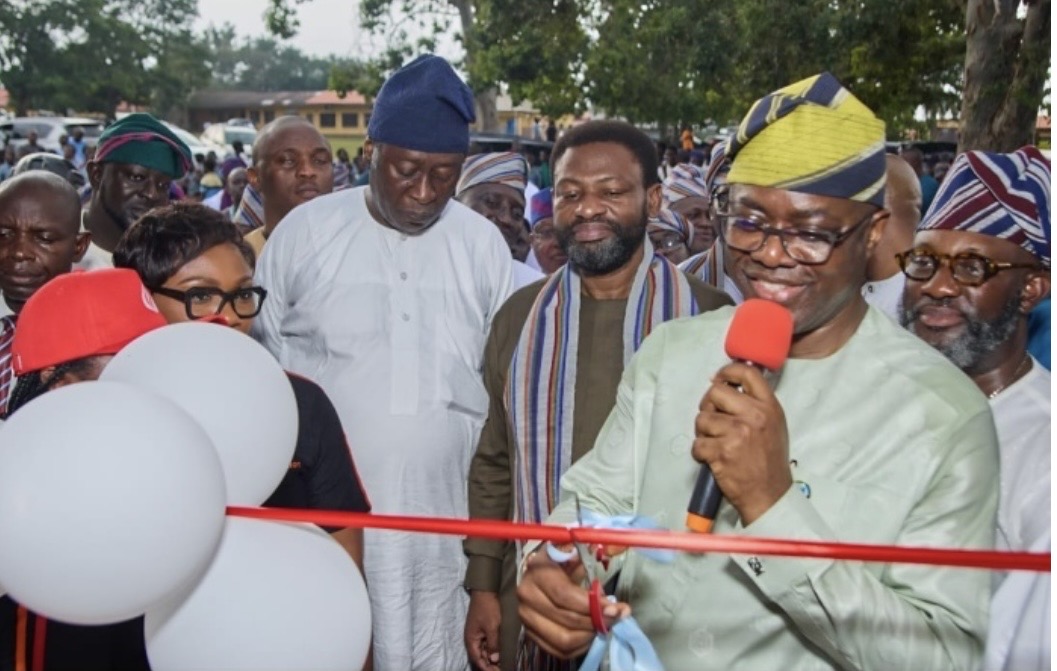

From left: Executive Director of Emadeb Energy and Emadeb Development Foundation, Mrs Olugbesoye Olujimi, Group CEO of Emadeb Energy, Mr Adebowale Olujimi, and Oyo State Governor, Seyi Makinde, after the commissioning of the renovated/equipped multi-million naira Chemistry and Physics Laboratories donated to Government College, Ibadan by Mr Olujimi, a member of Class of 1985, through Emadeb Development Foundation last Saturday
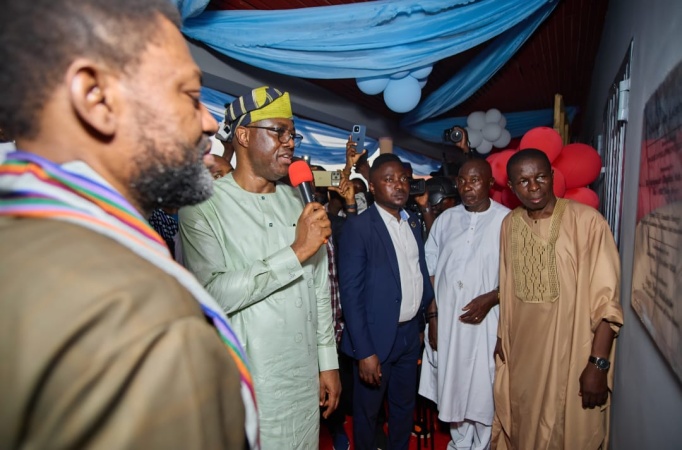
Oyo State Governor, Mr Seyi Makinde unveiling the plaque at commissioning of the renovated/equipped multi-million naira Chemistry and Physics Laboratories donated to Government College, Ibadan by Mr Adebowale Olujimi (left), member of Class of 1985 and Group CEO of Emadeb Energy, through Emadeb Development Foundation, at the 2026 AGM and reunion of Government College Ibadan Old Boys Association, GCIOBA, on Saturday

Interior of the 24KVA solar-powered renovated/equipped Chemistry and Physics Laboratories donated to Government College, Ibadan by Mr Adebowale Olujimi, member of Class of 1985 and Group CEO of Emadeb Energy, through Emadeb Development Foundation, the CSR and philanthropic arm of Emadeb Energy Group

Exterior of the 24KVA solar-powered renovated/equipped Chemistry and Physics Laboratories donated to Government College, Ibadan by Mr Adebowale Olujimi, member of Class of 1985 and Group CEO of Emadeb Energy, through Emadeb Development Foundation, the CSR and philanthropic arm of Emadeb Energy Group.
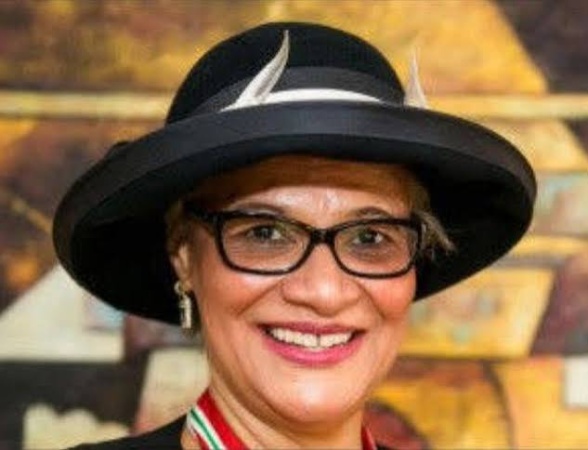
A retired justice of the Supreme Court, Amina Adamu Augie, has warned that corruption within Nigeria’s judiciary and legal profession is eroding public confidence in the administration of justice and transforming the courts from institutions of impartiality into what she described as “market stalls.”
Speaking in Abuja during the 40th anniversary celebration of the Nigerian Law School Class of 1986, popularly known as the Centennial Class, Augie said corrupt practices involving judges, lawyers and court officials had weakened the credibility of the justice system and damaged the public’s perception of the legal profession.
The retired justice called for practitioners found guilty of misconduct to be punished, regardless of their seniority, influence or professional standing.
Augie, who taught at the Nigerian Law School before beginning her judicial career, identified corruption, political interference, inadequate funding and delays in the administration of justice as some of the most serious challenges facing Nigeria’s judiciary.
“The third, which I will not dress up, is corruption. Where it exists on the Bench, at the Bar, or in the Registry, it poisons everything by turning the one place that a citizen should find impartiality into one more market stall,” she said.
She nevertheless cautioned against the blanket condemnation of the judiciary, stressing that the majority of judges and lawyers remained honest, hardworking and poorly remunerated.
According to her, the justice system must be designed in a way that protects judicial officers and other legal practitioners from undue pressure and temptation, rather than exposing them to conditions that make misconduct easier.
Augie expressed particular concern about the conduct of some senior members of the legal profession, saying their actions had contributed substantially to the decline in public trust in the courts and the wider justice system.
“Have we kept faith with them? In part, YES, in part, NO. Public trust has paid the price. The public today is quick to believe the worst of lawyers, and sorry to say, not always without cause,” she said.
“When a few senior members of the profession have been found to traffic in the corruption of justice, the damage is not to them alone; it stains the gown we all wear.”
She said rebuilding confidence in the legal system would require more than public relations campaigns or efforts to improve the image of the judiciary. In her view, the profession must demonstrate a willingness to discipline its members openly and fairly, without being intimidated by their status.
“Restoring that trust is not a matter of better public relations. It is a matter of conduct and a profession willing to discipline its own, without fear or favor, no matter how senior the offender may be in the legal profession,” she said.
The retired justice reminded lawyers that their foremost duty was to the court and the administration of justice, not merely to the clients who retained them. She said professional responsibility demanded honesty, candour, respect for judicial authority and commitment to the rule of law.
Augie urged lawyers to reject attempts to manipulate court proceedings, manufacture or distort evidence, delay cases unnecessarily or secure favourable judgments through improper influence.
She also warned that corruption could not be addressed in isolation from the broader conditions under which the judiciary operates. Inadequate funding, she said, posed a serious threat to judicial independence because a court that depended on the executive for basic infrastructure and operational needs could not be regarded as completely autonomous.
“A Judiciary that must beg the executive for a Courtroom roof, vehicles, or even the Judges’ entitlements is not fully free; financial autonomy for the Courts is not a perk for Justices and Judges, but a guarantee for litigants,” she said.
Augie further criticised the delays and high costs that continue to make litigation inaccessible to many Nigerians. She described delay as the “chronic disease” of the country’s justice system and said it had weakened public confidence in the courts.
Drawing on her experience at the Supreme Court, she said the apex court was burdened by an excessive number of appeals, including disputes that should ordinarily have been resolved at lower levels of the judicial system.
She recalled an appeal concerning the burning of 12 goats that eventually reached the Supreme Court, despite the enormous workload already confronting the court.
According to her, constitutional amendments were needed to narrow the categories of cases that could be taken to the apex court. Such reforms, she said, would enable Supreme Court justices to focus on matters involving significant constitutional, legal and national questions.
Augie also condemned the repeated failure of government authorities to comply with court orders. She cited the prolonged detention of former National Security Adviser Sambo Dasuki and Islamic Movement leader Ibrahim El-Zakzaky, despite judicial directives ordering their release.
She said the disobedience of court orders by public officials weakened the authority of the judiciary and sent a dangerous message that compliance with the law was optional for those in power.
Reflecting on the development of Nigeria’s justice system over the past four decades, Augie acknowledged that progress had been made, particularly since the country’s return to democratic rule in 1999. However, she expressed disappointment that justice remained slow, expensive and beyond the reach of many citizens.
She referred to Nigeria’s ranking of 120th out of 143 countries in the 2025 World Justice Project Rule of Law Index, describing the position as an uncomfortable indication of the country’s institutional weaknesses and the continuing challenges facing its justice system.
Augie called for comprehensive reforms to strengthen judicial independence, improve access to justice, modernise case management, reduce delays and restore ethical standards across the legal profession.
She urged members of the Class of 1986, many of whom now hold senior positions in the judiciary, government and legal profession, to use their influence to defend the rule of law and rebuild public confidence in the courts.
“If Governments obey the Courts, if its Judgments are enforced, if justice comes within a reasonable time and within reach of the poor, if the profession upholds its integrity and disciplines its own, Nigeria would be better positioned to secure its future”, she said. (Weekend Trust)
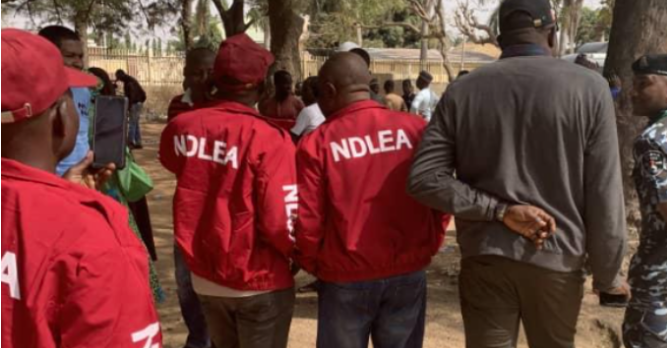
The National Drug Law Enforcement Agency (NDLEA) has intercepted 8,725 kilogrammes of tramadol powder worth more than ₦6.98 billion at the Apapa Port in Lagos and arrested a female passenger allegedly attempting to smuggle cannabis to Saudi Arabia.
The passenger, Fatimah Ahmad, was arrested on Friday, October 16, during the outward clearance of an Ethiopian Airlines flight to Jeddah via Addis Ababa at the Mallam Aminu Kano International Airport, Kano State.
The agency said operatives found 511.75 grammes of cannabis concealed in a gallon of palm oil she was carrying.
According to the NDLEA, Ahmad told officers that her cousin, Abubakar Yahaya, had given her the gallon. Yahaya was subsequently arrested at the airport car park.
The agency’s Director of Media and Advocacy, Femi Babafemi, disclosed the arrests and seizures in a statement on Sunday, detailing a series of anti-drug operations across several states.
At the Apapa Port, NDLEA operatives, working with the Nigeria Customs Service and other agencies, uncovered the tramadol shipment on October 2 during an examination of cargo declared as maize starch.
A confirmatory test at the agency’s forensic laboratory identified the substance as tramadol hydrochloride powder. When separated from its concealment on October 14, the shipment comprised 349 bags with a gross weight of 8,725 kilogrammes, valued at more than ₦6.98 billion.
At the Tin Can Port, also in Lagos, officers discovered 55 kilogrammes of Canadian Loud, valued at ₦165 million, hidden in a Toyota Sienna vehicle inside a 40-foot container on October 12.
The agency also reported the arrest of Elizabeth Chidera Kalu at Idumota Market on October 14, with 10,600 ampoules of diazepam injection and 6,500 tablets of Molly recovered from her store.
In separate operations in Mushin, two men, Idowu Daudu and Ahmed Oniyinde, were arrested on October 15 with 59.95 kilogrammes and 61.23 kilogrammes of skunk, respectively.
Another operation along Iyana Oba led to the interception of a truck allegedly carrying illicit drugs from Trade Fair Market. The NDLEA said 18,000 pills of tramadol 250mg were found in cartons labelled as Rambo insecticide. The suspects arrested were identified as Tajudeen Adeduntan, a loading manager, and his assistant, Azeez Sikiru.
In Edo State, six suspects were arrested during raids in Warake, Ivhiaro and Ewe/Irue communities in Owan East Local Government Area between October 15 and 16.
Those arrested included 85-year-old Grace Ehimeka, who was allegedly found with 179 kilogrammes of skunk, and Ayo Aigberadion, 53, with 220.8 kilogrammes. Other suspects were allegedly found with varying quantities of cannabis and other substances, including tramadol, Swinol and diazepam.
In Ondo State, the agency said operatives raided a cannabis farm in Okemoro Isinbode camp forest on October 17, destroying 7,500 kilogrammes of skunk cultivated on three hectares of land and arresting five suspects.
The operation also yielded 92 bags of skunk weighing 1,267 kilogrammes, 11 kilogrammes of cannabis seeds and three kilogrammes of fresh stems, bringing the total weight of the recovered exhibits to 1,281 kilogrammes.
In another operation in Owo, officers tracked 53-year-old Okunebe Ndidi to a hideout in Ameyinti on October 16 and recovered 25 bags of cannabis weighing 375 kilogrammes.
In Bauchi State, NDLEA operatives intercepted a Volkswagen Golf wagon at Ragwam village in Katagum Local Government Area on October 14, recovering 894,800 tramadol capsules and Exol-5 tablets from Shamsu Garba, 35.
The agency also said officers on patrol along the Bauchi-Gombe road recovered 291 blocks of cannabis weighing 265 kilogrammes from an abandoned vehicle at Tudun Natsira village. (Channels TV)
-
 Faith3 days ago
BREAKING: Anglican Church Places Archbishop Ibezim on Six-Month Leave, Bars Him From Church Duties
-
Faith1 day ago
Awka Anglican Diocese Rejects Ibezim’s Suspension, Threatens to Leave Church of Nigeria
-
News3 days ago
Tinubu Orders Rescue of Kidnap Victims, Demands Peaceful 2027 Elections
-
News2 days ago
BREAKING: Mbah Extends Enugu Movement Restriction to 10pm, Scraps Keke Ticketing
-
Politics1 day ago
Nigeria’s Weak Opposition and the Cost of One-Party Dominance: Can the Opposition Rebuild Before 2027?
-
News2 days ago
2027: Keke Riders Endorse Mbah, Tinubu
-
News3 days ago
Enugu Approves ₦32bn Legacy Gratuity Payment, Begins Disbursement Next Week
-
News20 hours ago
Catholic priest dies as crucifix falls on him during Mass