News
Anxiety over fresh kidnappers’, bandits’ attacks in Abuja, Kaduna


Security onslaught on terrorism raged across the country yesterday with the police deploying the newly launched Special Intervention Squad (SIS) in the bush of Bwari, Abuja where kidnappers have been making life unbearable for residents.
The security personnel are combing the bush to flush out the bandits and destroy their habitat.

They have already taken over a route in Ushafa, Bwari Area Council allegedly used by bandits to move their victims from Abuja into neighbouring states of Kaduna, Niger, Nasarawa and Kogi.
Sixteen men linked with terrorism in the FCT and other parts of the country have similarly been arrested and were paraded yesterday by the police in Abuja.
However, another gang succeeded in killing a secondary school principal at Kuriga, Chikun Local Government area of Kaduna State while yet another group abducted an FCT resident while he was driving home with his wife on Friday.

Three of the suspects paraded in Abuja — Idris Ishaku, Dahiru Salisu and Bala Umar — were arrested by the Inspector General of Police Intelligence Response Team (IRT) following the launch of the Special Intervention Squad (SIS) by Police Inspector General Kayode Egbetokun.
The suspects, who claimed to be working as farmers and security guards in Bwari, said they used the opportunity of their job as security guards to monitor the activities of residents, especially the rich ones.
Information gathered by them would then be passed to the gang for appropriate use in kidnapping or robbery.
The trio said they got paid after each operation.
One of those paraded yesterday was the alleged kidnapper Chinaza Phillip who was caught in the act on Thursday by the Kaduna State Police Command.
He was handed over to the Abuja Police Command on Friday.
He appeared on a stretcher yesterday.
The Force Public Relations Officer, ACP Olumuyiwa Adejobi, told reporters that the SIS foiled “another kidnap plot through technical intelligence.”
Involved in the attempt were Ishaku Salisu and Umar.
He said the police recovered from the suspects various weapons.
He said: “In a proactive move, following a report on the abduction of a victim from his house along with his Hilux van with Reg. No. RBC 90 DL, gray colour, by four armed men who disguised in a white Mercedes Benz 230 car, police operatives in an intelligence propelled investigation discovered that the victim was being taken to Kano State, but was dispossessed of his ATM cards in Kaduna while the sum of Five Hundred Thousand Naira (N500,000.00) was transferred from his account.
“The suspects however ran out of luck as they were intercepted by Police operatives at a filling station in Kaduna where three of them escaped, while one by the name Chinaza Philip Okoye Michael was arrested, the victim rescued unhurt, and the said Hilux Van recovered.
“It was discovered that Chinaza Philip Okoye Michael and his accomplices had earlier been arrested sometime in November 2023 and charged for similar offences, at the High Court, Kwali, Abuja, but went back to committing even worse crimes while on court bail.
“Also, operatives of the DFI-IRT office intercepted one Everest Magaji, a gunrunner, during negotiation with some notorious bandits who are currently at large, for the purchase and supply of illicit firearms and ammunition. Eleven (11) Pistols, and Two (2) Pump Action Guns were recovered from the suspect.”
Continuing, Adejobi said: “I am proud to announce to you today that the result of our relentless efforts in fighting crime is surely paying off.
“In today’s parade of suspects, we have a total of 16 suspects arrested by the operatives of the Intelligence Response Team (IRT) and the Anti-Violence Crime section of the FCT. The anti- kidnapping section of the FCT has arrested some suspects.
“Those suspects have all given their confessional statements and are still providing our operatives with more relevant information to help in their operation of other criminals and to further tackle crimes and criminality.
“We have also recovered a total of five AK 47 guns, 11 pistols, two pump action guns, one English made pistol, and 65 rounds of 7.62mm of live ammunition that were used for AK 47, seven rounds of 9mm live ammunition for pistol from the apprehended suspects which will serve as evidence for prosecution of these various cases.
“It is important to us to know that immediately after the IGP launched the Special Intervention Squad (SIS) in the Federal Capital Territory (FCT), these achievements started rolling in.”
On Ishaku, Salisu and Umar, the PPRO said they were arrested on Tuesday after the commander “received intelligence that a GSM number under surveillance belonging to one Idris Isiaku a.k.a. Yellow made a call to another number, informing the recipient of the call on his plans to carry out a kidnapping operation at Degiem House, and further stated that he had invited some other kidnapping gangs who had promised to execute the mission with him.
“On the 16 January, 2024, Idris Isiaku held another GSM belonging to another who was later identified as Dogo and informed him that the civil servant in their captivity is a very wealthy man and should not be let go for any sum less than N50 million.
“He further stated that he was still monitoring one other person (name withheld for security reasons) located in Niger State.”
He said investigation so far has shown that the trio was involved in several kidnapping activities in the FCT including some that occurred in the Bwari axis.
He said the police were intensifying efforts to rescue the hostages in their captivity and make sure that other members of the gang are apprehended immediately.
“I want to say that with these ones with us, we are going to heave a sigh of relief in the FCT.”
Idris told reporters that he was lured into kidnapping by love of money.
He confessed to have taken part in two operations.
His words: “I am 27 years and I live in Bwari. I am not married. I am a farmer, I work as a security, and money made me join kidnapping business.
“I have joined in two kidnap operations. Last year, I joined another operation. The first operation of Kuchiko in Bwari, I collected N600,000. Then the second operation, I collected N500,000 around Bwari area.
“I don’t handle guns, but I work with the people that use guns during operations. I am an informant .”
Salisu said: “I stay in Bwari. I am the supervisor of the camp where these kidnappers come and hold their meetings before they go out for operations.”
Reporters were later taken to Bwari where the SIS was combing the bush to fish out kidnappers.
Police take over kidnappers’ Abuja route, arrest own men for kidnapping, extorting of $3000 from victim
The SIS Commander, Police Commissioner Ben Igwe, told reporters that the squad had taken over a route in Ushafa, Bwari Area Council allegedly used by kidnappers to move their victims out of Abuja into Kaduna, Niger, Nasarawa and Kogi states.
“This route where we are is the bandits’ route. From Oshafa here, they’ll move through this route and go to Pappe, from Pappe they’ll enter areas like Maitama or Asokoro,” he said.
“So, when they pick someone, this is the route they pass through. If they pick someone from Maitama or Asokoro or Pappe, they’ll go towards the back of Pappe. From this position that we are, if you move forward, you’ll be surprised how we’ll descend into Maitama.
“This is their route. What we have done now is to deploy a lot of intelligence on this route because we have a lot of intelligence at our disposal. This is one of their major routes. We are inside their route now.”
He assured residents of FCT that the police were doing everything possible to dislodge the kidnappers.
Igwe called for the cooperation of Bwari residents to further achieve positive and needed result.
In a curious development, the Rivers State Police Command confirmed that it had arrested some of its personnel for allegedly kidnapping a man in neighbouring Abia State and extorting $3,000 from him.
The suspects were alleged to have moved their victim to Rivers and Bayelsa states through Ughelli, Delta State after arresting him.
They later abandoned him in Port Harcourt after collecting the money from him.
Spokesperson for the Command, Grace Iringe-Koko, confirmed the incident, saying the matter was under investigation.
Iringe-Koko, in a statement titled “Re: $3000 USDT Transferred to Police Officers WALLET”, said: “The Police personnel have been identified and arrested while the investigation is in progress.
“The outcome will be made public as soon as it is concluded.
Activities of informants undermining war against banditry in Katsina, says CP
Assessing the war against banditry in Katsina State, Police Commissioner Aliyu Musa said the major challenge for him and his men was the increasing activities of informants who were supplying intelligence to criminals.
Musa, speaking during an interactive session with journalists in Katsina, said the situation was undermining police efforts
“The activities of informants are our major challenge,” he said.
He added: ’’Whenever we planned an operation, the bandits would have already been informed about our coming, and they would have taken measures to shield themselves on our approach.”
He said despite this development, the police “are making progress in the war against banditry and other associated crimes, because we have the capacity to defeat them.”
He said 369 rapists, 258 armed robbers and 64 kidnappers were arrested by the command last year.
He also stated that the efforts of its operatives led to the safe rescue of 171 individuals who had been abducted
He said ’’a total of 1,627 suspects were apprehended in connection with 938 reported major cases. Of these, 395 cases have been taken to court and are currently undergoing prosecution in competent courts across the state.
“Furthermore, a total of 495 suspects were arrested for a variety of other offences’’.
Bandits kill school principal, abduct wife, son in Kaduna
Killed at Kuriga, Kaduna State by gunmen on Friday was Malam Idris Abu Sufyan after he put up resistance against attack on his family.
The bandits had stormed the late Sufyan’s residence in the community on the Kaduna-Birnin Gwari highway with a view to abducting his wife and baby.
It was gathered that the deceased resisted the action of the gunmen who turned their guns on him.
He died on the spot.
The terrorists still abducted their targets.
Sufyan was, until his death, principal of Government Secondary School (GSS) Kuriga.
The Kaduna State Police Command could not confirm the incident at press time. The Command’s Public Relations Officer, ASP Mansir Hassan, told The Nation that he would make enquiry and get back to our correspondent.
However, Senator Shehu Sani, who represented Kaduna Central in the 8th National Assembly, said on his verified X handle that the bandits “succeeded in kidnapping two women.”
He said: “Mallam Idris Abu Sufyan, Principal GSS Kuriga, Chikun LG, Kaduna State was killed by bandits when he tried to resist abduction.
“They succeeded in kidnapping two women in the process. May his soul rest in peace. Amen.”
A resident of the village, Aliyu Kuriga, said the late principal was attacked in his house on Friday night and was shot before his wife and son were taken away by the bandits.
Gunmen abduct man driving home with wife in Abuja
Gunmen also abducted one Abdullahi Sabo, a resident of the Federal Capital Territory (FCT) while he was driving home with his wife on Friday.
The gunmen Intercepted Sabo’s vehicle at Sabon-Lugbe on the Abuja Airport Road.
The victim was driving in his grey Lexus SUV with registration number ABC 769 TP when the gunmen struck.
They opened fire on Sabo’s vehicle and deflated the tyres of the car.
This incident occurred less than 48 hours after gunmen invaded the Army Estate in Kurudu in Abuja, and abducted some residents.
All efforts to get the reaction of the Federal Capital Territory (FCT) Police Public Relations Officer, SP Josephine Adeh, yesterday were futile as calls and text messages to her phone went unanswered.
Two kidnapped in Oyo community
The wave of kidnapping has spread to Oyo State where the Nigeria Security and Civil Defence Corps (NSCDC) confirmed yesterday the abduction of two persons.
The NSCDC said the two victims were kidnapped at Out in Itesiwaju Local Government Area of the state.
The victims were identified as Dayo Olayanju and one Mrs Obasola, whose husband, Kehinde, was said to have escaped with gunshot wounds.
The News Agency of Nigeria (NAN) quoted spokesman of the corps Samuel Opabiyi as saying: “Yes, it is true.”
Opabiyi said the police had taken over the investigation because “it falls under their purview.”
A community leader in the local government area, who preferred anonymity, said the incident happened in the early hours of Saturday.
“They were kidnapped in different areas. One was kidnapped on Okeho Road.
“I have confirmed it. Two people were kidnapped, but we don’t know where they have been taken to as at now,” the community leader said
However, efforts to get the reaction of the Police Public Relations Officer of the Police Command in the state, Adewale Osifeso, yielded no result as calls put through to his telephone line were not answered as at the time of filing this report.
Army Estate kidnappers demand N30 million ransom
It was gathered yesterday that the brains behind the Army Estate kidnap have demanded N30 million as ransom to release the wife of Barrister Cyril Adikwu and his two in-laws kidnapped.
Adikwu, who had escaped while the kidnappers stormed his residence in the estate, said he was in communication with the kidnappers and they had demanded that the ransom be paid within a time frame.
He said: “It all happened on Thursday night at about 10 pm when a vehicle containing those who were kidnapped drove into my compound, and then all of a sudden, the kidnappers followed the vehicle into my compound.
“I was upstairs and heard strange sounds, so I peeped through the burglary door upstairs and saw one of the people kidnapped on the floor. I asked what was going on there, and she said, ‘I don’t know. These men are asking me to go down.’ Then it occurred to me they were kidnappers.
“Then I started screaming ‘Kidnappers! Help! On top of my voice. At this point, they started shooting at me upstairs. I was able to escape and they started shooting guns in the air while they took the three of them away.
“There were about eight of them, and they walked through the bush path over the hill to the other side.
“Not up to 40 minutes later, I was called to provide a ransom. I don’t want to mention the amount because already false information is everywhere in the media about the whole incident. But I can assure you it’s more than N30 million.
“I am traumatised right now after the whole incident, and the kidnappers have been calling me and have given me a time frame.”
Police raid criminals’ hideout in Enugu, arrest 3, recover firearms
The police on Friday raided a criminals’ hideout at Centenary City, Enugu and arrested three armed suspects.
Other gang members however fled the scene before they could be arrested.
Police spokesman in Enugu State, DSP Daniel Ndukwe, stated on Saturday that police recovered eight pump action guns, four live and 26 expended cartridges at the scene.
He added that police also recovered one machete, four units of solar-powered CCTV cameras, 13 GSM phones, one DVD player, four bags, clothes and objects suspected to be charms from the hideout.
“Preliminary investigation showed that the criminal elements had been using the hideout for the design and perfection of armed robbery and kidnapping, among other crimes.
“The suspects shall be arraigned at the conclusion of investigations,’’ Ndukwe stated.
Police in the state also enjoined residents to remain law-abiding, vigilant and to continue to give credible and actionable security information to the police.
Such reports could be lodged through telephone numbers: 080320 03702, 08075390883, 08086671202, or 080988 80172, or to infoenugupolice@ gmail.com, Ndukwe stated.
The Nation









• Pensioners hail governor as promise keeper
• Mbah: No retiree should go to bed hungry
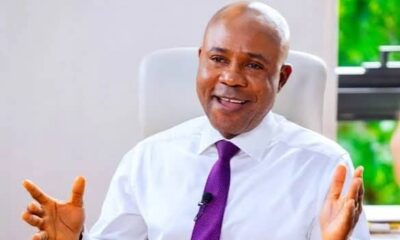
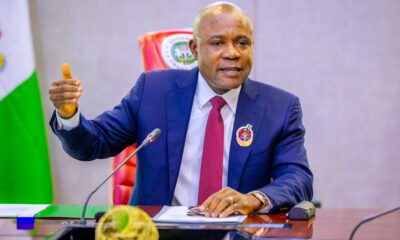
Enugu State pensioners under the auspices of the Nigeria Union of Pensioners (NUP) have hailed Governor Peter Mbah for keeping his campaign promise to clear legacy arrears, describing their decades of disappointment after serving their fatherland as a harrowing experience.
The pensioners spoke as retirees started receiving their gratuities dating back to the year 2000, with some also extending to the military era, saying the development had restored life to their bodies.
The Chairman, Enugu State chapter of NUP, Ikechukwu Ekere, confirmed the development at the weekend, describing it as “an emotional moment for pensioners, many of whom had long given up hope of receiving their gratuities in their lifetime.”
“Yes, I can confirm to you that our members have started receiving the alerts. Governor Mbah is a promise keeper; he has done it again and we can’t thank him enough,” he said.
In the same vein, the Caretaker Chairman of the Nigeria Union of Pensioners, Local Government Staff Pensions Board Branch, Kenneth Ugwueze, told journalists that the development had restored hope and joy in many homes, saying that Mbah had, once again, proven himself as a leader who could be trusted.
“You know what it means for a governor to pay debts incurred by many governors before him? It takes a large quantity of milk of human kindness. We are happy to see a day like this in our lifetime. We will continue to pray for him.
“We are also grateful and happy with the new dimensions brought in by our governor in pension administration, especially in the local government system.
“Before now, local government workers and primary school teachers who retired had to wait for two years before receiving their pensions. But since the conclusion of the verification exercise in July 2024, no pensioner in the local government system has been denied pension. We have been receiving our pensions as and when due.
“Now that our people have started receiving alerts for their gratuity, it is a thing of joy,” he said.
Some beneficiaries of the ongoing payments also expressed gratitude to the governor, describing the development as a rekindling of hope after years and devades of waiting. They said previous governments had not paid them even in the days of excess crude revenues.
Mr. Luke Obi Ezea, who retired in 2014, said he had since resigned himself to fate and put everything in the hands of God.
“I put in 35 years in service. Already, I had put everything in the hands of God because previous governors had made promises, but to no avail. They were just empty promises at the end of their eight years. But Peter Mbah is an action governor and keeps his word,” he stated.
Mr. Sunday Nwadi, a 2015 retiree, described Mbah as a godly and listening governor who does not play politics with the welfare of his people.
“I am enjoying today because, apart from this gratuity, he is not owing monthly pensions. He is up to date. He is not like the others, who would owe us pensions for many months. Nothing will happen to Mbah. He is returning for a second term.”
Susanna Emehelu, whose husband retired in 2013, said the man had been sick for a long time, and they had been hoping against hope that the gratuity would come to help ameliorate their challenges.
“When I broke the good news to him, he was so happy and asked me to rush to the office to confirm. Now, he is so happy that he would eat the fruits of his labour in his lifetime. May God bless our governor,” she stated.
Mr. Paul Ozoeze, a 2010 retiree, said the gratuity payment had restored life to his body, noting that it had been nearly 20 years of suffering for him.
Meanwhile, the Accountant-General of Enugu State, Mr. Tony Okenwa, recalled that Mbah had always insisted during discussions leading up to the verification and payment of backlogs that no senior citizen should go to bed hungry.
“These are old debts. Some of them date back even to the military era. But the governor has said that no retiree will stay without receiving his or her pension and gratuity, and he is very passionate about it.
“Whenever I went to him, he would ask: ‘Do you mean that people retire and then don’t go home with their gratuity?’
“He could not understand how somebody would work for many years, retire and still not receive what he had earned,” Okenwa said.
He said the State Executive Council, after several layers of verification, approved N32bn, with the governor releasing an initial N10bn, assuring that the releases would continue until the entire liabilities were cleared.
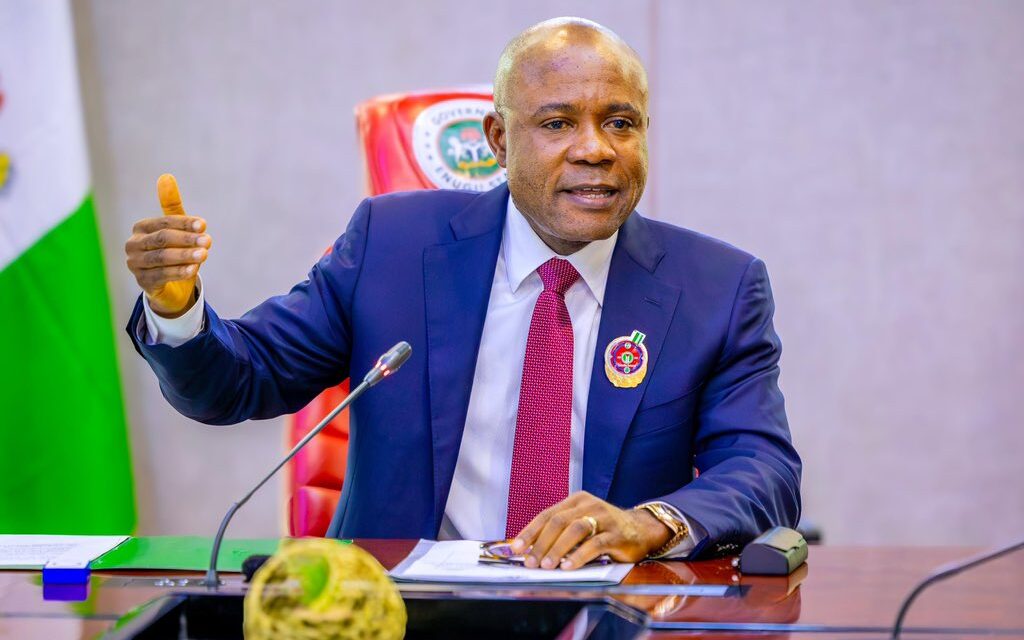
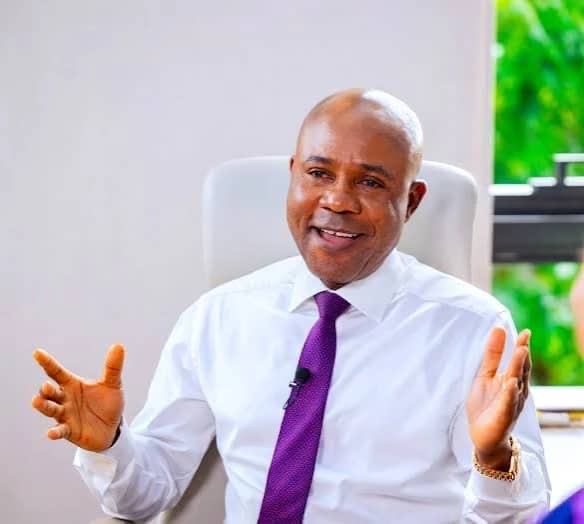
• Enugu needs another four years of my leadership to consolidate gains, says governor; defends Smart Green Schools, taxation, water supply, roads, 660MW power project
By Tony Edike
Governor Peter Mbah of Enugu State has defended the economic reforms of President Bola Tinubu, warning that bringing back the old fuel subsidy regime could worsen Nigeria’s economic challenges, trigger further currency depreciation and deepen poverty.
In this wide-ranging interview, Mbah speaks on his administration’s performance since assuming office in May 2023, explaining its investments in education, healthcare, agriculture, infrastructure, water supply, electricity and security.
He also addresses public concerns over taxation, delays in road construction, structural defects in some Smart Green Schools, the proposed 660-megawatt coal-fired power plant and allegations of marginalisation of Enugu North Senatorial District.
The governor defends his administration’s policies, outlines the challenges confronting some projects and makes a case for continuity beyond 2027, arguing that Enugu needs another four years of his leadership to consolidate ongoing investments and realise its development ambitions.
Looking back at your campaign promises in 2023, do you think the vision you presented to the people is beginning to take shape?
Before the 2023 election, we imagined what Enugu could become and presented that vision during our campaigns. We challenged our people to stretch their imagination and consider what the state could achieve if they gave us their mandate.
We imagined an Enugu where young people could build their futures, businesses would flourish, and children would receive an education that prepares them for the future. We also envisioned a state where people have access to quality healthcare, live securely and take pride in their environment.
I am excited to engage our people and hear whether they believe that ambition is beginning to take shape or whether it still exists only in their imagination. That is why I welcome this engagement.
Look around you. We are sitting in an international conference centre. Imagine an Enugu without such a facility a few years ago. Today, it has opened its doors to Nigeria and the world, creating limitless opportunities for our businesses and people.
Beyond this facility, we have the Enugu International Hospital, which is about to be commissioned; roads connecting our communities; improved transportation; Enugu Air; the revitalisation of existing industries and the establishment of new ones.
Coming from the business world, I understand the importance of performance management reviews, where promises are measured against results. That is essentially what we are doing here: measuring our promises against the results on the ground. I look forward to this engagement.
There has been considerable attention on the Smart Green Schools project. However, focusing on budgetary allocation and performance, what has education received under your administration?
Education was one of the first sectors we prioritised when we assumed office. We examined the data and became concerned about the situation. We recognised that if we wanted to eradicate poverty in the long term, build wealth and make Enugu a place where young people could build their futures, we needed an aggressive intervention in the sector.
Over the last three budget cycles, we have allocated an average of 33 per cent of our total budget to education. The lowest allocation was about 32 per cent.
We made that commitment because we understood the connection between education and development. It was never simply about building Smart Green Schools or creating beautiful physical structures. We recognised that the entire education sector required an intervention similar to an emergency declaration.
We could not continue to allow our children to go through the motions of learning without acquiring the relevant skills required in the modern world.
We have transformed the education system, including how we approach early childhood learning. For the first time in the history of the state, children from the age of three can access early childhood education in public schools on a large scale.
Beyond learning, we are using the same platform to intervene in their healthcare. When a child enters the system at age three, we assess the child’s health profile.
Our Smart Green Schools have clinics, each manned by a registered nurse. This enables us to assess the children’s medical records. Some of them, particularly those from rural communities, may not even have medical records. We help regularise those records and ensure they receive the necessary vaccinations and other preventive healthcare they should have received before the age of three.
We also assess their nutritional status, including stunting and wasting, and monitor their height and weight to ensure proper development.
The children progress through nursery, pre-primary one and pre-primary two before moving into the Basic One to Basic Nine system.
Previously, children attended primary school from Primary One to Primary Six, wrote the common entrance examination and then moved to another school. Parents had to spend additional money to secure admission for them.
We have eliminated that interruption in our Smart Green Schools. A child can start from Basic One and progress to Basic Nine without interruption. Technically, we have 12 years of compulsory and free education.
Governor Peter Mbah
And when we say free, we mean genuinely free. There are no registration fees. Parents do not have to buy uniforms because we provide them. Textbooks and notebooks are also provided free of charge.
We have equally transformed the teaching and learning methods. We have moved away from the traditional approach to experiential learning, where children acquire knowledge through practical experience.
Beyond digital skills, our schools have robotics and artificial intelligence hubs, as well as innovation hubs where children learn to build robots and acquire other practical skills.
Learning is no longer a one-way process in which teachers stand in front of classrooms and ask children to memorise and repeat information.
The children now see their classrooms as creativity hubs and themselves as potential problem-solvers. They are exposed to real-life social problems and taught how to develop solutions.
Some Smart Green Schools have reportedly experienced structural problems, including roofs being blown off during heavy rainfall. Are the schools we have today what you envisioned before assuming office?
We are talking about projects of enormous scale. In the last three years, we have built 268 Smart Green Schools. These are outstanding structures, and accomplishing such a feat could ordinarily take 10 to 20 years.
When you fast-track projects of that magnitude, you may encounter teething problems. We are not oblivious to the challenges, and the important question is whether we are prepared to address them. Certainly, we are.
Some of the issues people have observed involve physical defects, including roofs being blown off. These are challenges we are addressing, and we will ensure they are resolved.
We fast-tracked the projects because we wanted to achieve them within a short period. We could not afford to wait indefinitely. In our book, tomorrow is here.
We wanted to execute these projects on a large scale so that no child would be left behind.
We could have built just three Smart Green Schools, one in each senatorial district. That would still have been a significant achievement. We could even have settled for 17, one in each local government area.
But we went further and built 268 schools because we wanted every child in Enugu to have access to quality education.
Regarding the teething problems, including structural defects and roofs being blown off, we are addressing them and will ensure that all the schools are fit for purpose.
Does the decision to fast-track the projects absolve the contractors of responsibility for the defects?
Certainly not.
We have records of all the contractors. Those whose projects have defects are expected to return and fix them. Contractors who have been recalcitrant are blacklisted, and there are consequences for their actions.
We also obtained advance payment guarantees from all the contractors. Where necessary, we have the option of calling up those guarantees.
Your administration promised to revitalise agriculture, particularly palm oil production, and develop infrastructure to support sustainable growth. What has been achieved so far?
When we assumed office, we upgraded the Ministry of Agriculture to the Ministry of Agriculture and Agro-industrialisation. We did not change the name simply for cosmetic reasons. We recognised agriculture’s contribution to our GDP.
Our target was to grow the state’s GDP sevenfold in eight years. We therefore needed to concentrate on the critical sectors driving that growth, and agriculture was number one.
We immediately set out to activate the state’s dormant agricultural assets.
First, we entered into a joint venture with Pragmatic Farm to reactivate United Farm Products Limited, now known as Enugu United Farm Products Limited (EUPPL).
The joint venture is expected to attract an investment of about ₦100 billion into the plantation.
Today, the plantation is active and covers approximately 6,700 hectares. Some of the trees had become unproductive because of their age, but more than 2,000 hectares have now been cultivated and are producing. We have also rehabilitated some of the old trees and returned them to production.
We have equally reactivated what used to be Anambra Vegetable Oil Products (AVOP), now known as Enugu Vegetable Oil Products (EVOP).
We are producing palm oil at the UPPL plantation, and we are taking the process further. We will soon receive equipment for the refinery because we want to process the palm oil into vegetable oil and other related products.
Another example is the former Songhai facility in Heneke, Ezeagu. It was dormant, but today it is active. We are working with a private investor, Tribu, and it is now known as Tribu Songhai Farm. The facility covers about 10,000 hectares.
The Sunrise Flower Mill is another example. It was previously dormant, but it is being reactivated through the cultivation of 10,000 hectares of cassava. The facility is also being upgraded to process cassava in addition to wheat.
We have six pilot farm estates under development. Our plan is to establish at least 260 farm estates, with each ward having a minimum of 200 hectares.
Each estate will have perimeter fencing, warehouses and the necessary machinery. The objective is to help smallholder farmers transition from subsistence farming to mechanised agriculture.
We also have over 167,000 hectares of land available as a land bank for commercial farmers. These are lands freely donated by communities to the government to attract investors, create employment and generate wealth.
We welcome investors interested in our agricultural sector. They are already coming, and we are engaging with several of them. Examples include investments in Isi-Uzo and Adani, as well as our partnership with Ellah Lakes Plc.
We have also established a tractor assembly plant. More than 60,000 farmers are in our database, cultivating over 80,000 hectares of land. We have the geographical coordinates of their farms.
A few months ago, we distributed over 60,000 bags of fertiliser. Unlike some states that charge farmers for such support, we distributed ours free of charge.
We also provided other agricultural inputs, high-yielding seedlings, handheld tractors and equipment to improve production.
However, our focus is not limited to production. We are also investing in processing. We are building agro-transformation centres across the three senatorial districts, in addition to the Special Agro-Processing Zone, which will serve as the main production centre.
We are also building what will become the biggest ranch in the country, with the capacity to accommodate more than 20,000 cattle. It is known as the Integrated Livestock Hub and is being developed around Obahu and Umualo.
Additionally, we secured Federal Government approval for Enugu to be one of three states where an Integrated Poultry Hub will be established. The other states are Kaduna and Oyo.
On water supply, would you say Enugu State now has a reliable system that meets residents’ needs?
I know this question will come up, particularly regarding my 180-day commitment. I promised that within 180 days, water would flow in every household. We made that commitment because we understood how important access to water was to our people.
I recall during my campaign seeing children queuing to fetch water from tankers. I understood that the absence of water could keep a child out of school or prevent the child from doing homework because of the time spent searching for water.
Before making that commitment, I had already begun analysing the situation. Between my election and inauguration, I examined the production segment, particularly the upstream capacity.
I discovered that the state was producing only about two million litres of water daily, whereas Enugu needed approximately 80 million litres to ensure adequate supply across the city.
We immediately front-loaded the procurement process because some of the equipment required were long-lead items. They were not readily available, and some had to be customised. Procuring certain equipment, particularly the major pumps, could take about four months.
By front-loading procurement, we saved at least two months. Two months into our administration, the pumps arrived, and we began increasing production. We also reactivated the Ninth Mile water scheme, which had been dormant for years.
By the 180th day, we had increased production capacity to 120 million litres daily.
However, as production increased, the pipes began to burst. The existing pipes had become brittle and exceeded their design lifespan. We also had to contend with asbestos pipes and situations where buildings had encroached on the pipelines’ rights of way.
We faced a difficult choice: demolish buildings constructed on the rights of way or develop a new distribution network.
We decided that these were our citizens and that we did not want to demolish their buildings. Instead, we began reconnecting the network and establishing new connections.
Today, Enugu has the production capacity to serve the entire city, with a buffer of more than 50 per cent. Our challenge is ensuring that water reaches the last mile.
We have divided the city into approximately 14 zones, and work is ongoing across all of them to establish last-mile connections.
The process is slower because of the obstructions we encounter. We have also procured thrust-boring equipment to enable horizontal drilling, which will eliminate the need to cut open roads in many cases.
We will solve the water problem. I understand its importance to our people, and I receive daily briefings on progress in the sector.
Residents continue to complain about the condition of roads across the state, particularly delays in completing some projects. What is responsible for these challenges?
You can imagine how I feel whenever I notice that the weather is changing and the rainy season is approaching. We have a limited period of dry weather each year during which we can effectively undertake road construction.
If you fail to take advantage of that dry-season window, you may have to wait until the next year. No matter how much pressure you put on contractors, there are certain construction activities they cannot undertake during persistent rainfall without compromising quality.
I have often wondered whether there are innovative ways to undertake road construction even during the rainy season.
Unfortunately, we have barely five months in a year to carry out road construction effectively.
For instance, we expected the dry season to begin early this year. That was why I became disturbed when I saw the rain recently.
We had experienced only two days of dry weather, and I had already informed contractors that the rains were over and that they should return to their sites.
Those roads have been fully cash-backed. They have been fully funded. In fact, for many of the projects, contractors have not even completed work to the extent of the payments already made to them.
It is unfortunate that they cannot proceed while the rains persist because certain construction activities cannot be carried out during the wet season without affecting the quality of the roads.
Poverty eradication, zero hunger and ease of doing business were among the measurable indicators in your 2023 manifesto. However, taxation remains a major complaint among residents, with traders alleging that your administration is overtaxing them. What is your response?
Thank you for raising the issue of taxation because it is one of the allegations that have been repeated so often that some people are beginning to accept them as truth.
I think those who believe we are excessively taxing the people are looking at the growth recorded in our internally generated revenue (IGR). They probably cannot imagine how such growth could have happened within this period, so they conclude that we must have imposed additional burdens on the people.
That is far from the truth.
I have explained this on several occasions. We cannot legislate on taxation in areas outside the state’s constitutional competence. Personal income tax rates, company income tax, value-added tax, withholding tax and other related taxes are legislated upon by the National Assembly.
Perhaps what some people consider taxation may, in a generic sense, be payments for services, such as waste disposal, business premises fees, water charges, Certificate of Occupancy fees, estate management fees and land use charges.
If you examine the fees we charge for those services, you will understand what we have done.
We enacted a state law to consolidate the charges because businesses previously complained about multiple taxation. People were asked to pay different taxes, fees, rates and levies.
We decided to consolidate these payments into one annual charge.
How much did we decide to charge? ₦36,000 annually for businesses. This covers business premises fees and several other rates. Once you make that payment, nobody is permitted to approach you for additional payments for those services.
That amounts to barely ₦100 daily or about ₦3,000 monthly.
When the controversy became intense, I exercised caution and set up a committee, headed by the Secretary to the State Government, to compare our charges with those of other states.
I directed the committee to examine what was obtainable in neighbouring states, Lagos and Abuja. After about three weeks, I received its report, which showed that Enugu charged the lowest rates in the South-East for those services.
Regarding land use charges, before the committee was inaugurated, the fees were around ₦150,000 and, in some cases, ₦200,000. We reduced them significantly.
We also expanded the tax net. When we assumed office, barely 9,000 units were receiving demand notices for land use charges. But a survey showed that there were more than 800,000 billable household units.
I decided that since we were expanding the tax net, we should also reduce the rates to encourage voluntary compliance. We brought the charge down from over ₦100,000 to ₦25,000.
We also received complaints about people going to markets, apparently from local governments, to collect money from traders. I announced that the practice should stop. Nobody should collect ₦100 or ₦200 from our market women.
We have also made recent announcements concerning tricycle operators, although those charges have little impact on our IGR.
So, how have we grown our IGR?
First, we plugged leakages. We were shocked by the extent of financial leakages in the system. Today, nobody collects cash on behalf of the state government. All payments go into the Treasury Single Account.
We have also activated dormant government assets, which are now generating substantial revenue.
Before we came into office, the government was spending money to sustain Nike Lake Hotel and support its management. Today, we earn over ₦300 million from the arrangements we have put in place.
For Hotel Presidential, the government earns over ₦1 billion. The International Conference Centre is also generating substantial revenue.
The same applies to our partnerships in United Farm Products Limited, where the government owns 40 per cent; Sunrise Flower Mill, where we also own 40 per cent; and Tribu Songhai, where our interest is about 30 per cent.
The government is now generating revenue from assets that were previously dormant. That is what you are seeing reflected in the growth of our IGR.
Property owners have also complained about capital gains tax. What is your administration’s position on this?
I am yet to understand whether you are referring specifically to capital gains tax.
You cannot be charged capital gains tax if you have not carried out a transaction. Capital gains tax arises when you sell your land or house and there is a difference between the price at which you acquired the property and the price at which you sold it.
The government then charges a percentage of that gain. It is not a tax whose rate is legislated by the state government. Capital gains tax is also within the exclusive legislative competence of the National Assembly.
Land use charge, of course, is something we legislate on, and, as I have explained, we have done everything possible to reduce it.
Nobody should charge you capital gains tax if you have not carried out a land transaction. It becomes applicable when you complete a transaction involving the sale of land or property.
Is your administration open to engaging businesses differently, particularly through bespoke arrangements to address concerns about taxation and other business-related issues?
When we committed ourselves to growing the state’s economy sevenfold, we knew that businesses and private capital would drive that growth.
We are therefore not just interested in creating an environment where businesses can thrive. In many cases, we get directly involved. We support businesses and even inject funds where we believe such assistance will help them survive and grow.
We do this deliberately because we appreciate the employment opportunities they create and the wealth they generate for the state.
These are young people taking initiatives and investing their resources. We recognise the benefits that come when businesses succeed.
I am therefore more than happy to engage directly with business owners on specific areas where they want government intervention.
You promised that the groundbreaking ceremony for a 660-megawatt coal-fired power plant would take place in July, with a 24-month construction timeline. That promise is yet to be fulfilled. What is happening?
That brings me back to the issue of the rainy season. We have been ready since July.
In fact, when we experienced those two days of dry weather, I was already speaking with our partners about commencing preparations.
The plant has been procured. It is not the state government that procured it; we are working with an investor.
The plant is ready. What we need to do is prepare our base, which involves the civil works. We also need to construct an access road to the location because the plant will be situated at Amansiodo, close to the fuel source.
The plant will be powered by coal, and Amansiodo has our largest coal reserves. That is why we selected the location: we wanted the power plant to be close to the source of production.
As I speak to you, the plant is being brought in from China. Its commissioning process is ongoing, although that also takes time.
Everything remains on track.
The reason we have not held the groundbreaking ceremony as promised in July is the rainy season. We are hoping that once we have a favourable weather window, we will hold the ceremony and commence the civil works.
How would you assess President Bola Tinubu’s economic policies, particularly against the backdrop of the hardship Nigerians are experiencing?
When you assess Nigeria’s macroeconomic indicators, you will notice that before the bold and courageous decisions taken by President Bola Ahmed Tinubu, the country was almost at an economic precipice.
I am sure you remember the Ways and Means advances we had accumulated. We were talking about more than ₦27 trillion.
What that meant was that we were in a hole, and the only way we were trying to get out was by digging deeper. I do not think that was sustainable.
If we had continued along that trajectory, we could have witnessed total economic collapse and possibly become a failed nation.
The President could have come into office and decided that, because of the ₦27 trillion Ways and Means advances, we should continue printing money and digging deeper. That would have been disastrous.
Even the economic hardship we are discussing today, including pressure on households and unemployment, would have been relatively minor compared with what we might have experienced if those decisions had not been taken.
For a nation to function effectively, it must first address its macroeconomic pressures. Without stability at that level, sustainable growth becomes difficult.
For example, our foreign reserves are currently about $56 billion to $58 billion, which is the highest level in almost two decades. They can sustain us for approximately 10 to 11 months.
Look at the foreign exchange market. It has become relatively stable because we have allowed it to be driven by market forces. The exchange rate was floated rather than being artificially controlled.
Previously, we were controlling what we could not back. That was why our foreign reserves were declining rapidly because we were not generating the corresponding foreign exchange.
People were also losing confidence in the naira. Even workers, after receiving their salaries, would convert their money into foreign currencies because they no longer had confidence in the local currency.
Today, the economy is stabilising because the macroeconomic indicators are looking better. The next thing we need to pursue is growth.
Once you achieve stability, private capital becomes a major driver of growth. Investors will not bring their money into an economy they consider unstable.
You must first stabilise the economy to attract investment. When those investments begin to come in, people will experience shared prosperity through job creation, increased earning power and poverty reduction.
That is what this President has done, and I believe we must commend his courage in taking those decisions.
We have not had many administrations with the courage to take such bold decisions. We are on the right path, and based on the numbers and growth we are witnessing, we are beginning to see light at the end of the tunnel.
You have often spoken about Enugu’s relationship with the Federal Government and the importance of regional collaboration. Has the state recorded any security benefits from this relationship?
Certainly. Do not forget that even the idea of establishing the Distress Response Squad (DRS) received approval from the Federal Government.
The squad is not simply about having police officers working under the DRS. It is essentially helping to ensure that the command and control centre functions effectively.
Regional cooperation is another area where we have benefited significantly.
We now have a level of intelligence-sharing across the region that was not available previously. You may not see the physical structure of a regional central command and control centre, but there is considerably more collaboration among the states and security agencies than we had before.
We also receive support from security agencies.
We work very well with the Army, Police, Department of State Services, Air Force and other security agencies in the state, including the Nigeria Security and Civil Defence Corps.
We have a very good working relationship with them, and Ndi Enugu have derived several benefits from our connection with the Federal Government.
Enugu has always been a regional hub. We attained township status even before amalgamation. That tells you how important the city has historically been.
However, we were gradually losing that pre-eminence because we were increasingly being displaced. We were not sufficiently connected to places where important national activities were taking place.
Today, conferences and national functions are returning to where they belong.
The National Festival of Arts and Culture (NAFEST) is scheduled to take place here in November. We also have the National Sports Festival, the National Council on Agriculture and several other national activities taking place in Enugu.
These events are creating opportunities for our businesses and people.
Could you give an overview of your administration’s achievements in the healthcare sector? Also, what is the government doing about housing regulations in Enugu State?
We have invested significantly in healthcare. However, our investment is not primarily about physical structures. We are more interested in health indicators, which we monitor and measure closely.
For example, we knew the maternal mortality figures when we assumed office, and we know where they stand today.
We had a situation where, for every 100,000 live births, we recorded more than 700 maternal deaths. Today, that figure has dropped to below 100.
What accounted for that improvement? We increased access to skilled healthcare for pregnant women.
Before we came into office, about 40 per cent of our women had access to a skilled health professional during delivery. Today, barely four per cent lack such access.
We have midwives and family healthcare professionals providing those services. We do not want any pregnant woman to die while trying to bring a child into the world.
Our target is zero maternal mortality. We do not believe any woman should die simply because she wants to give birth.
That is also why I approved the recruitment of 2,250 healthcare personnel for our primary healthcare centres.
We first assessed personnel shortages across our primary healthcare facilities. When we discovered the extent of the deficit, we decided to bridge the gap.
Out of the 2,250 personnel, we have recruited 1,350. We are currently in the fourth phase of the recruitment exercise, with 450 personnel being recruited in each phase. We are working towards the next batch of 450.
Our objective is to recruit all 2,250 additional healthcare personnel. This will help address pressure on our facilities and improve under-five mortality figures.
What we are doing through the Smart Green Schools will also contribute to this effort because we are regularising the medical records of children who enrol in early childhood education.
Our primary healthcare centres are equipped to provide vaccinations. Mothers can take their children, particularly infants and under-five children, to these centres for immunisation.
Vaccination is preventive and can help prevent several childhood diseases and deaths.
Our current figures are significantly below the national average. In Enugu, we currently record about 60 deaths for every 1,000 live births among children under five. The same applies to infant mortality.
We are monitoring these figures closely because our objective is to ensure that children do not die from preventable conditions.
Regarding the retention of healthcare personnel, I think healthcare professionals themselves would be in a better position to tell you what we have done.
We have achieved 100 per cent of the Consolidated Medical Salary Structure (CONMESS).
For the Consolidated Health Salary Structure, we have achieved 80 per cent. We are still 20 per cent short, but we are working towards full implementation.
When we came into office, that figure was about 40 per cent. Today, we have moved it to 80 per cent.
Our objective is to achieve full implementation so that Enugu can become a major destination for healthcare professionals.
In the last two months, since the beginning of electioneering activities, you have made more than 800 appointments. Some people believe these appointments are driven by anxiety over the coming election. How do you intend to sustain them?
You are asking whether the appointments are sustainable and whether I am nervous.
What I understand you to be saying is that, at a time when some people believe the administration is approaching its end, we are instead doubling down, bringing in more people and accelerating the pace of work.
I think you should give us credit for bringing in additional hands to ensure that we accelerate development.
That is exactly what we are doing. It is not because we are nervous. We recognise that there is still a lot of work to be done, and we must do it.
There is controversy over the ₦150 million fees reportedly imposed on political parties for campaign posters and other political signage in Enugu State. What is your explanation?
The fees people pay for signage are not imposed through an executive order. They are provided for by the laws of Enugu State.
Some people have actually gone to court to challenge the law, and the court has given judgments affirming its legality because it is established by law.
It is a law of general application. Nobody is exempted.
Let me repeat that: go back to the law and review it. I challenge you to examine the law. You will never find any provision exempting the APC.
That means the law applies to everybody. Every political party is covered, and the prescribed fees must be paid. Failure to comply amounts to a violation of the law.
You are the general coordinator of the APC Presidential Campaign Council in the South-East. There is controversy surrounding the Rainbow Coalition led by the Minister of the Federal Capital Territory, Chief Nyesom Wike. What is your position on the development?
Frankly, politics is about alignment and realignment.
If the APC is today being treated as a beautiful bride and several interests and individuals are willing to align with us, it would be inappropriate to push them away.
We are happy to welcome any party willing to join forces with us to ensure the re-election of President Bola Ahmed Tinubu on the platform of the APC and support the re-election of our other APC candidates.
Essentially, it is about bringing together as many forces as possible.
What is your position on calls for the possible return of fuel subsidy as a way of addressing the hardship facing Nigerians? How do you also explain the confusion surrounding the 30-day petrol discount announced for NNPC filling stations?
I think there is a misconception rather than confusion. What we should do whenever we have an opportunity or platform like this is to dismantle those misconceptions.
First, as you mentioned, my background is in business, particularly the oil and gas sector. More specifically, I worked in the downstream subsector. That is my area of expertise.
Even before entering public service, I had written several articles explaining why fuel subsidy was unsustainable and why it needed to be removed.
I knew from the project I undertook in Lekki that it could only thrive in a non-subsidy environment.
I understood that petroleum subsidy was unsustainable because it was not targeted. It was a general subsidy.
Typically, when you have a general subsidy, the people who benefit most are often the wealthy and affluent members of society.
Do not forget that subsidy had long been removed from diesel, which is used by many mass transit vehicles. The subsidy we were dealing with was on Premium Motor Spirit (PMS).
If you think about it, owners of SUVs and other large vehicles benefited more from that subsidy.
So, if we are talking about subsidies, I do not think the model we operated before the President removed it was even the right one for the country.
The people we claimed to be helping benefited only marginally, while the wealthy benefited significantly.
However, you can have targeted subsidies, where the government identifies specific segments of society, particularly vulnerable people, and directs support to them.
I think you can already see that the government is doing something along those lines.
The government is implementing cash transfers. There is also the World Development Programme, through which the government is targeting 1,000 people in each ward across the country to provide seed capital that will enable them to become economically productive.
That is targeted support.
You can see that funds saved from subsidy removal are being channelled towards the segments of society that genuinely need assistance.
Anybody advocating a return to the old subsidy regime, in my view, is advancing a misconception about the direction in which the country should go.
I have heard the Minister of Finance and the Coordinating Minister of the Economy explain that the consequences of reversing the policy could be severe.
I believe those figures are accurate. If you remove the subsidy today, whatever you think you are gaining from that decision could be lost many times over through the poverty and economic consequences that would follow.
The naira could automatically be devalued, and we could be dealing with an exchange rate of about ₦4,000 to the dollar, according to a prediction made by the minister. I have not independently verified that figure, but even if you imagine such a possibility, do we really want to take the country back to where it was?
I think what we should focus on now is encouraging private capital to flow into the economy.
Look at the changes in the stock market and the growth we have experienced in that sector. We are witnessing considerable inflows of funds into the country, not just portfolio investments but also direct investments.
That trend will become stronger because the macroeconomic indicators are becoming more stable.
If we had failed to stabilise those indicators, we would still be struggling, and there would be little reason for hope. But because the macroeconomic indicators are largely stabilising, we have reason to hope.
There have been allegations of marginalisation of Enugu North Senatorial District, particularly the Nsukka zone. How would you respond to these concerns?
If there is one thing we take great pride in, it is inclusivity.
I do not think there has been any development model in the history of Enugu State that recognises development at the ward level in the way our administration does.
This is the first time in the state’s history that development across critical sectors, particularly those that determine its future, is being implemented at the ward level.
If you look at the senatorial district with the highest number of wards, it is Enugu North. So, if you ask me which zone stands to benefit most, I would say Enugu North.
Our biggest area of expenditure is education. The people benefiting most from that intervention include those in Enugu North.
The same applies to healthcare. Enugu North is also among the major beneficiaries.
So, how can you say the zone is being sidelined?
Having watched your administration for nearly four years, why should the people of Enugu State vote for you and renew your mandate?
Let me invite Ndi Enugu to imagine something with me.
Let us imagine the Enugu we knew four years ago. Imagine an Enugu without Hotel Presidential. Imagine an Enugu without the International Conference Centre. Imagine an Enugu without Enugu Air.
You do not want to imagine an Enugu without the International Hospital, CNG buses or Niger Gas. The list is endless.
Let us stretch that imagination further. Imagine an Enugu, four years from now, generating 660 megawatts of electricity and providing 24-hour electricity across the entire state.
Imagine returning home without worrying about power outages. Businesses can flourish, and people can operate throughout the week without worrying about the cost of diesel.
Imagine an Enugu where we generate electricity and residents buy power at ₦120 because they own the coal that powers the electricity.
Imagine an Enugu where you do not just travel on CNG buses but also have a monorail that can take you from one point to another.
Imagine an Enugu where you can fly directly from here to the United Kingdom, the United States, China and Dubai.
We have asked you to imagine what Enugu was like a few years ago, before we came into office.
But even more important is the work ahead of us.
Imagine an Enugu where our children receive an education that prepares them for the world because they have acquired the evolving 21st-century skills required to compete globally.
Imagine an Enugu where all the roads are paved and there is no part of the city with an unpaved road.
The decisions we make in the coming days, weeks and months will be decisive.
We have a responsibility to uphold this Enugu of our dreams, the Enugu we have imagined for generations and which is now beginning to take shape before our eyes.
If this vision captures our imagination, then we have a duty to work towards sustaining it. We must ensure that the standard we have set does not decline and that the development trajectory we have established is sustained.
I therefore invite Ndi Enugu to continue to keep faith with us on this journey. It is a journey of greatness, growth and development.
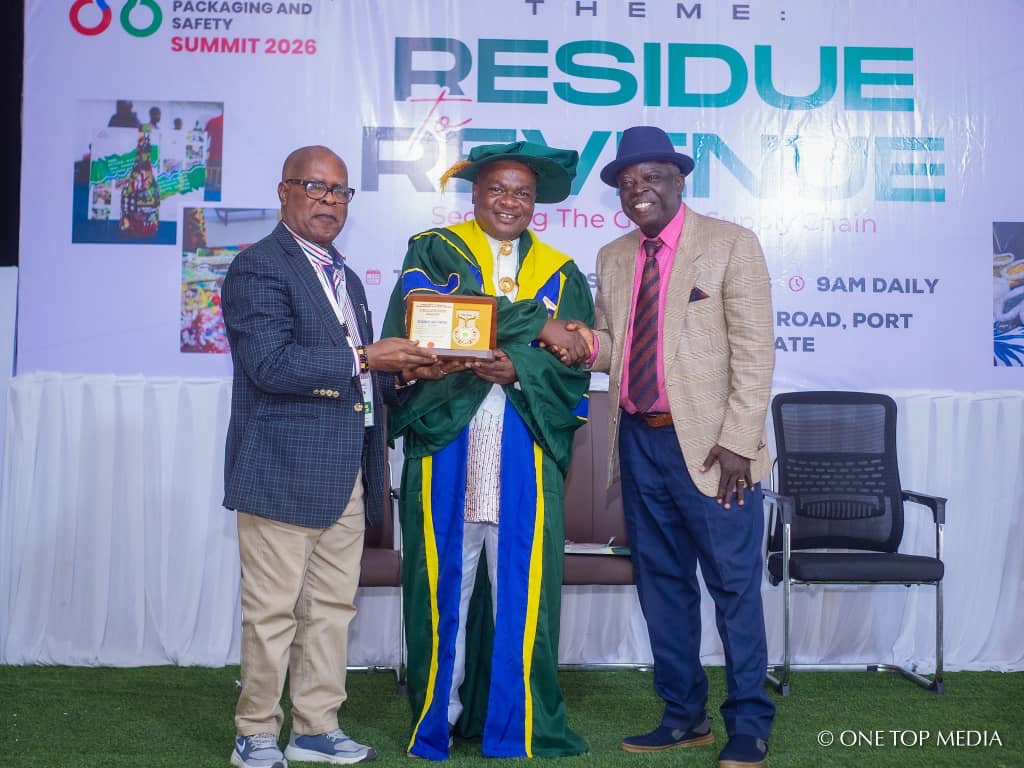
Waste-to-wealth advocate and reputation management expert, Dr Jossy Nkwocha, has called on the Federal and State Governments, as well as private investors, to adopt Public-Private Partnerships (PPP) in establishing waste recycling plants across Nigeria to transform waste into economic resources and tackle environmental pollution.
Nkwocha made the call on Thursday, November 5, 2026, while delivering a keynote address at the third edition of the Waste to Wealth Summit and the unveiling of the Nigerian Institute of Regenerative Resources Management and Protection Technologies (NIPRMPT) in Port Harcourt, Rivers State.
The keynote presentation, titled “Innovation for Tomorrow: Regenerative Technologies and Sustainable Resource Governance,” examined the role of regenerative technologies in sustainable development and outlined nine recommendations for advancing regenerative resource management and governance in Nigeria.
Dr Jossy Nkwocha
Dr Nkwocha, Managing Director and Chief Executive Officer of Reputation Masters Limited and immediate past Group Head of Corporate Communications of Indorama Eleme Petrochemicals and Fertilizer Group, Port Harcourt, urged the Institute and relevant government authorities to integrate regenerative practices and principles into Nigeria’s national development agenda.
He explained that regenerative technologies encompass systems, tools and scientific methods designed to prevent damage, repair existing harm, restore degraded resources and renew human tissues and natural ecosystems, including soil, forests, water bodies, air, the environment, livestock and other natural resources for the benefit of present and future generations.
He identified four major areas of regenerative technologies as regenerative medicine, regenerative engineering, regenerative environment and regenerative agriculture.
The keynote address, delivered as part of the induction ceremony for the Institute’s Fellows and Members, also recommended increased public awareness and capacity-building on regenerative practices to improve human health, environmental sustainability and agricultural development.
According to him, the Institute should undertake extensive research into ways of maximising the benefits of regenerative practices in Nigeria.
He further called on the Federal and State Governments to support the emerging Institute to establish a strong foundation in the relatively new field of regenerative resource management and governance.
Dr Nkwocha also urged relevant Federal Government agencies to facilitate the Institute’s access to essential equipment, materials and other resources required to implement regenerative practices.
Other recommendations included encouraging the Institute to contribute to the prevention of further biodiversity loss, restoration of degraded ecosystems, promotion of sustainable waste management practices and effective pollution control.
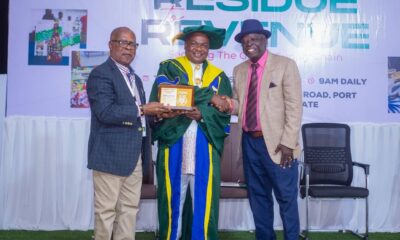
A major highlight of the event was the decoration of the Institute’s Chancellor, Sir Daminabo Amos Atuboyedia, alongside other board members, as Fellows of the Institute.
The decoration was performed by the Chairman of the occasion, Prof. Andrew Adesola Obafemi of the University of Port Harcourt, alongside the keynote speaker, Dr Nkwocha.
Earlier, at the opening ceremony of the summit on Tuesday, November 3, 2026, Dr Nkwocha was honoured with the Nigerian Sustainability Impact Development Award in recognition of his contributions to sustainability advocacy and development.
-
 News3 days ago
PSC Appoints Fidelis Ogarabe Enugu Police Commissioner, Deploys Three Others
-
News2 days ago
‘I Had Lost Hope, But Prayed To Receive My Gratuity Alive’ – Enugu Retirees Thank Mbah After Years Of Waiting
-
News2 days ago
Enugu Gratuity: ‘It’s Wrong to Retire Without Gratuity for Years’ – Mbah Releases ₦10bn, Pays 1,893 Retirees in First Batches
-
Entertainment2 days ago
Diewait Ikpechukwu Dies at 71: Nollywood Veteran, Former Footballer, Husband and Father
-
News20 hours ago
Marriage Under Threat: Has Love Disappeared? Why Many Marriages Are Crashing and Young Men Are Afraid to Marry
-
News15 hours ago
Adeboye Ordered Refund of Billions in Suspected Illicit Donations to RCCG, EFCC Chairman Reveals
-
News2 days ago
10 Key Things to Know about Justice Lifu’s Judgment Affecting ADC, Atiku, By Abdulrahman Abdulaziz
-
News2 days ago
Mbah Inaugurates 68 Development Centre Administrators, Tasks them on Grassroots Governance