News
Igbo abused, called greedy after playing a major role in shaping Lagos, Abuja — Iwuanyanwu

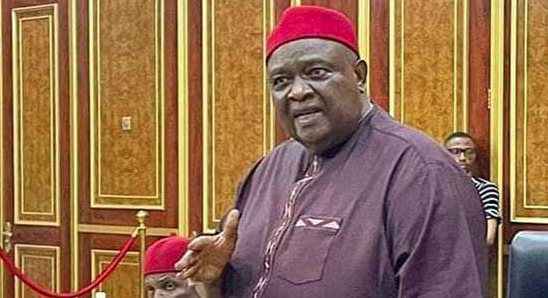
You recently played host to former President Olusegun Obasanjo at your residence in Owerri, Imo State. The meeting was described as symbolic. Would you like to share some of those issues of mutual interest that the leadership of Ohanaeze Ndigbo discussed with Obasanjo?
The visit was purely a private one obviously but the situation in Nigeria today is so bad, so critical that it must be discussed when leaders meet and I don’t think anybody needs to be told the situation of the country. Things are not good and it Is important to underline the fact that it is not proper to blame this government for what is happening because this is a combination of errors and failures of many past administrations. But the worst situation is in not taking step, not taking action.

I believe that the government in the past few days has taken some steps which have given some confidence to Nigerians. When they have taken step to suspend somebody who actually was suspected to have done a wrong thing, mind you, she has not been convicted by any law court but it’s normal to suspend her and if she is free, that is, if she is not found guilty, she will come back to her job. The government has taken practical steps to show they identify with the sufferings of the masses by cutting down the entourage because the entourage of Mr President’s recent visit abroad was embarrassing. We are talking about over 500 people following an entourage, it is very embarrassing.
Amalgamation
One thing is clear, in 1914 when Lugard amalgamated Nigeria, the country had ethnic nationalities, people with different cultures, languages and religions. It was clear to us at that time that the survival of Nigeria would depend on our ability to manage our differences. And of course, our forebears, before independence, were able to manage it. The military intervention in 1966 was absolutely very unfortunate; it was the saddest thing that ever happened to Nigeria. Unfortunately, that was blamed on the Igbo but there was no reason for Igbo to topple that government but it was blamed on us.

Now, that particular government before independence had a constitution, a true federal constitution, a constitution that could actually apply without a lot of strain to a people who have diverse backgrounds like Nigeria. We had a true federal constitution in 1960/1963 that worked for us. Later on, they changed to unitary constitution which is not right.
Now, that is why we in Igbo land are saying please, let us have a true federal constitution. What we are operating today is a unitary government. It doesn’t work for a people who have diverse backgrounds.
Unitary Government
Take many countries for instance, if you go to a place like Britain, you have Scotland, you have Wales, and you have England. They have a constitution that binds them together and it’s working for them. If you go to America, we are supposed to be following their kind of constitution, what they have is not a unitary government.
Every state in America has got a certain level of autonomy. Now, I believe that the government of Bola Tínubu should take steps to see if we can actualize this restructuring of Nigeria. Without a proper restructuring, Nigeria will continue to have problems. There is no way this country can survive. Today, everybody is talking of presidency; in a restructured Nigeria, the presidency will not attract so much attention as it does today. Because today, every power is vested in the President.
Rail Project
As I said last time, for example, a child who is born in South-South or South-East in the past 30 to 40 years has not even seen a train before. He doesn’t know what it’s all about. But we have borrowed money and the whole money we borrowed was invested in railway line from Western Nigeria to North -West. So these are some of the problems we have because South-East and South-South were not in power. Now, coming specifically to one of the Igbo, our own is very serious. It’s very, very serious. We feel very sad about what is happening to us.
When we came together as one country, Lagos became my capital. Naturally, in every country in the world, people all work together to develop their capital. The moment Lagos was made the capital of Nigeria in 1914, it was the duty of all Nigerians to come together to develop our capital. Our capital, Lagos, became the pride of our country. Ndigbo came in and participated. I must tell you, Igbo, by nature, once they say they are with you, they are with you.
They are people who, when they commit, they keep to it. They did a lot to develop the place. We are not saying that Igbo built Lagos alone. No, they couldn’t have built Lagos alone. We didn’t say that there were no other inhabitants, there were.
So, the point is that they played a major role in shaping the destiny of Lagos today. Now, the same thing with Abuja. When Abuja was made the federal capital, Igbo moved in. Today, Igbo are being abused and insulted, people call us greedy because of our efforts to develop Abuja and Lagos.
Following reports of anti-Igbo activities in areas like Lagos, Abuja and other parts of the country, could you give us a bit more detail into that, the experiences of your people, and what the Peace and Reconciliation Committee being set up by the Ohanaeze Ndigbo hopes to achieve?
Before the last elections, there had been information, unverified information circulating in many circles that Igbo had dominated and had major investments in Abuja and Lagos. There is no statistics that proved that Igbo have majority investments in Lagos and Abuja, but people believe and peddle the unverified information.
Now, after the elections, the presidential candidate the Igbo supported won in Abuja and Lagos. It was now confirmed by all these people who were against the Igbo that the only way to handle Igbo is to cripple them. They used the word ‘cripple’. Several clandestine meetings were held in places where people said that it was now important to cripple the Igbo and that the only way to cripple them was by crippling their businesses in Lagos and Abuja.
Due Process
This information gets to us, it gets to me as the leader of Ndigbo. I have got this information, I don’t believe the information but, you see, when I see certain things happening, for example, suddenly after the election, Igbo buildings were demolished in various places with excuses. I have investigated the demolitions in Lagos for example, and it is very clear to me that some of them didn’t follow the process of law.
You cannot come anywhere and start demolishing somebody’s structure without telling him. In the first place, in every place, when a building is going on, if the person has violated the construction, the building people must go to that place and mark it.
But these people just come in without any court order and demolish the buildings. This is not a proper thing. We have raised our objection and I’m glad to observe that I think the government of Lagos State and all those doing this have stopped. I’m happy because we are not objecting to the government acquiring any property for overriding public interest. They can, it’s the right of any government. But the government must follow the right process.
However, it is sad for somebody who has come into a place, invested his life saving, and suddenly wakes up one morning and sees his building demolished or a child who went to school and before he came back, the house where he left in the morning was demolished. There is also the threat that whatever the Igbo have licensed for would not be renewed. Igbo may not get contracts too. But on the issue of contracts, to be honest, most of the Igbo businesses buy contracts from other people because we don’t get.
Reconciliation Committee
Let me tell you about the Truth and Reconciliation Committee. This matter has become so much that I have decided that the best thing to do is to expose the fact and let Nigerians know the truth. One malicious falsehood against the Igbo was the Civil War and then the coup of 1966. Igbo were blamed for the 1966 coup.
The coup was a military operation and many other coups have come after that led by other groups. I believe that it’s unfair for Nigerians to brand it, of course, the coup was very bad.
We are not happy that great leaders like Ahmadu Bello, Tafawa Balewa and others were killed. But they forget to say that that coup failed and the person who made it to fail was an Igbo man, General Ironsi. And even Ironsi was later killed. And that is how all these troubles we have started.
Aburi Accord
Even this secession, we went to Aburi in Ghana for peace conference and, in Aburi, we agreed on certain restructuring of Nigeria to make it easy for us in the South-East and South-South but it was violated. Today, young Igbo are talking about secession and they are serious about it. They are serious because they don’t see any future for themselves in Nigeria.
They think they don’t have any future in politics, business, and so on but we the older ones have been begging them because we know there are potentials, there are a lot of opportunities and, above all, we believe in God Almighty.
So this committee has been set up and we’re going to produce our own story about the events in Nigeria from 1966. We’re going to produce a book which we are going to keep in Nigeria for posterity to know the position of Igbo because, today, a young northerner, for example, will think Igbo hate northerners by killing two great leaders from the North. It’s not true.
So, the committee will put the story, it will be clear what the position is. The committee will also make contact with leaders in all the various ethnic groups and then find out. I’m not saying Igbo are angels, Igbo definitely must have made some mistakes, must have done things wrong in those places. So, this Committee on Peace and Reconciliation will also find out what Igbo are doing wrong in all the various places and then, we will try to make effort to get them through because it’s not only going to tell our story, but also visit all these places because Igbo are everywhere and it is our culture and tradition to invest and develop any place we live in.
You said you’ve been able to investigate that most of these demolitions were racially motivated. Where is your proof?
The demolition of Igbo properties in Lagos was brought to me as the leader of Ndigbo. I sent some members of the National Assembly to go and find out the facts. They went and brought me reports. I sent some leading Igbo in Lagos. They brought me the facts. Most of the reports were conflicting.
Some of them said that the people didn’t obey (rules); some said they were given notice and so on. I know Igbo very well, I know that no Igbo man will go and gamble with his money when he knows it can be lost. Igbo have lived in Ikeja, Yaba, Apapa, Ebute Meta, Ikoyi, Victoria Island and many other areas in Lagos, and we have never in history heard the story that Igbo don’t obey laws, that they go and build without obeying law. That is not part of our character. And knowing my people very well, so I decided to go and find out myself.
‘Omo onile’
I traveled and went to Abule Ado (site of demolition of Igbo properties) and I spent over six hours there. I was there that day until about 8 pm. I saw everything. They told me their story. The truth is that one, the land was not government land. They bought it from the villagers, they call them ‘Omo onile’.
It’s a native land. That means at the time they bought the land, there was no municipal planning. You know in some parts of Nigeria today, natives sell lands and you can buy and build. So they bought land from the villagers and started developing. At the time they bought land, they didn’t know if there were any issues.
Later on, the government planned a layout there and put roads. That is fine. As a people, we are not objecting to it. We want anything the government think it can do to develop Lagos.
However in doing that, the government must take the following steps: One, go to court, get a court injunction, assess the property and pay compensation to property owners because these people have bought it from the villagers. So, the government should first of all value the land and pay compensation. That is all we want. We are not telling the government not to carry out their duty. Government has a right anywhere to do that but citizens must be paid. We are all Nigerians and this time people are suffering, people are in difficulty. Part of the thing the government should do now is to produce, bring unity, peace and happiness.
Detention
Again, there is a man, one Nwajiaku, an Eze in Lagos, one of the prominent Igbo in Lagos. He has been in detention because they said he mentioned the name of IPoB. This man has been in detention. Every effort to get him out has failed. By the time I went to Lagos, I went to Lagos about three weeks ago, and he was still in detention. The offense he was alleged to have committed was bailable offense. I don’t see why Eze Nwajiaku should be kept in prison because it’s a bailable offence.
Sunday Vanguard



By Tony Edike
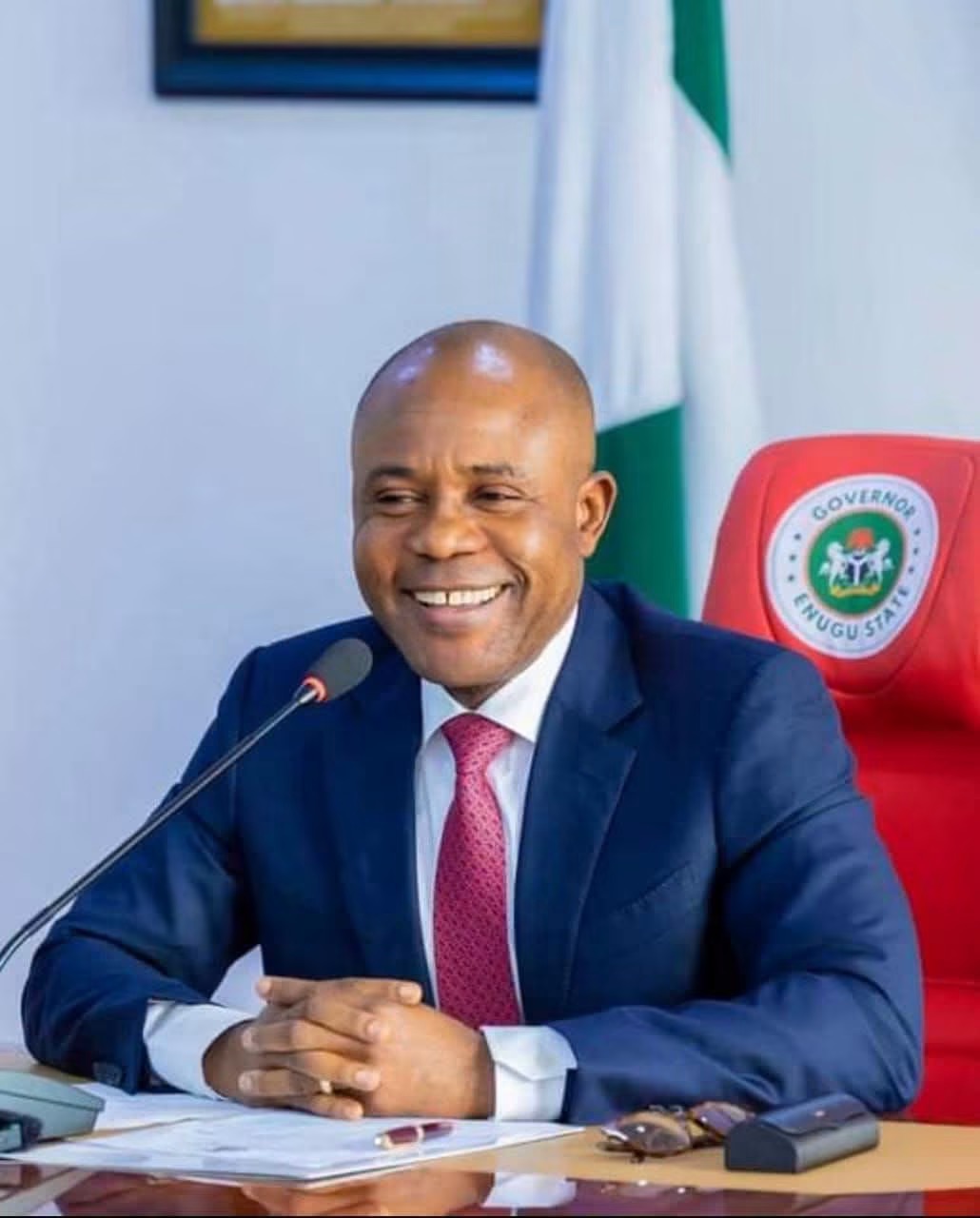
Enugu State Governor, Peter Mbah, has said the state has increased its daily water production capacity from two million litres to 120 million litres, while intensifying efforts to ensure reliable water supply reaches households across Enugu metropolis.
Mbah disclosed this during a town hall meeting held at the International Conference Center in Enugu on Wednesday , where he addressed issues relating to water supply, agricultural development, regional security cooperation and the state’s economic prospects.
The governor explained that although the state had significantly expanded its water production capacity, ageing pipelines, burst pipes, encroached water corridors and other infrastructure challenges had slowed the distribution of water to some communities.
According to him, the state initially needed about 80 million litres of water daily to ensure adequate supply to homes across Enugu metropolis, against the two million litres being produced when his administration took office.
He said the government began procuring critical equipment before his inauguration to accelerate the implementation of its 180-day water supply commitment.
“We front-loaded the procurement because some of the items we needed to procure were long-lead items,” Mbah said, explaining that some equipment, particularly large pumps, required several months to manufacture and deliver.
He added that the government also reactivated the Ninth Mile water scheme, which had remained dormant for years, contributing to the increase in production capacity.
However, Mbah said the expansion exposed weaknesses in the existing distribution network, including brittle pipes that had exceeded their design life, asbestos pipes and sections of the pipeline network obstructed by buildings.
He said the government decided against demolishing citizens’ buildings along affected pipeline routes, opting instead to develop new distribution networks.
According to the governor, Enugu metropolis has been divided into 14 zones, with work ongoing to extend water supply to the last mile.
He said the government had also procured horizontal drilling equipment to enable underground pipe installation without unnecessarily cutting open roads.
“We have a buffer of over 50 per cent to serve the entire city of Enugu. What we’re now dealing with is making sure that the water gets to the last mile,” he said.
Mbah assured residents that his administration remained committed to resolving the water supply challenge, adding that he received daily briefings on progress in the sector.
Enugu Opens Up Agricultural Sector to Investors
The governor also highlighted his administration’s agricultural development initiatives, saying the state was creating opportunities for commercial farming, mechanisation and agro-processing.
He disclosed that Enugu had more than 167,000 hectares of land available as a land bank for commercial agricultural investments, with some communities voluntarily making land available for farming and wealth creation.
Mbah said the government was engaging investors across different parts of the state and had established a tractor assembly plant to support agricultural mechanisation.
He added that the state had more than 60,000 farmers in its database, cultivating over 80,000 hectares of land, with the coordinates of their farms documented.
According to him, the government recently distributed more than 60,000 bags of fertiliser free of charge to farmers, alongside other farming tools, improved seedlings and handheld tractors.
He said the interventions were aimed at increasing agricultural productivity and helping smallholder farmers transition from subsistence farming to mechanised agriculture.
Mbah further disclosed that the government was constructing agro-transformation centres across the state’s three senatorial zones, in addition to a special agro-processing zone intended to support large-scale agricultural production and processing.
He also announced that an integrated livestock facility capable of accommodating more than 20,000 cattle was under construction around the Obollo and Eha-Amufu axis, while Enugu was among three states selected for a federal government integrated poultry project.
The governor said the agricultural initiatives were designed not only to increase food production but also to encourage processing, attract private investment and create employment.
Security: Mbah Cites Federal Support, Regional Intelligence Sharing
On security, Mbah said Enugu State had benefited from its relationship with the Federal Government, particularly through support for security operations and improved collaboration among security agencies.
Responding to concerns about insecurity along interstate border areas, including flashpoints connecting Enugu with neighbouring states, the governor said intelligence sharing and regional cooperation had improved.
He disclosed that the establishment of the state’s Distress Response Squad received approval from the Federal Government.
Mbah also said the state was working closely with the Nigerian Army, Police, Department of State Services, Nigerian Air Force and Nigeria Security and Civil Defence Corps to strengthen security operations.
According to him, although regional collaboration might not always be reflected in a single physical command centre, intelligence sharing and cooperation among security agencies had increased.
He maintained that Enugu’s relationship with the Federal Government had brought benefits beyond security, including opportunities to attract national events, conferences and other activities to the state.
Enugu Repositioning Itself as Regional Hub
The governor said Enugu was regaining its position as a regional hub after years in which it was increasingly being displaced by other locations.
He cited the hosting of national conferences and activities, including the National Council on Agriculture and other major events, as evidence of renewed interest in the state.
Mbah said the return of such activities was creating opportunities for local businesses and residents through increased economic activity.
He argued that reconnecting Enugu to national economic and institutional networks was essential to sustaining its regional importance.
Mbah Defends Federal Economic Reforms
The governor also defended the Federal Government’s economic reforms, arguing that stabilising the macroeconomic environment was necessary to attract private investment and stimulate growth.
He cited Nigeria’s foreign reserves, which he put at about $58 billion, and what he described as improved foreign exchange stability as indicators of progress.
Mbah said allowing the foreign exchange market to respond to market forces had helped address pressures that previously contributed to the depletion of the country’s reserves and weakened confidence in the naira.
He argued that economic stability would encourage private capital to enter the economy, leading to job creation, increased earnings and a reduction in poverty.
According to him, the reforms required political courage and should be assessed by their impact on economic indicators and growth.
“We are on the right path, and I can tell you from the numbers we’re seeing and the growth we are witnessing now, we are seeing the light at the end of the tunnel,” he said.
The governor maintained that the benefits of economic stabilisation would become more evident as investment increased and economic activity expanded.
He said the state government would continue pursuing its infrastructure, agricultural and security initiatives as part of efforts to improve living conditions and strengthen Enugu’s economic position.
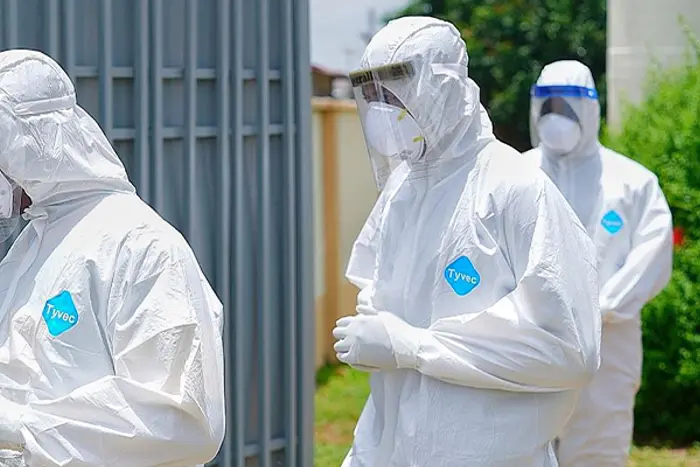
The Federal Government has confirmed a case of Ebola disease in the Federal Capital Territory (FCT), identifying 44 close contacts as health authorities intensify efforts to contain the infection and prevent further spread.
The Coordinating Minister of Health and Social Welfare, Professor Muhammad Ali Pate, disclosed this in a statement issued on Tuesday, October 20, 2026, following laboratory confirmation of the case.
According to the statement, the patient is a woman who recently arrived in Nigeria on an international flight from Uganda.
She was admitted to a private hospital in the FCT, where she received treatment for several days before the diagnosis was confirmed.
The Minister said the patient was currently in isolation and receiving medical care.
He added that the Federal Ministry of Health and Social Welfare, the Nigeria Centre for Disease Control and Prevention (NCDC), the FCT Health Services Secretariat and other relevant authorities were working together to contain the infection.
Contact tracing has commenced, with public health teams identifying and monitoring individuals who may have been exposed to the patient, including healthcare workers, patients, caregivers and travel contacts.
The government has also intensified disease surveillance, while the hospital where the patient received treatment is being supported to strengthen its infection prevention and control measures.
The Federal Government called on public and private healthcare facilities across the country to remain on high alert and promptly report suspected cases to public health authorities.
It urged healthcare workers to maintain a high index of suspicion, identify and isolate suspected cases without delay, and strictly observe infection prevention and control protocols.
The government also explained that Ebola spreads through direct contact with the blood or other body fluids of an infected person who is sick or has died from the disease, as well as contact with contaminated materials.
It further clarified that a person infected with Ebola cannot transmit the disease before symptoms develop.
The government urged Nigerians to remain informed and follow public health guidance as authorities continue efforts to contain the confirmed case and prevent further transmission.
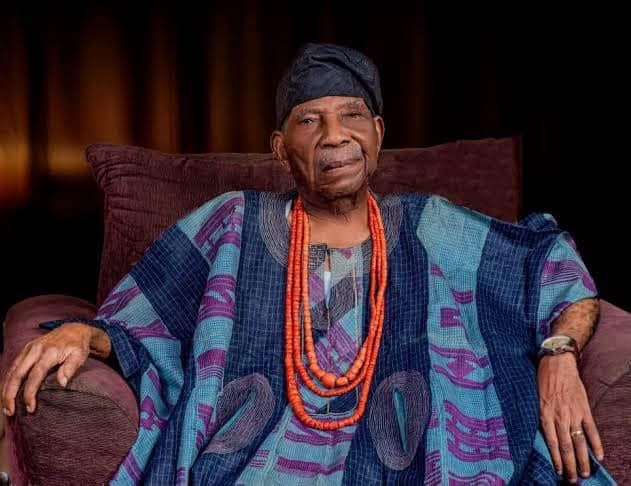
Pa Reuben Famuyide Fasoranti, the revered Yoruba elder statesman and national leader of the pan-Yoruba socio-political organisation, Afenifere, has died at the age of 100.
Announcing the death of the centenarian, Governor Lucky Aiyedatiwa, in a statement personally signed on Tuesday, mourned the death of the elder statesman and community leader.
Aiyedatiwa described the late Fasoranti as a symbol of wisdom, integrity and selfless service whose contributions to the development of Ondo State, Yorubaland and Nigeria would remain indelible.
The governor, in a condolence message issued on Tuesday, said the centenarian’s fatherly counsel, guidance and principled positions on justice and good governance would be sorely missed.
He said Fasoranti lived a fulfilled life and left behind an enduring legacy that would continue to inspire generations.
“Pa Fasoranti was a patriarch, a beacon of wisdom, integrity and selfless service whose century-long life was marked by uncommon commitment to the development of our dear State, Yorubaland and Nigeria at large,” Aiyedatiwa said.
Aiyedatiwa, who expressed sadness over the elder statesman’s death, said his administration and the people of Ondo State shared in the grief of the deceased’s family and associates.
On behalf of the state government and its people, the governor extended his condolences to the Fasoranti family, the people of Akure Kingdom, and the entire state over the loss.
He prayed for the peaceful repose of the deceased’s soul.
-
 News2 days ago
JUST IN: Former Delta Governor, Uduaghan, dies
-
News23 hours ago
FG confirms Ebola case in FCT, identifies 44 contacts
-
News2 days ago
Federal High Court Upholds ENSSAA’s N150m Political Campaign Billboard Fee, CTC Reveals
-
Politics2 days ago
AA Assembly Candidate, Ugbaje Friday, Unveils Development Agenda for Ibaji
-
News3 days ago
Corruption turning Nigerian Courts to ‘market stalls’ — Retired Justice Augie
-
Gallery2 days ago
PHOTO NEWS: Emadeb Energy CEO Gives Back to Alma Mater in Show of Gratitude
-
News2 days ago
Reject money requests from home, Obi tells UK-based Nigerians
-
News2 days ago
Court Orders Interior Minister Tunji-Ojo to Respond to Suit Seeking Release of His NYSC Records