News
Mbah’s socio-economic policies of eradicating poverty in Enugu State


By Ejeh Josh
In its recent report released on 13 of December, 2023, the World Bank presented a graphic image of a country receding deeper into the pit of poverty as a result of years of accumulated mismanagement, bad governance and poor system of leadership. The report shows an economy plummeting despite reforms by the present federal government to salvage the situation. This has sent, at least, 104 million Nigerians to the dungeon of extreme poverty, rapidly moving away from 79 million people living in poverty in 2018, according to the World Bank release. An attempt to understand the meaning of “extreme poverty” would have a recourse to the World Bank’s September 2022 adjustment to global poverty lines which benchmarks any person living below the sum of $2.15 per day as living below poverty line or held in extreme poverty.

The above figure is not new to Nigeria as the National Bureau of Statistics (NBS), in its 2022 National Multidimensional Poverty Index Report, squared 133 million Nigerians as multi-dimensionally poor. The reports noted that the reasons for the increase in poverty were not unconnected with the sluggish growth and hyper-inflation the country is going through. This has implications to the overall well-being of the country. First, more Nigerians will face a scourge of hunger as their purchasing power falls. Second, there is pressure and stress on those outside the poverty line for maintenance, and this may probably drag them down the line of poverty. Third, crime rate will increase among the youth. Fourth, high incident of school dropouts are expected. Fifth, human capital flight, known otherwise, as the “Jappa syndrome” which is a brain drain to Nigeria and its economy, will be on the rise. The list goes on almost without end.
Appreciating the above terrific throes Nigeria is presently mired, the Enugu State governor, Dr. Peter Mbah, threw down the gauntlet, first in his statement of purpose or manifesto which boldly has its vision statement as “making Enugu one of the 3 top states in Nigeria in terms of Gross Domestic Product, and to achieve a zero percent rate in the poverty headcount index.” This vision, although, sounds lofty, could only be achieved with focus, dedication, resilience, discipline, and “intentional” drive of disrupting the norm and its prevailing status quo. Like Mr. Mbah keeps reminding himself and his team, “we are in a hurry to achieve our humongous promises to the people of Enugu State”. A study of some of the policy and economic reforms being undertaken by the state government would reveal a government truly in a hurry to deliver on its mandate.
First has been the intention of the Mbah administration to peg a timeline to every project undertaken and enjoin the citizens to participate in the process of execution by holding the government to account. Matching up these timelines are the core internal policies in which one is called, key performance indicators (KPIs). KPIs are measurable and quantifiable metrics used to evaluate and assess the performance of an organisation as to the extent its objectives or goals have been achieved. This adopted term is basically used in the private sector and development space to rate performance and award credit or sanction. With this, each appointee is under pressure to deliver within time allotted. Mbah has shown that governance is no longer a space for merrymaking. Every dime is accounted for and must be judiciously put to use for the benefits of the people. Underperformance, inefficiency is shown the way out, and this has become a KPI dashboard for self-assemment before general assessment.

This little deviation is necessary to underscore the discreet action behind every success story that the people of the state are telling about this government. In most states, the past six months had been dedicated for euphoria excitement of clinching to office. However, this government has remarkably moved from policy formulation to policy and projects execution. This permeates both the tangible projects such as road execution, provision of potable water, payments of salaries and other emolument to workers, training of youths on digital skills for global competitiveness, upgrading and building of new hospitals, construction of primary and secondary school blocks including the state-of-the-art smart schools with centres for robotics, artificial intelligence, creative studios, modern science laboratories, and a shift in the curricula of tertiary institutions to meet today’s needs with a view to thinking about future technologies. This gives credence to the gale of accreditations and upgrade some of the state institutions have received. From schools of nursing to colleges of nursing and degree-awarding institutions.
On the intangible aspect of the feats, the administration is championing a leadership role in digitisation and automation of all the ministries, departments and agencies (MDAs) as a way of strengthening the state’s institutions, creating a viable social order that would allow citizens transact businesses in the state without necessarily having a physical interface with any of the MDAs. This is creating the much promised conducive environment for business and investment. A cursory look at the mission statement encapsulated by the administration will aid the better understanding of where the government is headed. In his mission statement, Mbah tersely captured it this way: “To deliver quality, people-focused governance by making Enugu the preferred destination for investment, business, tourism and living “. There is no magic that could make the state an investment hub without the deliberate reforms the administration is now undertaking. This could basically be seen as the process of derisking investment and guaranteeing that investors have flexible and friendly access to information needed for a start-up and other investment prospects.
This being at the verge of completion, the governor had thrice hosted economic and investment summits, outlining pipeline projects that would activate the interest of investors given their promising return on investment worth over $2.1 billion. The recent trips to Lagos State, United States, Indonesia, Egypt, Abuja, for investment summits, economic talks among others, the administration had optimally maximised the opportunities afforded to woo investors to Enugu with their clear outlays of what the state has got to offer. Enugu is an unmined territory of gold the administration has laid out for exploration. There is no more any excuse for willing investors to have their presence in the state and have their return.
Huge reforms had been carried out in the agro-allied space, with many now returning to agriculture in a modern way. With thousands of hectares of land earmarked for agriculture, and some already farmed, Enugu is poised to announce to the global market, its presence and products. Visits to different local government areas and their farmlands cultivated for rice, cassava, yam, special species of pepper, vegetables, and other staple food, the end of poverty is near in the state. Being passionate and committed about agriculture, the state seizing every opportunity to liaise with international agencies and donors by paying its counterpart funding boost the chain of food production. The target population includes women and youths. This accounts for the training and retraining of the population on the use of modern farming tools.
One of those issues usually raised as concern by investors is security. No business thrives in a swamp of insecurity. Mbah understood this immutable principle of a safe state for a thriving economy when he came in as governor. His series of security reforms alluded to it. First, he declared war against insecurity and the now forgotten illegal sit-at-home orders which had become a sub-culture of notoriety in the southern part of Nigeria, particularly the southeastern zone. Like the National Security Adviser to President Bola Ahmed Tinubu, Mr. Nuhu Ribadu, admitted last week, Governor Mbah was at the forefront of the battlefield against insecurity beyond Enugu State to the entire southeast region. With his resolute spirit, he dealt with the incidence of sit-at-home, eradicated the then looming unknown gunmen, flushed out kidnapping, and ensures that security and normalcy was returned to the state and the region by extension. The above was also corroborated by the Federal Minister of Works and Infrastructure, Engr. David Umahi, when he gave testimony of how peace returned to the zone. The message is clear; Enugu State is ready for business!
Following all these efforts, investors have started scrambling for space, drilling down on the mission and vision of the administration. While the battle against a depressing economy continues at the national level, Enugu State has made some significant gains. First, some of the institutional mechanisms that would lead to a zero percent poverty headcount rate in the state are beginning to gain attention not withstanding that the state is also cushioning the effect of the “sluggish growth and high rise in inflation”. The 2023 to the second quarters of 2024 wage award the administration had outlined for workers in the state would increase the purchasing power of majority of the people in the state. Workers have received the first payment of such, boosting their capacity to invest from what they are earning. This welfarist policy has the tendency of impacting on the socio-economic status of workers leaping further upward the rung of the ladder of the economy.
These deliberate policies are geared towards upscaling the people’s economic welfare, insulating them from the national economic crunch. With the policies transforming into deliverables, and the economy rebounding from the shock of national economic crisis, eradicating poverty in the state could only happen sooner than projected.
Merry Christmas and a prosperous new year ahead!
e-mail: ejehjosh@gmail.com





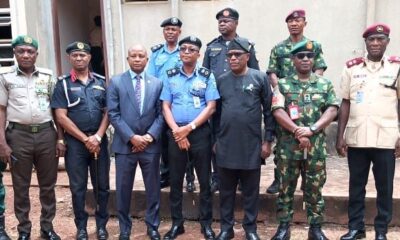





The Nigeria Security and Civil Defense Corps (NSCDC) has deployed no fewer than 2,527 personnel for the Enugu State Local Government Elections scheduled for Saturday, Sept. 26.
The Commandant of NSCDC Enugu State Command, Dr Elijah Willie, told newsmen on Thursday in Enugu that those deployed included uniformed and plain cloth officers and men.
Willie noted that the Corps would strategical deploy seven vehicles for the Area Commanders, four additional van trucks, other vehicles for operational support staff for monitoring, while the commandant vehicular team would be on duty.
According to him, the command is ready for the council elections and we have been preparing ahead of time for it.
He said, “I have met the Corps management staff, Area Commanders, Divisional Corps Officers, head of special squad units and heads of departments on the election for sometime now.
“They have been briefed and oriented on their roles and responsibilities.
“We have developed an operational modules for the election, having received that of the police.
“The command will extend the same operational modules and its instructions down to officers and men in divisional areas and wards in order to ensure all officers and men work according to instruction.
“The command also directed officers and men to be firm carrying out their election duties while being civil and ensure due respect for human rights.”
He revealed that due to the council polls, the command and sister security agencies had been raiding criminal black spots and flashpoints in the state to ensure the state remained calm during the election.
The commandant urged residents to feel free and come out to exercise their franchise, while voting for the candidate of their choice without fear or favour.
“The NSCDC and other sister security agencies are assuring residents of a peaceful, violence-free and fair election as we are highly prepared to ensure a hitch-free and successful election.
“Miscreants are also warned to steer clear of the state and the election as there will be no room or space for them to operate.
“They should also be reminded that their activities are being tracked with statewide technology that will easily spot them out,” he said.
Willie noted that the NSCDC had also put in place other vintage security measures for the election, which might not be appropriate for the press.
It would be recalled that the Enugu State Independent Electoral Commission (ENSIEC) had scheduled a statewide elections into the 17 Chairmanship and 260 Ward Councillorship positions in the state on Saturday, Sept. 26.
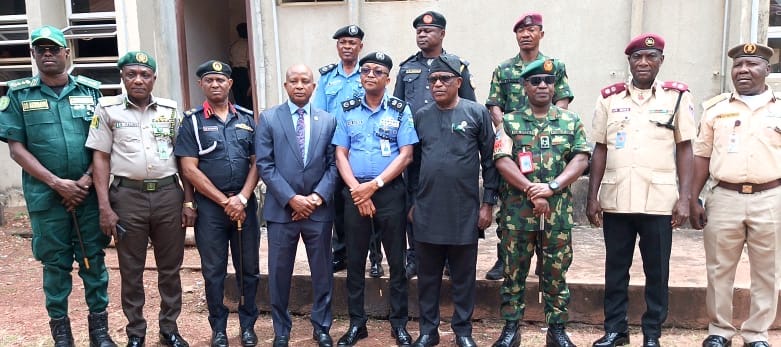
Security agencies in Enugu State have assured residents of the state of a peaceful, hitch-free and credible Local Government Election upcoming on Sept. 26.
Speaking on behalf of other security agencies after a security meeting on the elections on Thursday, the state Commissioner of Police, Mr Mamman Giwa, said that the election security arrangement had been concluded.
Giwa noted that the security agencies had put in place firm and robust strategies to ensure a peaceful, hitch-free and credible election on Sept. 26.
He said that the security agencies had made robust plans to take care of flashpoints and ensure no miscreant do anything to violate electoral rules.
According to him, we have planned to give the residents of Enugu State a very successful and peaceful election that they will be proud of.
“We have put our heads together to come out with formidable strategies for the conduct of the election.
“Our officers and men from various security agencies will be everywhere to ensure safety for all residents and people come out to cast their vote without fear or favour.
“The security agencies have vowed to ensure peace before, during and after the election and respond swiftly to any perceived incident that will be a threat to the election,” he said.
The commissioner said that so far there had been no threat to the election, while the security agencies had deployed adequate intelligence to ensure any threat is taken care of proactively.
Giwa urged those who would want to protect their votes after going to the ballot to do it with civility and decorum, while respecting electoral rules.
Speaking, the Executive Chairman of Enugu State Independent Electoral Commission (ENSIEC), Prof. Christian Ngwu, said that ENSIEC was “very ready” for the election after “due and proper” arrangement.
Ngwu said that security agencies had assured residents adequate security with all their officers and men on ground before, during and after the election.
“They have assured the commission to deal decisively with any threat or persons that intend to cause trouble or create problem for election officials or electorate.
“We are anticipating a successful, hitch-free, transparent and credible election on Saturday.
“ENSIEC want eligible voters to come out en masse with their voters cards to cast their votes and elect their preferred candidates,” he said.
It would be recalled that ENSIEC had scheduled polls for the 17 Chairmanship and 260 Ward Councillorship positions in the state for Sept. 26.
The chairman also urged electorate to be free to defend their votes, adding,: “But you should not cause any trouble while doing that”.
The other security agencies that attended the meeting included: Nigerian Army, Nigerian Air Force, Nigerian Navy, the Nigeria Security and Civil Defense (NSCDC) and Department of State Security (DSS).
The rest are: the Federal Road Safety Corps (FRSC), Nigeria Correctional Service, Nigeria Immigration Service, Nigeria Customs Service, Federal and State Fire Service and the Forest Guard among others.

Former Deputy Speaker of the House of Representatives and Chairman of the Governing Board of the South-South Development Commission, SSDC, Chibudom Nwuche, has urged the Federal Government to grant amnesty to repentant cultists and militant youths in the Orashi area of Rivers State who are willing to lay down their arms and embrace peaceful and productive lives.
Nwuche also called for the rehabilitation, reorientation and reintegration of such youths into society, saying the initiative would help restore peace and security to the troubled communities.
The Orashi area comprises Ahoada East, Ahoada West, Abua/Odual and Ogba/Egbema/Ndoni local government areas of the state.
Nwuche made the appeal through his representative, Chief Kingdom Ajugo, at the commencement of the 2026 Upata Folklore, Ele, at Ula Upata, Ahoada East Local Government Area, on Tuesday.
He expressed concern over the deterioration of security in Ahoada and other parts of the Orashi region, saying the area had witnessed killings and various forms of criminality.
He recalled the gruesome killing of the then Divisional Police Officer, DPO, late CSP Bako Amgbashim, whom he described as a dedicated, intelligent and gallant police officer.
According to him, several appeals have been made to Rivers State government for an amnesty programme for repentant youths in the area, with no action taken.
Nwuche, therefore, appealed to the federal government, particularly the Office of the National Security Adviser, ONSA, headed by Mallam Nuhu Ribadu, to consider an amnesty programme for repentant cultists and violent youths.
He said the programme should include proper rehabilitation, reorientation and reintegration measures to enable beneficiaries become productive members of society.
He also appealed to youths still involved in cultism, kidnapping, robbery and other criminal activities to abandon violence and embrace legitimate livelihoods.
Related News
2027: APC govs divided over Wike, Uzodimma, AbdulRazaq’s feud
Nigeria must process agro commodities to boost export earnings — Stakeholders
Fish import bill drops 14% to N167bn in Q2’26 – NBS
“Those who are still carrying guns and killing our people indiscriminately should stop and accept amnesty and be ready to be reintegrated into society,” he said.
Nwuche said the predominantly farming and trading Ekpeye people should be able to carry out their legitimate businesses without molestation, harassment or fear.
He said hundreds of Ekpeye people had lost their lives to cultism and related violence over the years, declaring that the situation must end.
He urged traditional rulers, community leaders, government and the people to work together to restore peace, insisting that Ekpeye land could no longer be allowed to become a haven for criminals.
Urges Ekpeye unity
Nwuche also urged Ekpeye traditional rulers to provide exemplary leadership and work together to advance the interests of the people.
He appealed to the people of Upata to support their monarch, Eze (Dr.) Felix E. Otuwarikpo, Eze Igbu Upata III, and preserve the cultu ral heritage of the kingdom.
He described the annual Upata Folklore as an important platform for promoting unity, culture and hospitality among the people.
The monarch had earlier declared the 2026 celebration open, describing it as an enduring tradition through which the people celebrate their culture and heritage following the harvest season.
Use your votes wisely in 2027
On politics, Nwuche urged the people of Ekpeye to vote wisely in the 2027 general elections, saying they should support politicians who had demonstrated commitment to the development of the area.
“We have seen and known all those seeking our votes, and I will therefore urge you not to waste your votes but to support those who have shown attention and developed Ekpeye land,” he said.
Nwuche also spoke in support of President Bola Tinubu’s second-term bid and the political platform associated with FCT Minister and former Rivers State governor, Nyesom Wike.
He said he would, at the appropriate time, tour Ekpeye and the wider Orashi region to mobilise support for the political coalition led by Wike.
He recalled projects executed during Wike’s tenure as Rivers State governor, saying they remained significant to the development of Ekpeye land.
The event attracted traditional rulers, chiefs, community leaders, women and youth groups, students and representatives of Ahoada East and Ahoada West local governments. It featured cultural displays, traditional dances, goodwill messages and presentation of gifts to the monarch, chiefs and participants.
-
 News3 days ago
UK excludes Nigerian, Ghanaian-trained teachers from teaching qualification list
-
News2 days ago
Nigerian cleric flees after body found buried in Cameroon church
-
Opinion3 days ago
Who is in Charge of Nigeria?
-
Business3 days ago
Enugu Air Launches New Website
-
News3 days ago
Kidnapped female Police officer found dead in Ebonyi
-
News1 day ago
NSCDC arrests truck driver, two others for pipeline vandalism in Abuja
-
News1 day ago
ADC: Tinubu, Shettima’s absence leaves Nigeria in constitutional crisis
-
News2 days ago
Minister Secures International Investment Commitments for Power Projects