News
Senate moves to return control of National Social Investment Programme to Presidency

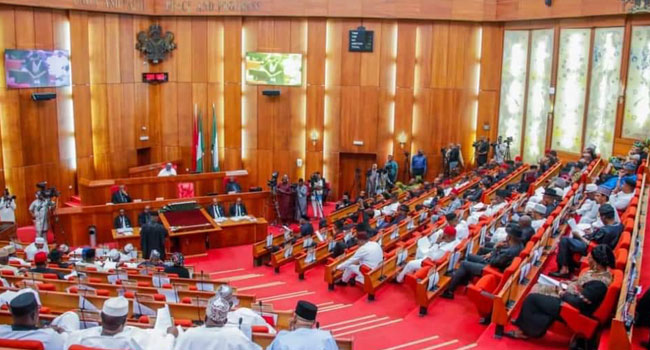
A bill seeking to transfer the control and supervision of programmes under the National Social Investment Programmes (NSIP) from the Ministry of Humanitarian Affairs and Poverty Alleviation to the Presidency has passed second reading at the Senate.
The bill titled “A bill for an act to amend the Social Investment Programme Agency Act 2023 and for other matters connected therewith, 2023 (SB.163),” was sponsored by Leader of the Senate, Opeyemi Bamidele.

The programmes under the NSIP are the N-Power , the Government Enterprise and Empowerment Programme (GEEP), National Home-Grown School Feeding Programme (NHGSFP) and the Conditional Cash Transfer (CCT).
The NSIP was created in 2016 by the administration of former President Muhammadu Buhari while the National Social Programme Agency Act was enacted this year to address socio-economic inequalities and alleviate poverty among Nigerians.
The programme started under the control of the office of the then Vice President, Yemi Osinbajo, but was transferred to the ministry of humanitarian affairs, disaster management and social development during Mr Buhari’s second term.

The former president had hinted during his 2019 Independence Day broadcast that the NSIP would be moved from the vice president’s office.
The bill, seeking direct supervision of the NSIP programmes to the office of the President of the Federation, was read the first time in the Senate on Tuesday and was transferred to the Committee of the Whole.
Leading debate on the bill, Mr Bamidele (APC, Ekiti) said the amendment was to support the renewed hope mantra of President Bola Tinubu in ensuring that Social Investment Programmes are standard, transparent, effective and accountable in the discharge of constitutional duties.
He also said the reason for amendment was to fulfill Section 17 (3) of the Nigerian Constitution which provided that the State shall direct its policy towards ensuring that all citizens, without discrimination, have the opportunity of securing adequate means of livelihood and ensuring provision is made for public assistance in deserving cases or conditions of need among others.
“This Bill seeks to amend Sections 9 (3); 14(1); 21(1); 22(1), 26(1) and 33 of the National Social Investment Programme Agency Act by transferring the Agency from the ministry of Humanitarian Affairs to the Presidency under the direct supervision of the President C-in-C.
“This amendment is as a result of the commitment of the renewed hope mantra President Bola Tinubu in ensuring that Social Investment Programme are standard, transparent, effective and accountable structure of delivery, adequate coordination and synergy amongst key government agencies as well as fulfilment of Section 17 (3) of the Constitution of the Federal Republic of Nigeria which provided that the State shall direct its policy towards ensuring that all citizens, without discrimination, have the opportunity of securing adequate means of livelihood and ensuring provision is made for public assistance in deserving cases or conditions of need among others.
“With this amendment, a wide range of sustainable development goals (SDGS) including poverty reduction, education, health, social inclusion and empowerment can be achieved through the NSIPA and countries the world over have recognised and deployed similar social support programmes as an effective strategy for poverty reduction, social development and economic growth.”
The Senate Leader therefore urged his colleagues to support and pass the bill, stressing that it would reduce poverty in Nigeria.
“Mr President, my respected colleagues, the passage of this bill will ensure continuity and sustainability of NSIP as a reliable tool to solve poverty problems in Nigeria and also serves as an enduring legacy of this administration. I therefore recommend the bill for second reading.”
When the bill was set for debate, majority of the senators spoke in support of it.
They also said the bill should pass second reading.
The immediate past Senate President, Ahmed Lawan, who supported passage of the bill advised that after passing the amendment, relevant committees of the National Assembly must actively participate in the NSIP programmes in order to ensure that all the identified vulnerable receive support from the government.
“We are talking about social inclusion. Money was distributed in cash and that is not what we are expected to continue to do. After passing the amendment, we must participate fully, from all relevant committees to ensure that those that needed the support, the vulnerable are satisfied,” he said.



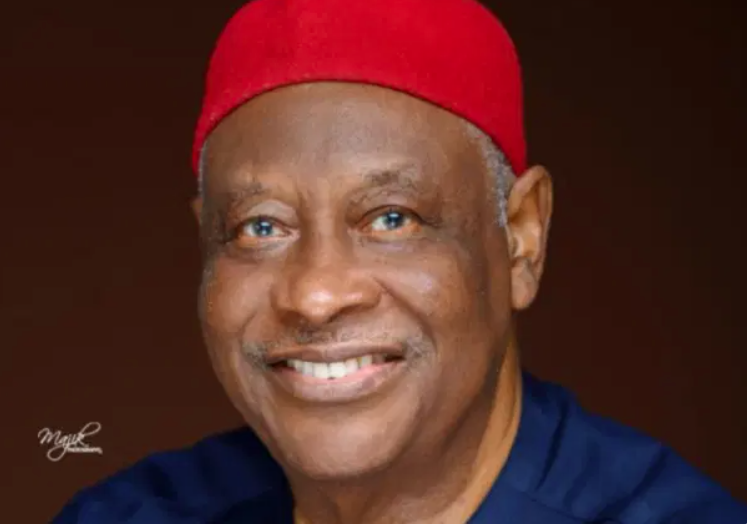
A founding member of the National Democratic Coalition, NADECO, Chief Ralph Obioha is dead, aged 80.
In a statement by his son, Chima Obioha on behalf of the Obioha family in Enugu, said: “It is with profound sadness and heavy hearts that the family of Chief Ralph Obioha, “Okpuruisizuruoha II of Arondizuogu announces his passing on October 3, 2026, at the age of 80.
Chief Obioha was first and foremost a beloved father, husband, brother, grandfather and friend. His kindness, strength, humor, generosity, faith, and unwavering devotion to family will always be remembered .
“Many Nigerians knew Chief Obioha as a patriot, elder statesman, political leader and businessman. Indeed, his very eventful life spanned various business sectors and the Nigerian political and socio- economic space.
“He was deeply committed to Nigeria’s progress and the ideals of service, leadership, and nation-building. His was a respected voice in the land, and he was a firm believer in Nigeria’s enormous potential.
“His passing has left an immeasurable void in our family, but we find comfort in the fullness of his life, the people he touched, and the legacy of service he leaves behind.
“The family is deeply grateful for the prayers, condolence messages, and expressions of love that have already been received. We, however, respectfully request privacy at this time while we mourn and come to terms with this profound loss.
“Details of the memorial and funeral will be announced in due course. May his soul rest in complete peace.” the statement added.

Lagos, Nigeria, October 6, 2026: The Guild of Corporate Online Publishers (GOCOP) has announced the addition of the Lagos, Delta, Imo and Ekiti state governments, Shell Nigeria Exploration and Production Company (SNEPCo), Access Bank Plc and the National Agency for Science and Engineering Infrastructure (NASENI) to the list of partners for its 10th Annual Conference.
The conference begins on Wednesday, October 7, 2026, at the Radisson Blu Hotel, 38 to 40 Isaac John Street, Ikeja GRA, Lagos.
The first day will feature a presentation by Max Amuchie, Publisher of Sundiata Post, on “The Sundiata Post Model: Building the African Newsroom for the Long Term.”
This will be followed by a presentation on “AI and Prompt Engineering for Online Publishing” by Biodun Durojaiye, Publisher of The Lagos Times.
The final presentation will be “Monetisation of Digital Media Business” by Dr Monday Ashibogwu, Publisher of Quick News.
The presentations will be followed by lunch with GOCOP partners, while the association’s Annual General Meeting will round off the day.
The second day of the conference, Thursday, October 8, will focus on the theme, “2027 Elections: Trust, Transparency and Shared Responsibilities
Chairman of the Independent National Electoral Commission (INEC), Prof Joash Ojo Amupitan, SAN, will deliver the keynote address, while Dr Olisa Agbakoba, SAN, Founding Partner of Olisa Agbakoba Legal (OAL) and former President of the Nigerian Bar Association (NBA), will chair the session.
The panel will feature CP Abayomi Shogunle, Commissioner of Police, Election Planning, Monitoring and Evaluation, Force Headquarters, Abuja; Prof Tayo Popoola, Head of Department of Mass Communication, University of Lagos; Adaora Onyechere Sydney Jack, Creative Director of Gender Agenda and Founder of WEWE Network Afrique; and Lanre Arogundade, Executive Director of the International Press Centre.
Speaking ahead of the conference, Deputy President of GOCOP and Chairman of the 2026 Conference Planning Committee, Mr Olumide Iyanda, said preparations had been concluded.
“All is set for our 10th anniversary conference. We are delighted that the Lagos State Government, the Imo State Government, the Delta State Government and the Ekiti State Government, as well as Access Bank, one of Africa’s leading financial institutions, and NASENI, Nigeria’s foremost agency driving indigenous technology and industrial innovation, have joined our long list of sponsors. Their support underscores the importance of the dialogue we are convening,” Iyanda said.
The new partners join those previously announced, including the Nigerian National Petroleum Company Limited (NNPC), Nigeria LNG Limited (NLNG), Nigeria Customs Service, Dangote Group, Seplat Energy, Nigerian Content Development and Monitoring Board (NCDMB), Nigerian Communications Commission (NCC), Bank of Industry (BoI), National Drug Law Enforcement Agency (NDLEA), Joint Admissions and Matriculation Board (JAMB), Securities and Exchange Commission (SEC), TAJBank, Emadeb Energy, Setraco Nigeria Limited, Sovereign Trust Insurance and Nestlé Nigeria Plc.
Iyanda thanked all sponsors and partners for their support, noting that their contributions would help GOCOP sustain its conference as a platform for engagement on professional journalism, democracy and national development.
GOCOP is a business membership organisation of 127 corporate online publishers in Nigeria. The Annual Conference, now in its 10th edition, brings together media executives, policymakers, academics, business leaders, civil society representatives and other stakeholders to discuss issues of national importance.

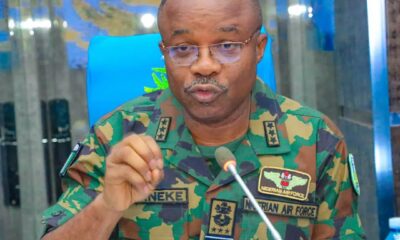
The Chief of the Air Staff (CAS), Air Marshal Sunday Kelvin Aneke, has expressed profound condolences to the families of the personnel and passengers who lost their lives following the accident involving Nigerian Air Force (NAF) ATR 42 aircraft, NAF 931, in the Igbokoda area of Ondo State.
The CAS described the incident as a deeply painful moment for the Nigerian Air Force and the nation, expressing heartfelt sympathies to the families, loved ones and colleagues of those who lost their lives. He assured the bereaved families of the Service’s full support during this difficult period.
NAF 931 had 25 persons on board, comprising five crew members and 20 passengers. The aircraft was on a routine mission from Benin to Lagos when the accident occurred. Search-and-rescue procedures were immediately activated, with response efforts conducted in coordination with relevant authorities to locate and account for all persons on board. No survivors have been found. The crew members were:
CREW
1. Squadron Leader MI Aburime (Flight Captain)
2. Squadron Leader AP Man-Ugwueje (Co-pilot)
3. Flight Lieutenant IS Bako (Co-pilot)
4. Warrant Officer Abubakar A (Aircraft Technician)
5. Corporal Uguru HC (Aircraft Technician)
PASSENGERS
6. Flight Lieutenant TL Lazarus
7. Flight Lieutenant M Akinloye
8. Flying Officer IM Adeshina
9. Master Warrant Officer Onwuka F
10. Master Warrant Officer Matini BA
11. Warrant Officer Nuhu FS
12. Flight Sergeant James RB
13. Flight Sergeant Mohammed AI
14. Sergeant Ani AE
15. Sergeant Izibenikien SI
16. Sergeant Alafuka C
17. Sergeant Mbadugha AN
18. Lance Corporal Ugwuba FC
19. Lance Corporal Eledan GE
20. Mrs Ezeh Nneka
21. Godstmine Tarabina
22. Joy Micheal
23. Sunday Micheal
24. Ukeme David
25. Gideon Omotola
The CAS has directed a comprehensive investigation to establish the circumstances surrounding the accident. The Nigerian Air Force will continue to provide timely and verified updates as the investigation progresses and urges the public to refrain from speculation and the circulation of unverified information, while respecting the privacy and dignity of the affected families. A condolence register has also been opened at Headquarters Nigerian Air Force, Abuja, for senior government officials, members of the diplomatic corps, heads of security agencies, and other well-wishers who may wish to pay their respects and convey messages of sympathy to the families of the deceased and the Nigerian Air Force.
Ehimen Ejodame
Air Commodore
Director of Public Relations and Information
Headquarters, Nigerian Air Force
6 October 2026
-
 Entertainment2 days ago
BREAKING: Temi Nkem wins BBNaija season 11
-
News1 day ago
NAF confirms ownership, launches rescue operation after aircraft crash in Ondo
-
News1 day ago
NAF aircraft crashed with 32 passengers, crew – Keyamo
-
News1 day ago
Bandits allegedly kidnap 18 Oyo students, kill driver
-

 International2 days ago
Six people missing as plane vanishes from Bermuda to Boston
-
News2 days ago
Kidnappers torture 20 corps members, demand N5m each NYSC
-
News1 day ago
Kidnappers torture 20 corps members, reduce ransom to N100m — Relatives
-
News18 hours ago
“Stop chasing shadows” – Obi’s camp fires back at Soludo over anti-Obi campaign