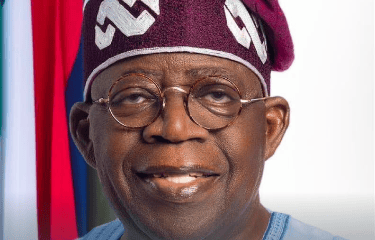
On the sidelines of the maiden Enugu State Investment Roundtable, the state governor, Mr Peter Ndubuisi Mbah spoke on his plans to grow the economy from $4 billion to $30 billion, efforts to de-risk access to land completely and the multiple initiatives deployed in the area of ease of doing business in the state.
The Advocate presents the Excerpts:

Congratulations on your victory, its been 100 days since you assumed office as governor, what has been your experience?
It has been quite an exciting journey. So far, nothing has taken us unawares because we did an extensive study of the situation. We knew what we were coming into. And when we made promises to our people, we gave timelines. The reason we backed our promises up with timelines was because we were aware of the things that we needed to deal with, and we knew that the timelines we committed to were sacred and we were not going to deviate from it.
We did promise that we are going to have an investment forum within 100 days of our swearing in. That is what we are doing right now. It is not Just about the optics or symbolism of making a promise and keeping it, but it is essentially the substance, the fact that there are huge takeaways or success from what we have done today.

You would recall that we got the mandate of the Enugu people entrusted into our hands on the basis of all the promises that we made. One of them was to grow the economy from $4 billion to $30 billion. And we also said to them that that growth will be driven by private sector, it will be enabled by government, but driven by private sector.
We were deliberate because we knew that in order for us to tackle unemployment and generate wealth, we needed private sector investments. It is not going to come from the public sector. And for the private sector to invest, they also need the government to do certain things.
We hear a lot about de-risking investments. It is not even the emphasis about the ease of doing business, which is providing infrastructure security and the ease of obtaining your business permit and construction business property permits. It is about understanding how projects are structured how to make the program attractive for the private sector to come in. So, you have to identify the aspect of the project that you must de-risk. Whether it is the technical risk or the commercial risk. This is because businesses are more than happy to take financial risk, but they are not interested when it has to do with political risk, technical risk and go-to-market risk. Only a few businesses can undertake such risks.
But because we want an inflow of businesses, we want this state to be a preferred destination for business, investments, tourism and living. That means that we have to go the extra mile, which is essentially what we are doing in today’s event.
During your speech at the investment roundtable, you enumerated a lot of sectors you want to drive, but there are concerns you may not be able to do everything at a go. Can you tell us your priority areas that you want to focus on? Secondly, you talked about private sector financing, are you considering the bond market like other states have done?
Certainly, our strategy is to have creative alternative financing models. This means that first of all, the current financing model, which focuses on revenue from the federation accounts is suboptimal. It is not going to work with this current model. Therefore, we all have agreed that this current model cannot serve us if we want to intervene across the critical sectors of our economy.
What that means is that we need to ask, what are the other financing models we have to deploy? First, we have to look at what we have control over. We have control over mobilising our domestic revenue/resources. So, we need to identify how to optimize our internally generated revenue. ‘What are those impediments that are stopping me from optimally collecting revenue from the service or business enabling MDAs? Or just expanding the tax net?’ I am not saying increasing your tax rates, I mean expanding your tax net.
We have basically done all that within the last 90 days that we have been sworn in. What we have done in our revenue-enabling ministry is to first of all to elevate the service levels to mix the collection of payments and services. You can, from the comfort of your home, assess whatever service, particularly with the Land administration and management. We have automated the systems there so you can apply for your C of O within 72 hours and obtain them. You can access almost all the services you need within the land ministry. It has all been automated. That shifts up our revenue because we are now able to fast-track services and attract payments because they are no longer collected in cash, you have to assess and pay online and it goes directly to the state treasury single account. There are a lot of things that we’ve done to mobilize the domestic revenue.
The projects we have outlined are very deliberate though the time we had did not permit us to do some detailed analysis. One of the speakers talked about our area of comparative advantages, and that is the reality. Take a look at agriculture for instance, the areas we are focused on are areas we have almost four times factor productivity. Therefore, our rates of productivity in those areas are actually four times better than in any other state. If you take soybeans for example, which is one crop that we are interested in, our factor productivity in soybeans is almost four times. So, the yield you will get from planting soybeans in our land is four times more than what you get in any other state, even in the north.
We have identified those areas of comparative advantages and those are the things we are focusing on. The same thing will go for cassava, palm products and all that. Again, on the value chains, we must go beyond just scaling our production; we must get involved in processing. That is why we are talking about the special agro-processing zones, which we hope to do at least three across the three senatorial zones in the state.
In terms of the harmonisation of our land tenure, which one of the speakers raised, our plan is to de-risk access to land completely. As an investor, you have absolutely no business worrying about interfacing with the communities. This is because we have earmarked about 300,000 hectares of land for agriculture. And we are providing access roads to those lands. We have parcellated them to different sizes; 1,000, 10,000, 5,000 depending on the appetite of the investor and how big we have profiled them to be.
Again, there are a number of multiple initiatives we have deployed in the area of ease of doing business. In infrastructure we are also doing a lot because we know that businesses have to make profits and we do not want to burden them with the provision of roads, water and all that. When we say Enugu is going to be the number one destination for business, we are not paying lip service to it. And as business owners and those with background of strong entrepreneurship, we understand what it takes to invest, hence, we make sure that the ground is well watered.
Your plans look good on paper and we believe you will achieve your goals. However, what assurance can you give investors that when you have served your two terms the next governor will continue with your projects?
Out of the three-pronged approach we have taken at strategic objectives. One is the strengthening of our institutions. We are not just building these around us as individuals, we are also building institutions. These are policies that will outlive anyone. At the end of the day, if you have strengthened the institutions through a policy framework and also building systems, it should not be easy for one single person to come and verse that.
We are strengthening our public service sector by ensuring that a lot of these things that we are doing have regulatory and legal framework embedded. This makes it almost impossible for any one person to reverse. Just like in the education sector where we are doing 260 basic model schools across, and these schools are designed to provide world-class quality education to our people. Any child in this state from age 3 must have access to this quality education where you have an interactive board in the class, and even have access to ICT at that tender age. Could there be anybody who will come back after eight years to see he is going to shut down those schools? No, because it is already entrenched. And those people you are training would stand up to ask for the right thing, because you have already exposed them to what quality leadership should be.
You were a top player in the private sector but politics is a different mater entirely, how courageous can you be when there is pushback?
Do a peep into my background. You will discover that I came into a sector where we were regarded as late entrance and as ‘one other oil company’. Fast forward 14 years after, we became the market leader having 23 per cent market share with the next company having just 5 per cent. And the sector we are talking about is an already established sector; the oil and gas downstream sector. It is not like a nascent market where new players are struggling for market shares. It is a market that had already been dominated by the incumbents, so the market shares had been taken over. So, we came in as late entrance in 2008, and by 2021 where the market leaders, we were number one in the market. It can only take courageous execution of strategies to achieve that. When I was going around talking to the people of Enugu about my plans for the state. I use words like disruptive innovation, quantum leap, leap frogging and all that which is essentially what we are going to do. We are going to disrupt the sub optimization and do things differently. If you look at the pattern of growth that we have had in the last 24 years, we were able to grow the economy marginally, but that is not what we have proposed. We have not paid attention to the pattern or the trends, because if we did, we would have used the same rate of growth to measure ourselves.
What we have done is to say that we are going to grow sevenfold in the next 4 to 8 years. That indicates exponential growth. It means that you have to come with disruptive innovations; you have to do things that are radical. Things that are disruptive in a positive way. That is why we have talked about the creative alternative financing model.
There are structures that were put in place to make sure that our cash flow is not impeded yet being able to finance major projects. You know we need about two trillion in the next four years to achieve the sort of infrastructural development and cutting-edge social services we want to provide for our people. If you look at the revenue from the federation account and took everything to do capital projects, it is not up to 400 billion in the next four years. And even out of that money you are currently receiving, a huge chunk of it is dedicated to your recurrent exposure.
How do you plan to mobilise the ordinary man on the streets to key into plans for the state and what are the verticals for your Diaspora project?
Our people are increasingly becoming interested in good governance. And you know that our young people, and indeed even our politicians, are no longer sitting on the fence. They are now all aware that they must demand good governance from their leaders. Good governance, essentially, is felt; If you walk into your house and turn on your switch and light come on, nobody will tell you what good governance is. If you turn on your tap and the water is flowing, nobody needs to tell you what good governance is. If you drive on a road and it is well paved and you will not have to take your vehicle to the mechanic every now and then because of bad roads, nobody needs to tell you what governance is. You have to always know that there is a world of difference between politics and governance. And of course, the minute you are done with your electioneering processes, you need to focus on governance. And this governance must be inclusive. You have to be able to impact all Sections of the states.
You also do that believing that the people will see and feel it, that these things are happening and that there is a huge change. Our hope is that there will be a whole lot of interest. You notice that in the past what has happened is that the diaspora has been invested a lot in this economy, but it has largely been on consumption. Therefore, you see all the remittances that you see flowing in from the diaspora community into our states and other parts of the country being used for consumption.
Our view on that is clear and actually one of the reasons why we have this forum. So that we can actually set up a project that could attract the Diasporas to Invest. So, they can look beyond just sending remittances for consumption, but they can also identify some social impactful projects, which would also give them good returns on investments. That is why we talk about bankability. What we want to do at some point is also to have a diaspora bond that is tradable where once you have set up these funds and the money is coming in, which is used to execute projects. It would become a trade finance structure so that you create a platform for it that allows people to trade.