Connect with us

Politics

Obi most popular choice among Nigerians, Kwakol Poll reveals

Published

on

Spread the love
Peter Gregory Obi, the presidential candidate of the Labour Party, is the most popular candidate among the major contenders seeking to become the nation’s next president, according to a new poll conducted by the Kwakol Research Institute.

The poll, which took a different approach to collecting valuable data and providing reasonable conclusions, arrived at the conclusion that the Labour Party presidential candidate was the ideal choice for more than 50 percent of respondents, including women, the unemployed, civil servants, private sector participants, and students, especially those in tertiary institutions.

Unlike most polls, Kwakol gathered most of its responses from rural dwellers. “It is important to note that, unlike the majority of the polls in Nigeria, we polled more registered voters in rural Nigeria than registered voters in semi-urban Nigeria and urban Nigeria, respectively,” it stated.

The research agency also used several parameters to arrive at its conclusion—for example, the issue of income classification, educational background, work status, and sex were factors used in arriving at its conclusion.

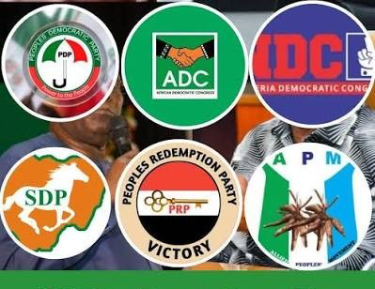
In summation, 52.80 percent of respondents said that they would vote for the Labour Party, 18.9 percent said they would vote for the Peoples Democratic Party (PDP), 15.6 percent said they would vote for the All Progressives Congress, and 10.4 percent said that they would vote for the New Nigeria Peoples Party (NNPP).

It must be pertinent to note that respondents in the exercise cut across the six geopolitical zones and income backgrounds. The spread of the poll had 45 percent of respondents residing in rural areas, while semi-urban areas narrowly edged out urban respondents by a point, with them taking up 28 percent and 27 percent, respectively.

Maduka College Advert

A further breakdown showed that the agency agreed with popular census figures of the numerical strength of the Northwest and Southwest geopolitical zones, with the spread resulting in 25.27 percent and 19 percent, respectively, while the Southsouth and Southeast ended up with 13.44 percent and 12.13 percent, respectively.

Obi gained more acceptance with young people who fell within the age bracket of 18 to 69, with 56 percent of those within the age range of 35 to 49 years and with valid Permanent Voter Cards (PVCs) saying that they would vote for him at the February 25 election.

Across the occupational background divide, over 70 percent of respondents working in the private sector said that they would vote for Obi and his Labour Party. This performance was closely followed by civil servants, whose 66.9 percent of respondents said that they would vote for him as president in next week’s Saturday election. 53.4 percent of the students said they would vote for him. This was closely followed by 52.3 percent of unemployed respondents who said they would vote for him.

Another interesting revelation from the Kwakol poll revealed that over 67 percent of respondents earning above N200,000 said that they would vote for Obi. This result was closely followed by the 64.5 percent of respondents who earned between N101,000 and N200,000 and said that they would vote for Obi.

The poll also revealed that over 53 percent of female respondents said that they would vote for Obi, a figure that is more than the APC, PDP, and NNPP figures combined. Despite a slight gender gap, 52.61 percent of male respondents said they would vote for the Obi.

Another parameter used in the analysis revealed that an overwhelming 64.41 percent of respondents with at most a tertiary education said that they would vote for Obi and his Labour Party in next week’s presidential election. The least surprising finding was that 30 percent of uneducated respondents said they would vote for Obi and the Labour Party in next week’s presidential election.

Kwakol provided two scenarios that might be exceptions to the poll results. First, it was agreed that though the sample size of 1,000 respondents wasn’t representative enough, Obi wasn’t totally certain of victory in the next Saturday’s presidential election. Why you may ask?

Elections in Nigeria have always been “characterized by electoral violence, terror violence, sectionalist violence, and voter intimidation,” it stated.

For the first scenario, it was predicted that in the event of violent attacks in the North Central geopolitical zone, voter turnout would decline significantly. “A situation that would have an impact on the number of votes available for the Labour Party and the NNPP,” it said. This leaves the two major political parties to slug it out.

In the north-east geopolitical region, “if an outburst of violence by non-state actors occurs in the northwest, this will significantly reduce voter turnout, and the only parties to benefit from traditional voting patterns will be the PDP and the APC, whose strongholds are in the geopolitical zone.”

For the Northwest, in the event of a breakout of violence, “all the frontline political parties will be adversely affected, but the APC will benefit from the 2019 voting patterns despite a significantly lower voter turnout.”

For the South East geopolitical zone, it feared that concerns from the Indigenous People of Biafra (IPOB) militant wing—the Eastern Security Network (ESN)—could reduce the numerical chance of Obi, while in the South-South zone, Kwakol said that “we do not expect to see an outburst of violence from the militants in the South-South geopolitical zone, but we suspect that hired political thuggery could be a recurring theme during the election, particularly in River and Delta States. We think that this will likely be due to specific interests for the minimum 25 election of votes cast in the two respective states. We also suspect that pro-LP strongholds in the region might be targeted in order to heighten voter anxiety, therefore dampening voter turnout. The LP, more specifically, will rue this probable outcome.

For the South West region, it was argued that if political thuggery erupted, the APC would benefit, reducing the Labour Party’s chances significantly.

In essence, it predicted that “if either of the six scenarios below of electoral violence plays out in any of the geopolitical zones, the probable political party to benefit is the APC, most likely due to a repeat of the 2019 voting patterns that were favorable to the party in hindsight.”

“In the eventuality that the presidency has to be decided by a run-off presidential election round between the two parties with the greatest number of votes cast in their respective favor, and if these two parties happen to be the APC and LP, we predict a very close race with the APC as the eventual winner.

“The APC’s incumbency, reliable voting patterns in its strongholds in the northwest and southwest, and the further polarization of the electorate along time-honored ethnoreligious lines in the midst of reeling voter fatigue will be of advantage to the APC,” it stated.

However, in the event of a likely run-off between the PDP and the Labour Party, Kwakol predicts that while the PDP will be adversely affected by the expected low voter turnout in the Northwest and while the Southwest will back the LP instead of the PDP, it will not be enough for the LP. The PDP will benefit from Nigeria’s time-honored voting patterns along ethnoreligious and sectionalist lines, where the proportion of registered voters across the north will be of utmost importance.

In the event of a likely APC-PDP runoff, “the PDP will benefit from a section of the electorate that is disgruntled with the APC’s same-religion candidate pairing, especially in the south-south and southeast.”

“The PDP will also benefit from a section of the LP strongholds in the south-south and the southeast. The APC will maintain its strongholds in the northwest and the southwest albeit with a reeling voter fatigue. This leaves the key battleground geopolitical zones in the context of this run-off pairing to be the northeast and the north-central zones. Thus, we predict that the PDP will just about edge out the APC in this very tight race,” it predicted.

It created another permutation, stating that in the event of a last-minute alliance between “the APC and the NNPP with the NNPP dropping out of the race, we predict that the APC will be able to gain more support from the NNPP stronghold in the north and northeast, and thus, it is likely that the APC will win the election in the first round.”

In its final permutation, Kwakol argued that “if there is a last-minute alliance between the PDP and the NNPP with the NNPP dropping out of the race, we predict that the PDP will be able to gain more support from the NNPP strongholds in the Northwest. However, we cannot conclude if this is enough for the PDP to win the presidential election in the first round.”


News

2027: ‘Peter Obi must not die’ — Igbo Group warns of catastrophic consequences

Published

on

Peter Obi, Presidential candidate of NDC
Spread the love

Njiko Igbo Forum, an affiliate of Ohanaeze Ndigbo, has issued a stern warning ahead of the 2027 general elections, cautioning that it will be catastrophic should anything happen to Mr Peter Obi.

It could be recalled that Obi, on Wednesday, raised the alarm that his life was under threat.

The presidential candidate of the Nigeria Democratic Congress, NDC, raised fears that he may not be alive in 2027 to be part of the election.

However, in a statement issued on Thursday, Rev Dr Okechukwu Christopher Obioha, Leader, Njiko Igbo Forum Nigeria, he warned that should anything happen to Obi or he was not in the ballot, the reaction and result would be very catastrophic.

Obioha said the caution was part of the decision taken during an emergency meeting held today, Thursday, in Enugu.

Maduka College Advert

The Forum said, “That we have seen the viral video made by His Excellency, Mr Peter Gregory Obi, speaking on a number of issues, he expressed serious concern that his life is in danger.

“For him to have gone to the extent of saying he might not be alive before the 16th of January 2027, speaks volumes both in our polity and in the country at large.

“We have seen him in the past, spoke about the federal government trying to frustrate and targeting him not to be in the ballot.

“We have also observed over a period of time that the presidency or the federal government led by President Tinubu does not want Peter Obi to be in the ballot.”

While drawing the attention of the Presidency, Nigeria and the world to those allegations, Njiko Igbo Forum declared that “if anything happens to Mr Peter Gregory Obi or finally his name is not in the ballot for the 16th January, 2026 presidential election, the reaction and result will be very catastrophic and may adversely affect the continued unity in diversity of this country Nigeria.”

It further stated that the Igbo had been very quiet, pushed to the wall, segregated against, marked out everywhere, chased about and even tried to take their possessions.

Njiko Igbo Forum cautioned that keeping quiet does not mean the Igbo are cowards.

It said the ruling government should not forget that for any democracy to thrive, there must be a viral opposition in the polity.

“There is no reason, for what we have seen in the process or polity in trailing Peter Obi and going to an extent of chasing him through all the political parties and now wanting to kill him.

“This outcry by Mr Peter Gregory Obi, must not be taken lightly and request as a matter of urgent National importance, that an urgent investigation panel be constituted to verify Mr Peter Obi’s allegations.

“We are strongly stating again that, nothing should happen to Mr Peter Gregory Obi.

“Yes, Chief Awolowo said, before Nigeria he was of the Yoruba Nation. The same way we are saying before Peter Obi is of Nigeria, he is of the Igbo.

“Mr Peter Gregory Obi will live and become the President of the Federal Republic of Nigeria in 2027,” it declared.

Continue Reading

News

I might not be alive to contest in 2027 – Peter Obi raises alarm over threats to his life

Published

on

Peter Obi not arrested by DSS – Aide
Peter Obi, NDC Presidential candidate
Spread the love

Presidential candidate of the Nigeria Democratic Congress, NDC, Mr Peter Obi, has cried out over alleged threat to his life.

Obi, who is a major contender ahead of the 2027 presidential election said he might not be alive to participate in the election.

According to him, there is obvious attack on everything that had to do with him, including his life.

The former Anambra state governor made the allegation during a podcast with Chude Jideonwo.

“The way they are going now I might not be alive,  I’m telling you every single thing I do for a living this government is frustrating it deliberately so.

Maduka College Advert

“Everything, so there’s even a possibility if they have opportunity I will not be alive. I get frustrations every day because you do things that may think it may be normal it is not normal they won’t come directly and say oh we are doing this but you could see their hand in eventually everything.

“The government is attacking everybody, I am being attacked personally even to provide me with things I am entitled to, not at all,” he said.

He recalled how his vehicle was clamped down at the airport while he was right there, whereas other vehicles lined up on the same spot were untouched.

Obi further that stated that even close associates were beginning to avoid him over fear of government clampdown.

He disclosed that friends now send him invitations for occasions but tell him not to bother attending.

Continue Reading

Politics

Voters reward performance as APC sweeps Ekiti, dominates Bye-Elections nationwide — Yilwatda

Published

on

Professor Nentawe Yilwatda
Spread the love

The National Chairman of the All Progressives Congress (APC), Prof. Nentawe Yilwatda, has described the resounding victory of Governor Biodun Oyebanji in the Ekiti State Governorship Election and the party’s impressive performance in the recent bye-elections across the country as a clear vote of confidence in the APC, the administration of President Bola Ahmed Tinubu, and the ongoing reforms being implemented to reposition Nigeria for sustainable growth and prosperity.

Prof. Yilwatda stated that the outcome of the elections demonstrates that Nigerians are able to distinguish between temporary economic challenges associated with reforms and the long-term benefits of responsible governance, economic restructuring, infrastructure development and institutional renewal being championed by the APC at both federal and state levels.

According to the National Chairman:

“The overwhelming victory recorded by our great party in Ekiti State and our remarkable success in the bye-elections across the country represent a powerful endorsement of the APC’s governance philosophy. These results affirm that Nigerians appreciate leadership that prioritises development, accountability, stability and the welfare of the people.”

“The people of Ekiti State have once again demonstrated that performance remains the most potent campaign message in democratic politics. Governor Biodun Oyebanji’s resounding re-election is a reward for visionary leadership, inclusive governance, prudent management of resources and visible developmental achievements across the state.”

Maduka College Advert

Governor Oyebanji of the APC was declared winner of the Ekiti Governorship Election after securing a commanding victory across the state, reaffirming the confidence of the electorate in his administration and the APC’s developmental agenda. The party also recorded significant victories in five of the six bye-elections conducted across various states of the federation.

Prof. Yilwatda, in a statement signed by his Special Adviser on Media and Information Strategy, Abimbola Tooki, noted that the Ekiti result has further strengthened the APC’s narrative that performance-based governance remains electorally rewarding, even amid difficult economic transitions.

“The Ekiti election has become a national reference point. It confirms that when governments deliver tangible results in infrastructure, education, healthcare, agriculture, youth empowerment, security and social development, citizens respond with renewed trust and overwhelming electoral support.”

“This victory sends a clear message that governance, not propaganda, remains the most effective route to political legitimacy. The people of Ekiti have spoken loudly and clearly in support of continuity, stability and progress.”

The APC National Chairman described Ekiti State under Governor Oyebanji as one of the most compelling governance success stories in contemporary Nigeria, citing sustained investments in road infrastructure, rural development, human capital advancement, healthcare delivery, agricultural productivity, workers’ welfare and ease of doing business.

He said the administration has successfully built broad-based political consensus while maintaining a strong focus on development outcomes, thereby creating an environment of stability and accelerated progress.

“Ekiti today stands as a shining example of how APC governments are translating public trust into measurable development outcomes. The state’s progress under Governor Oyebanji provides a practical demonstration of our party’s commitment to people-centred governance.”

Prof. Yilwatda further stated that the election outcomes should be viewed within the broader national context of President Bola Ahmed Tinubu’s reform agenda, which is gradually laying the foundation for a more resilient, productive and globally competitive Nigerian economy.

“Despite inheriting deep structural challenges, President Bola Ahmed Tinubu has demonstrated courage and vision in implementing reforms that are necessary for Nigeria’s long-term prosperity. The confidence reposed in our party by voters across the country indicates growing public understanding and appreciation of these reforms and their future benefits.”
It
“These victories are therefore not only electoral successes; they are validations of a governing philosophy anchored on bold leadership, responsible decision-making and sustainable development.”

The National Chairman congratulated President Tinubu, Governor Biodun Oyebanji, APC leaders and members in Ekiti State and across the federation, as well as all candidates who emerged victorious in the bye-elections.

He also commended the Independent National Electoral Commission (INEC), security agencies and the people of Ekiti State for the peaceful conduct of the election.

Prof. Yilwatda assured Nigerians that the APC would remain focused on delivering good governance at all levels and deepening democratic dividends for citizens across the country.

“Our message to Nigerians is simple: we have heard your voices, we appreciate your confidence and we shall continue to justify the trust you have placed in our party through impactful governance, economic renewal and inclusive national development.”

“The APC remains committed to building a stronger, more prosperous and more united Nigeria. The victories recorded in Ekiti and the bye-elections reinforce our resolve to work even harder in service to the Nigerian people.”

Continue Reading

Trending

Maduka College Advert