Education
School resumption: Parents groan as proprietors hike fees, textbooks, uniforms

As primary and secondary schools across the nation resume for the 2022/2023 academic session, parents are lamenting the decision of many school owners to hike the fees payable by each pupil.
In the face of the current economic hardship, DAILY POST reports that there is an increased cost of textbooks, uniforms, sports wear and others.

In most schools, parents complain that they are not allowed to get the books or uniforms elsewhere, rather they are mandated to buy same from the schools immediately the pupils resume.
Parents and guardians, who spoke with our correspondent, said they were contemplating changing their children’s schools because of their inability to raise the school fees charged.
There are some who maintained they may take “the worst decision” by taking their wards to government-owned schools, saying they (the parents) also attended public schools.

“I am just coming from my grandson’s school. He is in Primary 2. They told me that the books he would buy is N28,000 and we are to buy from the school at once. That’s too much. The school fee has also been increased from N15,000 to N25,000. It seems these proprietors are not considering the nation’s economic situation at all
“I don’t know if he will resume school on Monday. I may consider taking him to an affordable one or worst still, to a good public school,” Alhaja Memunat Agboworin, told our correspondent in Sagamu.
Mr Seyi, a media practitioner said parents were the ones to decide what is affordable for them, saying he would never be forced by any school to buy textbooks from it.
According to him, parents should be given the list of books and should be allowed to buy the books anywhere they want.
Seyi posited that “selling textbooks is not anything wrong, but it must not be done to extort the poor parents.”
The father of three advised parents to enroll their kids in schools they can afford instead of trying to impress the society.
“Parents need to wise up these days, many of us also like to ‘belong’. It is better for me to take my wards to a school where I will pay their fees without stress, financially.
“I can’t take my wards to schools where we’ll pay through our noses. Those proprietors are not showing mercy at all. I will first of all ask questions before enrolling my children in any school. My daughter got admission into a popular public secondary school in Abeokuta. I was given the list of books and they invited the publishers to bring their books. I went to Sapon to price the books. At the end of the day, I bought those that are cheaper and those I can’t get at Sapon from them. I headed to Sapon to buy the rest. You won’t believe the price difference is in thousands of Naira.
“Parents need to cut their coats according to their clothes and proprietors should consider the parents before taking decisions that have to do with money,” Seyi stated in a chat with our correspondent.
In his words, Ibrahim Osho recalled when parents would be given the list of books to buy, saying schools nowadays were after making money at the expense of poor parents.
“Unlike in the olden days when parents were given a list of books and samples of the school uniforms to purchase and sew them wherever you like, things have changed now.
“I still recall when I first entered Overcomer Nursery and Primary School Ijebu Ode in the 90s. I was taken to one Ogunde Bookshop to buy textbooks and taken to New Market to buy a sample of the uniform. But now, every school is after making money, all because the system isn’t helping them,” Osho posited.
Speaking, a mother of one, who identified herself as Aina explained how her daughter’s school sent her the amount to pay for the first term, tagging it as the ‘New Bill’.
In a copy of the new bill made available to our correspondent, an SS1 student of the secondary school located at Ibadan (name withheld) is charging N147,000 for the term.
According to the bill, the tuition is N60,000; the list of books is N52,000; two pairs of uniform, N13,000; sport wears, N8,000; Thursday wears cost N2,500, while Friday wears cost a sum of N2,000.
Also, each pupil is expected to pay N3,500 for laboratory; N3,000 as development levy; N2,000 for maintenance and N1,000 for a necktie.
It was gathered that most parents are not finding it easy to raise money to foot the new bill.
No school fees, no entry
Meanwhile, some schools have warned parents not to bother bringing their children for resumption if they are yet to pay the recommended fees.
In most of the private schools, security guards at the gate have been ordered to ask for evidence of payments before pupils are allowed into the premises.
Sharing his experience, Mr Citizen Nagazimab, said, “My kids’ school sent a text telling us about an increase in school fees. ‘No be that one pain me’ because it is understandable, but the subtle threat that the fees must be paid on or before resumption, ‘pain me well well!’”
Our correspondent gathered that the trend has extended to private universities, as they now ask for receipts before allowing students into their campuses.
It’s not our fault – School proprietor
Meanwhile, the Proprietor and Principal of Perfect Assurance Academy, Ilaro Ogun State, Yinusa Babatunde, has said the increase in school fees should not be blamed on school owners.
In an interview with DAILY POST, Babatunde said private schools were meant for those who can afford it, asking the government to reform public schools.
He said most proprietors obtain loans in order to meet up with standards, saying the economy is not friendly with proprietors too.
“Our major challenge is funding. School business is a serious business that requires much financial involvement. In order for us to meet up, we go into loans with exorbitant interest rates. All these are done to be able to fit into the business appropriately. Another angle is manpower. Many are not ready to teach as they prefer other self-sustaining jobs to teaching. High debt rate from parents is the peak of it all,” he said.
Asked if these were the reasons parents were being extorted by schools, he retorted: “We are not extorting parents. What happened is that the high cost of production of educational materials as a result of foreign exchange is not helping the schools. As for the uniforms, schools are trying their best to package their business and those attires and packages being introduced make them special and different from their peers. Whoever says education is too expensive should try ignorance.”
On why textbooks are sold at high costs by schools, Babatunde explained that, “Majority of the books sold out there are pirated. Kindly make a visit to those publishers’ offices and compare the books with the ones sold in the market. Majority of the schools collect these books on credit from the publishers. We return the money after the sales. Without doubt, piracy is making publishers back out of the business of publishing.
“Those books are of different editions. How do you know the one the school is using if you don’t buy from the school? Again, those pirated copies are poorly printed with bad pictures. This affects the learners whenever they are using the books.”
In his request to the government, the educationist urged that, “Government needs to be sincere with education. No quality service can be free. Proper monitoring of schools is important to put us on our toes. If public schools are well structured, private schools will benefit from it. It will reduce the crowding in private schools. We need people and not crowds. Private school is for those that can afford it. Now, everybody sees us as the only means to qualitative educational services.
“That is why I said the government should put public schools in order. It will reduce the pressure from private schools.”
Advising parents, Babatunde charged them to endure and cut their coats according to their clothes.
“Parents should not enroll their children in schools based on status or popularity of the school, but rather on what they can afford,” he submitted. (Daily Post)



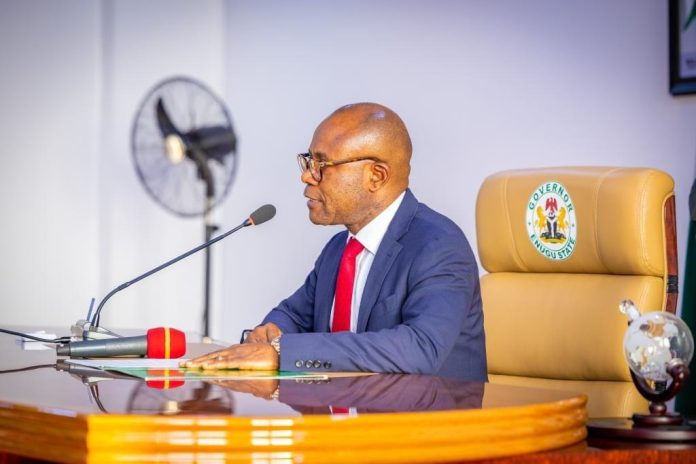
The approval was contained in a letter signed by the Secretary to the Enugu State Government, Prof. Chidiebere Onyia, dated August 11, 2026, and addressed to the Accountant General of the state.
According to the letter, the approval followed a report submitted by the Joint Action Committee on Trade Union (JACTU) in ESUT over issues surrounding a one-month strike ultimatum issued by the university’s unions.
The government also approved an across-the-board increase of N50,000 for all other categories of staff of the university.
The SSG directed the Accountant General to fully implement the approval of Governor Peter Ndubuisi Mbah.
The directive referenced an earlier Government House letter dated August 7, 2026, on the matter.
The letter, which was copied to the Vice-Chancellor of ESUT, Professor Aloysius-Michaels Okolie, for information and necessary action, is expected to take effect from September 1, 2026.
Education
Digital Economy Boost: NCC Leases Digital Industrial Park, Learning Centre to Enugu State Gov’t

…NCC’s CEO lauds Mbah’s Smart Schools, infrastructural, digital capacity initiatives
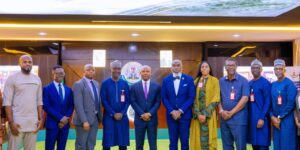
In a major boost to President Bola Tinubu’s digital economy agenda, the Nigerian Communications Commission (NCC) and the Enugu State Government, on Tuesday, sealed a strategic 15-year lease of the agency’s Digital Industrial Park and Learning Centre to the Enugu State Government.
The move would see the Enugu State Government take over and optimise the facilities located in the state capital as the Enugu Talent City and Artificial Intelligence (AI) Institute in line with the digital economy drive of the Governor Peter Mbah Administration.
Speaking during the lease agreement signing ceremony at Government House, Enugu, the Executive Vice Chairman/CEO of NCC, Dr. Aminu Maida, said the arrangement fully aligned with the Renewed Hope Agenda of the President Bola Tinubu Administration, and its ambition to grow Nigeria into a $1 trillion economy driven by productivity, innovation and private sector growth.

Maida stressed that Mbah had shown a clear agenda to build Enugu State into a digital economic powerhouse through deliberate investment in education, infrastructure, innovation and digital capacity, maintaining that the Mbah Administration was well positioned to advance the objectives for which these facilities were established.
“Our expectation is that this partnership will support Enugu’s ambition to become a leading destination for digital services, artificial intelligence, startup incubation, outsourcing, research and technology-enabled enterprise.
“We also expect these facilities to become spaces where young people acquire relevant skills, entrepreneurs transform ideas into viable businesses and local enterprises connect to opportunities beyond Enugu and Nigeria.
“These facilities were conceived as platforms for innovation, entrepreneurship and human capital development. They were designed to deepen digital skills, support startups, attract investment, create jobs and position Nigeria as a competitive destination for business process outsourcing, knowledge process outsourcing and other technology-enabled services.
“In essence, they were built not merely as physical assets, but as platforms for developing the people and enterprises that will power Nigeria’s digital economy.
“So, for us at the NCC, completing physical infrastructure is only the beginning. Buildings alone do not create innovation. People do. Ideas do. Entrepreneurs do. And partnerships bring all these elements together,” he said.
The NCC boss also commended Governor Mbah’s investment in Smart Green Schools, saying he was building an economy prepared for the future.
“Physical infrastructure is essential to development, but infrastructure alone cannot deliver lasting prosperity. This is what makes the Smart Green Schools initiative significant. It recognises that preparing our children for tomorrow must begin today. Technology-enabled schools, digital learning facilities, robotics and artificial intelligence laboratories demonstrate an understanding that education must evolve alongside technology. That is leadership with the future in mind.
“Investment in education and skills raises productivity, expands economic opportunity and strengthens the ability of individuals and businesses to create value.
“This is even more important today. Artificial Intelligence is reshaping industries. Automation is changing the nature of work. Digital technologies are transforming how governments serve citizens and how businesses operate,” he concluded.
Speaking, Governor Peter Mbah commended President Tinubu for recognising the centrality of the digital economy to the $1 trillion economy he seeks to build, as well as for understanding that much of that growth would come from the states.
He noted that AI would contribute about $20 trillion to the global economy by 2030, saying, “It is not a space you want your young ones to be missing.”
“We also believe that our talents, our brightest talents, should not be exported in person. We believe that they should export their talents outside the country from here, and that is why we see huge benefits in these assets in terms of job creation and opportunities for our young people.
“We are also looking at transforming the Digital Bridge Institute into a world-class AI institute. We will also transform the Digital Industrial Park. If you have followed the news, we have already taken steps, working with some teams from Qatar, to make sure that it becomes a certification centre for AI on the continent.
He said the NCC would not regret its decision to temporarily hand over the facilities to Enugu State.
“I am sure that a few years down the line, we can come back here and be very proud of the decision we made today to activate these assets and to make sure that they are productive,” he concluded.
Earlier in his remarks, the Special Adviser to the Enugu State Governor on Digital Economy and Micro, Small and Medium Scale Enterprises (MSMEs), Arinze Chilo-Ofia, thanked the FG and NCC for the confidence reposed in Enugu State to activate and optimise the two strategic assets and ensure the realisation of the objectives for which they were conceived and built.

The Joint Admissions and Matriculation Board (JAMB) has announced the sales of registration forms for the 2026 Unified Tertiary Matriculation Examination (UTME) and Direct Entry (DE) admissions for the 2026/2027 academic session.
JAMB stated this in a post on its X handle on Tuesday night.
“UTME is open to suitably qualified candidates for admission into Nigerian tertiary institutions for the 2026/2027 academic session,” the photo statement signed by its Registrar, Ishaq Oloyede, read.

“Registration commences January 2026 and closes March 2026 (exact dates to be announced by JAMB),” the post read, disclosing that the UTME examination is scheduled to hold in April 2026.
“The period of registration for UTME candidates, including those from foreign countries, is from Monday, 26th January, 2026 to Saturday, 28th February, 2026,” the statement read in part.`
According to JAMB, candidates must have obtained their National Identification Number (NIN) before registration.
The agency said, “Only candidates who will not be less than 16 years old by 30th September, 2026 are generally eligible to apply/be considered.”
But it clarified that, “Candidates less than 16 years old by 30th September, 2026 will have to undergo an intensive evaluation to determine their eligibility for a waiver. Such must have scored not less than 80% in each of UTME/ALEVEL, PUTME, SSCE, and in the exceptional candidate assessment.”
“The UTME results of the underage candidates will be released only at the conclusion of the complete evaluation process,” JAMB said.
For Direct Entry candidates, the “Sale of 2026 Direct Entry (DE) application documents and E-PIN vending would commence from Monday, 2nd March, 2026, and end by Saturday, 25th April, 2026, and would only be at the Board’s State and Zonal Offices.”
“The 2026 UTME will commence on Thursday, 16th April, 2026 and end on Saturday, 25th April, 2026,” JAMB wrote. “Mock-UTME (optional) shall hold on Saturday, March 28th, 2026.”
-
 Faith3 days ago
BREAKING: Anglican Church Places Archbishop Ibezim on Six-Month Leave, Bars Him From Church Duties
-
News3 days ago
Gunmen Abduct Catholic Priest in Benue, Police Launch Rescue Operation
-
News3 days ago
Tinubu Orders Rescue of Kidnap Victims, Demands Peaceful 2027 Elections
-
Faith1 day ago
Awka Anglican Diocese Rejects Ibezim’s Suspension, Threatens to Leave Church of Nigeria
-
News2 days ago
BREAKING: Mbah Extends Enugu Movement Restriction to 10pm, Scraps Keke Ticketing
-
Politics1 day ago
Nigeria’s Weak Opposition and the Cost of One-Party Dominance: Can the Opposition Rebuild Before 2027?
-
News2 days ago
2027: Keke Riders Endorse Mbah, Tinubu
-
News2 days ago
Enugu Approves ₦32bn Legacy Gratuity Payment, Begins Disbursement Next Week