Editorial
Nigeria’s 56,000 abandoned projects

At independence in 1960, Nigeria was classified as a developing new nation. But 61 years later, we are among the most underdeveloped and backward countries in the world. All our economic, social, political and human development indices are among the worst while the deficits are among the highest.
The revelation that there are 56,000 abandoned projects in Nigeria validates the claim of Nigeria’s backwardness. In August 2021, the Nigerian Institute of Quantity Surveyors, NIQS, disclosed the existence of this large quantum of uncompleted projects, estimating the cost at N12 trillion. The Nigerian Society of Engineers, NSE, recently confirmed this fact in a lecture at the University of Ibadan.

What is the reason for this shameful anomaly? Abba Tor, the President of NIQS, postulates that most contracts fail in Nigeria due to poor cost estimation. Politicians and even private individuals tend to embark on projects without employing the services of experts, and even when they do, they do not strictly follow expert advice.
By the time market reality dawns on the facilitator, the effort is suspended. Some still go ahead to cut corners, which leads to failures such as building, bridge and road collapses.
Corruption is central to most abandoned public projects. Most contracts are awarded to politically-exposed, overnight construction businessmen and women who collect mobilisation fees and abandon work. Most contracts are compromised at source because the awarding and funding sources deduct parts of the project funds for themselves leaving very little for the work.

Abandonment is also traced to lack of continuity. New regimes tend to abandon contracts awarded by their predecessors, especially when there is a rancorous takeover of power. Everyone wants to pursue his own “legacy” projects which eventually ends in “legacy corruption”.
If the right things were done and these 56,000 projects were completed as part of our development efforts, Nigeria would have definitely been a much better place for all citizens. Life would have been better and easier for all. What we have, instead, is that the tiny few who stole public funds tied to these projects are living large at the expense of the ordinary Nigerian.
These capital projects would have impacted hugely in boosting wealth and employment creation, and the violent crimes wreaking havoc on Nigeria would be minimal and easily controllable.
As a nation, we must turn a new leaf. The 2023 elections must not be business as usual. We must elect leaders who will rally the country to install checks against corrupt project abandonment. The legislature, judiciary, media, civil society and the populace must rise against corrupt leadership. Government is a continuum; a relay race. The baton exchange must continue until government projects are fully actualised.
We need a new era of accountability among public officeholders.
(VANGUARD EDITORIAL)










Editorial
MANIFESTO: Mbah Presents Governance Scorecard, Highlights Enugu’s Progress, Sets $30bn Economic Growth Target
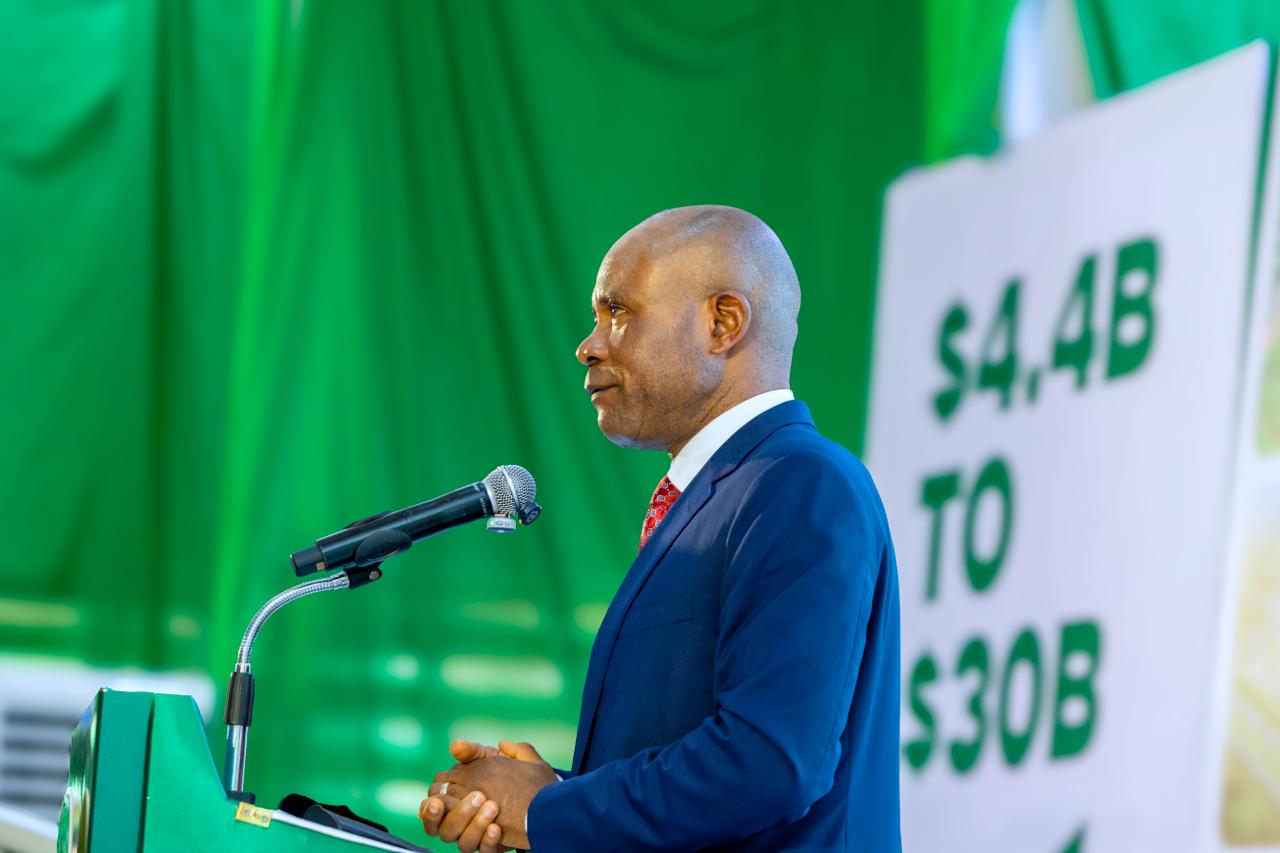
…Lists achievements in security, education, healthcare, infrastructure, aviation, agriculture; urges Ndi Enugu to sustain transformation
By Tony Edike
Enugu State Governor, Dr Peter Mbah, has reaffirmed his administration’s commitment to transforming the state into one of Nigeria’s leading economies, citing progress in security, infrastructure, education, healthcare, aviation and industrial development.
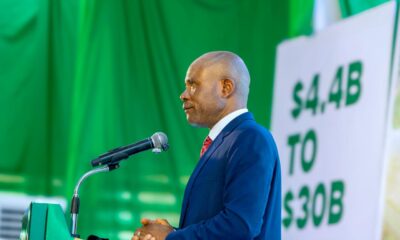
Mbah said his administration had set a target of growing Enugu’s economy from approximately $4.4 billion to at least $30 billion within eight years, alongside a long-term ambition to eliminate poverty.
The governor stated this while presenting his administration’s manifesto performance scorecard at Godfrey Okoye University, Enugu, where he reviewed the state’s development journey since his assumption of office in May 2023 and outlined priorities for the years ahead.
In his address titled Our Commitment to Ndi Enugu: The Journey So Far, Mbah said his administration had taken deliberate steps to address the challenges inherited in 2023 while laying the foundation for sustainable economic growth.
He identified security, education, healthcare, infrastructure, productive industries and effective public institutions as the pillars of the administration’s development agenda.
According to him, the government remains committed to measurable performance, accountability, transparency and public participation in governance.
1. Mbah Recalls Enugu’s Challenges in 2023, Says State Has Made Significant Progress
Reflecting on the circumstances surrounding his assumption of office in May 2023, Mbah recalled a period when economic activities were disrupted by sit-at-home restrictions, infrastructure was in poor condition, public services had deteriorated, and businesses were gradually losing confidence in the state.
He said the situation affected traders, small-business owners, students and other residents who depended on daily economic activities for their livelihoods.
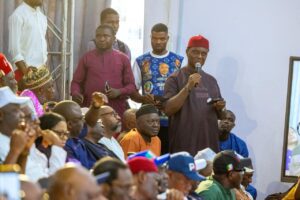
The governor noted that Enugu, which had historically served as a major commercial, political and cultural centre in the South-East, was gradually losing its position as businesses and major events moved to other cities.
“Our greatest resource was already here: the people of Enugu. What was missing was a clear direction, the determination to pursue it, and a government prepared to take responsibility for the results,” he said.
Mbah explained that his administration had prioritised addressing the underlying challenges while creating conditions that would enable residents and businesses to maximise their potential.
He added that the government had adopted a development strategy designed to address interconnected problems rather than treating them in isolation.
2. Enugu Sets $30bn Economic Growth Target, Eyes Nigeria’s Top Three Economies
Mbah said his administration’s original Statement of Purpose established an ambitious target of growing Enugu’s economy from approximately $4.4 billion to at least $30 billion within eight years.
He said the objective was to position the state among Nigeria’s three leading economies while pursuing the long-term goal of eliminating poverty.
The governor acknowledged that achieving the target would require substantial investment in infrastructure, education, security, energy, agriculture, technology and industrial development.
He explained that economic growth could not be achieved sustainably without reliable electricity, accessible roads, secure business environments and a workforce equipped with relevant skills.
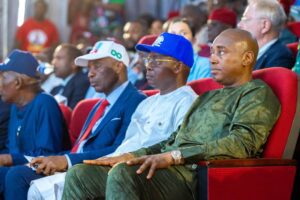
According to him, the administration’s development strategy is designed to create an environment in which businesses can expand, investors can operate with confidence, and young people can access meaningful employment opportunities.
Mbah stressed that the government would continue to assess its performance against measurable objectives rather than relying solely on public announcements.
He said projects and policies must produce tangible benefits that residents could see and experience.
3. Mbah: Restoring Security Was Essential to Reviving Enugu’s Economy
The governor identified security as one of the fundamental conditions necessary for restoring economic activity and attracting investment to Enugu State.
He said businesses could not thrive where residents were afraid to travel, traders could not open their shops, and parents were apprehensive about sending their children to school.
Mbah explained that the administration therefore prioritised restoring normalcy and creating a safer environment for residents, businesses and investors.
According to him, security improvements were necessary to support the broader development agenda, including road construction, education, agriculture, tourism and industrial expansion.
He noted that a functioning economy depends on the ability of people to move freely, transport goods, provide services and conduct business without unnecessary disruption.
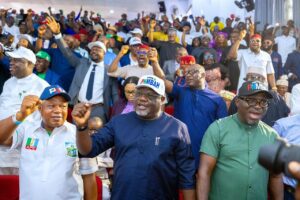
The governor said restoring confidence in the state was essential to encouraging investment and repositioning Enugu as a destination for commerce and enterprise.
He added that security would remain a critical component of the administration’s efforts to sustain economic growth and improve residents’ quality of life.
4. Sit-at-Home: Mbah Highlights Restoration of Monday Economic Activities
Mbah cited the restoration of economic activities on Mondays as one of the significant changes since his administration assumed office.
He recalled that sit-at-home restrictions had affected traders, workers, students, transport operators and small-business owners, many of whom lost income whenever economic activities were suspended.
The governor illustrated the impact with the example of a market woman whose goods could deteriorate while customers remained at home, leaving her unable to earn money to support her family.
He also highlighted the difficulties faced by young entrepreneurs who had borrowed money to establish businesses but lost an entire working day each week.
According to him, the restrictions also disrupted education, including the academic progress of students whose compulsory external examinations coincided with Mondays.
Mbah said the restoration of normal economic activities had enabled traders to plan their working weeks, businesses to receive customers and children to attend school.
“It may seem strange that we should celebrate something as ordinary as being able to go to work on Monday. But anyone who lived through those years understands its importance,” he said.
He described the restoration of normalcy as an important foundation for the state’s economic recovery.
5. Roads, Transport: Mbah Highlights Infrastructure Development Across Enugu
The governor said his administration had undertaken substantial road development and initiated improvements to the state’s transport system to facilitate movement and connect communities to economic opportunities.
He explained that the importance of road infrastructure should be measured not only by the kilometres constructed or the value of contracts awarded, but also by its impact on people’s daily lives.
According to him, good roads reduce travel difficulties, improve access to markets, facilitate the movement of agricultural produce and help businesses operate more efficiently.
Mbah also highlighted the introduction of new buses and terminals as part of efforts to develop a more organised transport system.
He said the administration’s ambition was to make transportation safer, more comfortable and more dependable while improving connectivity across the state.
The governor added that infrastructure development would continue to focus on linking communities with emerging commercial centres and expanding access to economic opportunities.
He noted that improved transportation would support other sectors, including agriculture, tourism, manufacturing and commerce.
6. Enugu Air: Governor Cites Growth in Flight Operations, Pledges Stronger Global Connections
Mbah said Enugu had recorded an increase in flight operations, noting that the state had moved from barely two incoming flights daily when he assumed office to more than 15, according to the administration’s recent review.
He attributed the development to renewed interest in the state and efforts to strengthen its aviation connections.
The governor said Enugu Air and the administration’s wider aviation plans were intended to improve connections between Enugu, other parts of Nigeria and international markets.
He explained that improved air connectivity would make it easier for investors to visit the state, businesses to reach customers and partners, and residents living outside the country to return home and participate in economic activities.
Mbah, however, acknowledged that aviation development alone would not transform the lives of residents in rural communities.
He said the government must ensure that opportunities generated by increased connectivity extended to other sectors and reached more people.
According to him, aviation infrastructure and services form part of the broader economic framework required to position Enugu as a competitive destination for business, tourism and investment.
7. 260 Smart Green Schools: Mbah Targets Quality Education Across All Wards
The governor reaffirmed his administration’s commitment to education, describing investment in children’s abilities as one of the most important contributions government could make to the state’s future.
He highlighted the administration’s plan for 260 Smart Green Schools, designed to bring improved educational opportunities to every ward in Enugu State.
Mbah said the initiative was intended to bridge educational gaps between urban and rural communities and ensure that children from different backgrounds had access to quality learning.
He explained that changes in technology and the global economy required a new approach to education, with greater emphasis on independent thinking, problem-solving, communication and adaptability.
According to him, children entering school today must be prepared for a future in which technology will transform existing occupations and create entirely new industries.
The governor said the Smart Green Schools initiative was designed to provide a stronger foundation for children to pursue careers in engineering, software development, agriculture, healthcare, teaching and other fields.
He added that the government’s education investment must be matched by economic opportunities capable of absorbing skilled graduates.
Mbah stressed that educating young people without creating opportunities for them to apply their knowledge would undermine the state’s long-term development ambitions.
8. Agricultural Industrialisation: Mbah Seeks Greater Value for Enugu Farmers
Mbah said agriculture remained an important sector for Enugu’s economic development but noted that farmers continued to face challenges involving equipment, storage, processing facilities and market access.
He explained that many farmers worked hard and assumed considerable risks but received only a limited share of the final value generated by their produce.
The governor said the administration wanted to develop an agricultural economy in which more value was created and retained within the state through local processing and related industries.
Using cassava production as an example, he explained that processing agricultural produce locally could create additional employment opportunities beyond farming.
According to him, such activities could generate jobs for equipment operators, technicians, packaging workers, transporters and traders.
He said similar opportunities could emerge from other crops and agricultural products across Enugu, strengthening rural economies and increasing household incomes.
Mbah described agricultural industrialisation as a strategy for connecting farming with manufacturing, processing, logistics and commerce.
He added that developing these connections would help create a more productive economy while expanding opportunities for farmers, entrepreneurs and young people.
9. Power Supply, Industrial Investment Key to Enugu’s Economic Transformation — Mbah
The governor identified reliable electricity and industrial investment as essential components of his administration’s economic transformation agenda.
He said inadequate power supply could undermine the productivity of small businesses, food processors, manufacturers and other enterprises that depended on electricity to operate efficiently.
Mbah noted that reliable electricity could enable tailors to work more efficiently, food processors to preserve agricultural produce and manufacturers to operate equipment without constantly relying on expensive alternative power sources.
He said the administration had set out major ambitions for increasing electricity generation and attracting industrial investment.
According to him, these interventions were necessary to create the conditions for businesses to expand and new industries to emerge.
The governor acknowledged that some of the undertakings were long-term projects whose benefits would develop over several years.
He, however, maintained that the state could not afford to postpone investments required to strengthen its productive capacity.
Mbah said the administration would continue to pursue infrastructure and industrial policies capable of supporting economic diversification, job creation and improved living standards.
10. Healthcare: Mbah Pledges Improved Medical Services, Acknowledges Gaps
Mbah said his administration was working to improve healthcare delivery by strengthening primary healthcare facilities and investing in the wider systems needed to make medical services more effective.
He said the quality of healthcare should be assessed by the experiences of residents who need medical attention, particularly children, expectant mothers and elderly people.
According to him, access to medical services should not require families to travel unreasonable distances or shoulder financial burdens they cannot afford.
The governor acknowledged that more work remained to be done to ensure that healthcare improvements reached every community.
He also recognised that some residents were still waiting for completed roads, fully operational facilities and new economic opportunities.
“I understand that frustration. A government must be judged by the experiences of all its citizens, including those who have yet to see the full benefit of its work,” he said.
Mbah assured residents that the administration would continue its development programme while listening to public concerns and making necessary adjustments.
He stressed that healthcare investments must translate into practical improvements in the availability and accessibility of medical services.
11. Tourism, Hospitality, New City Projects to Create Jobs, Attract Investments — Mbah
The governor highlighted the administration’s plans to expand aviation connections, develop tourism destinations, attract major hospitality investments, improve electricity supply and establish new areas for business and residential development.
He said such projects were intended to strengthen Enugu’s attractiveness to investors, visitors and businesses while creating employment opportunities.
Mbah explained that tourism and hospitality investments could stimulate demand for services such as food supply, transportation, maintenance, laundry, construction and other related activities.
He said tourism destinations could also support local businesses and create opportunities for residents to participate in the wider economy.
According to him, improved electricity supply would further make the state more attractive for manufacturing and other productive enterprises.
The governor, however, stressed that government must do more than expect the benefits of major projects to spread automatically.
He said residents needed access to relevant skills, finance and business opportunities to participate meaningfully in the economic activities generated by such investments.
Mbah maintained that the objective was to ensure that major developments created opportunities for smaller enterprises and households across the state.
12. Mbah: Government Must Ensure Benefits of Major Projects Reach Communities
Mbah said the success of the administration’s development agenda would depend partly on its ability to ensure that the benefits of large investments extended to ordinary residents.
He explained that major projects should create opportunities for smaller businesses, entrepreneurs and communities rather than operate in isolation from the wider economy.
According to him, a new hotel should generate demand for local suppliers and service providers, while tourism destinations should support transportation businesses, food vendors and other enterprises.
Similarly, improved roads should enable farmers to reach markets more easily, while better electricity supply should support the growth of small and medium-sized businesses.
The governor said the administration must help residents acquire the skills, access the finance and establish the businesses required to take advantage of these opportunities.
He added that the government would continue to pursue policies intended to strengthen the relationship between large-scale investment and community-level economic development.
Mbah said the ultimate objective was to ensure that economic transformation produced tangible improvements in household incomes, employment and living standards.
13. Governor Identifies Technology, Manufacturing, Agriculture as Drivers of Future Growth
The governor said Enugu must prepare for changes in the global economy by investing in sectors capable of generating productivity, employment and sustainable growth.
He identified technology, modern agriculture, manufacturing, tourism and other productive industries as important areas for future development.
Mbah noted that technological advances were changing how food was produced, goods were manufactured, businesses were managed and knowledge was shared.
He said states that invested in education, infrastructure, skills and productive enterprises would be better positioned to benefit from these changes.
According to him, Enugu’s young population, talented workforce, natural resources and entrepreneurial traditions provided a foundation for future growth.
He, however, warned that these advantages would not automatically translate into prosperity without deliberate planning and investment.
The governor said the administration’s priority was to strengthen the connections between education, skills development, business and industry.
He added that schools, training institutions, private businesses and government agencies must work together to prepare residents for emerging economic opportunities.
14. Mbah Urges Investment in Youth Skills to Prepare Enugu for Emerging Industries
Mbah called for greater investment in skills development to prepare young people for employment and entrepreneurship in emerging industries.
He said young people seeking to establish businesses needed more than encouragement, stressing that they also required relevant skills, access to finance, customers and dependable infrastructure.
The governor explained that the changing nature of work made it necessary for educational institutions and businesses to equip young people with practical and adaptable skills.
He said the development of technology, modern agriculture, manufacturing and tourism would require a workforce capable of meeting new demands.
According to him, the next phase of the administration’s development programme would focus on deepening existing investments, bringing projects into full operation and extending their benefits to communities still waiting for improvements.
Mbah maintained that creating opportunities for young people to participate in the industries of the future was essential to achieving sustainable economic growth.
He also warned that the state could not afford to lose talented young people because of a lack of opportunities at home.
15. ‘We Cannot Afford to Lose Another Generation’: Mbah Highlights Urgency of Development
The governor emphasised the urgency of accelerating development, warning that delays in education, employment and economic opportunities could have lasting consequences for the state’s population.
He noted that children who received inadequate education could lose opportunities that might be difficult to recover later in life.
Similarly, businesses forced to close because of unfavourable operating conditions might never reopen, while talented young people could move elsewhere in search of better prospects.
“We cannot afford to lose another generation of potential,” Mbah said.
He argued that the foundations already being established through investments in infrastructure, education, security and economic development provided an opportunity for the state to accelerate progress.
According to him, decisions made over the coming years would determine how widely the benefits of transformation were shared and how firmly the gains became established.
The governor said the administration remained committed to creating an economy in which residents could develop their abilities, establish businesses and build sustainable livelihoods.
He stressed that the state’s development agenda must deliver opportunities that would improve the prospects of present and future generations.
16. Mbah Calls for Greater Public Participation, Accountability in Governance
Mbah urged residents to become more actively involved in the state’s development process, stressing that government alone could not sustain the transformation Enugu needed.
He said progress also depended on the contributions of teachers, business owners, farmers, community leaders and other residents.
According to him, teachers must take responsibility for the children in their classrooms, business owners should train young employees, and farmers should be encouraged to adopt improved production methods.
The governor also called on citizens to participate in identifying community problems and proposing practical solutions.
He said public participation and accountability were central commitments in the administration’s original Statement of Purpose.
Mbah explained that citizens were more likely to take responsibility for development projects when they understood them and had a meaningful voice in decisions affecting their communities.
He encouraged residents to demand accountability, ask difficult questions and draw the government’s attention to areas requiring improvement.
The governor maintained that a stronger relationship between government and citizens would contribute to the development of effective institutions and more responsive public services.
17. Enugu’s Next Development Phase Must Deliver More Jobs, Opportunities — Mbah
the next phase of Enugu’s development must focus on consolidating existing progress, completing ongoing projects and ensuring that more residents benefit from economic opportunities.
He explained that while the administration had made progress in several areas, the ultimate objective was to create a productive economy that improved the lives of ordinary people.
Mbah said the government would continue to strengthen education, infrastructure, healthcare and the business environment while encouraging investment in productive sectors.
He stressed that economic growth must be accompanied by employment opportunities, particularly for young people entering the workforce.
According to him, the administration’s long-term ambition would require sustained cooperation between government, investors, businesses and residents.
He added that the state must continue preparing for technological and economic changes while ensuring that the benefits of development were not concentrated in a few areas.
Mbah said Enugu had the potential to become one of Nigeria’s major centres of economic and social progress if the state sustained its development efforts.
18. ‘The Morning Is Upon Us’: Mbah Urges Ndi Enugu to Sustain State’s Transformation
Using the imagery of dawn and morning, Mbah described Enugu as a state moving from the initial stages of transformation towards a period requiring sustained effort and greater productivity.
He recalled that when his administration assumed office in May 2023, there was uncertainty about the future, but the government had committed itself to changing the state’s development trajectory.
According to him, the progress made so far had begun to demonstrate what was possible when government and residents worked towards a common objective.
The governor, however, cautioned that the journey was far from complete, noting that the foundations established needed to be strengthened through continued investment and collective effort.
He urged Ndi Enugu to recognise the importance of the current period and contribute to the state’s development.
Mbah said the opportunities before Enugu would require the commitment of government, the confidence of investors, the enterprise of businesses and the active participation of residents.
He maintained that the decisions taken in the coming years would shape the state’s future and determine the opportunities available to subsequent generations.
19. ‘Tomorrow Is Here’: Mbah Reaffirms Commitment to Enugu’s Economic Transformation
Concluding his address, Mbah called on Ndi Enugu to bring their ideas, skills, enterprise and experience into the development of the state.
He encouraged residents to take an interest in developments within their communities, help identify problems and contribute practical solutions.
The governor also urged young people to embrace learning, innovation and entrepreneurship while preparing themselves to take advantage of emerging opportunities.
He said the administration wanted to leave behind a state with stronger institutions, a more productive economy, better opportunities for children and communities whose residents could take pride in their collective achievements.
Mbah maintained that the transformation of Enugu required shared responsibility and a sustained commitment to the common good.
He expressed confidence that the state could realise its development ambitions through continued cooperation between government and the people.
“That is the Enugu I want us to build. And I believe we have reached the point in our history when we can begin to make that ambition real,” he said.
The governor concluded with his administration’s rallying message: “Ndi Enugu, Tomorrow Is Here.”
He urged residents to remain committed to building a state that would provide greater opportunities for present and future generations.
By Tony Edike
There are journeys Nigerians make every day without giving much thought to the danger involved.
We enter a car, fasten—or sometimes do not fasten—our seat belts, tell the driver where we are going and assume that we will arrive safely.
But increasingly, driving on Nigerian roads feels like an exercise in uncertainty.
The reckless overtaking.
The speeding.
The sudden lane changes.
The driver overtaking on a blind bend.
The motorist beating a red light.
The commercial bus forcing its way into traffic.
The driver using a mobile phone while driving.
The young man who bought a car yesterday and is driving it today as though years of experience came with the vehicle.
The question that should concern every Nigerian is simple:
How many people on our roads have actually demonstrated that they are competent to drive?
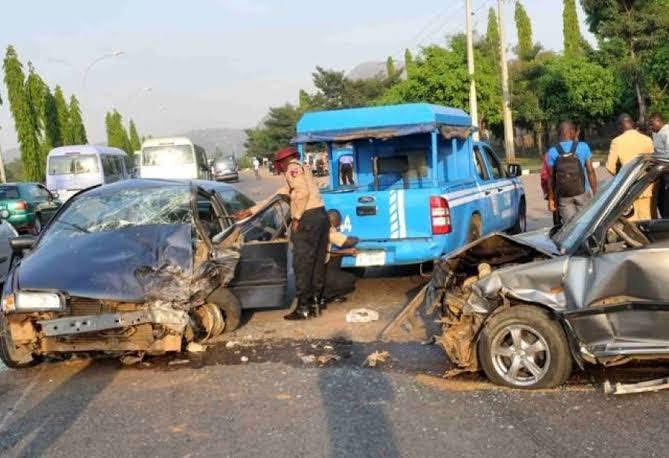
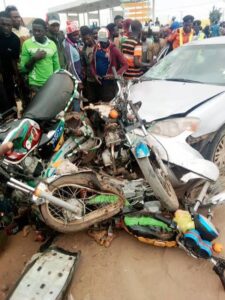
That question becomes even more important when we consider that the Federal Road Safety Corps recorded 10,446 road traffic crashes and 5,289 deaths in Nigeria in 2025.
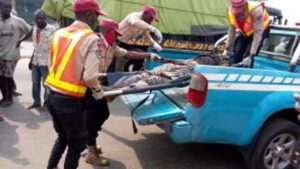
FRSC officials rescuing accident victims
Compared with 2024, the total number of crashes increased by 9.2 per cent, from 9,570 to 10,446. The number of people injured also increased by 7.2 per cent, from 31,154 to 33,400. Fatal crashes rose from 2,532 to 2,608, even though the overall number of deaths fell slightly from 5,421 to 5,289. (Nan News)
These are not merely statistics.
Behind every number is a person.
A father.
A mother.
A child.
A breadwinner.
A student.
A passenger.
A pedestrian.
A motorcyclist.
Somebody who left home expecting to return.
When a licence becomes a piece of plastic
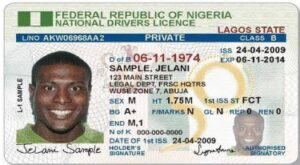
Nigeria’s official driver-licensing system does require training.
The FRSC’s current driver’s licence portal states that a first-time applicant must be at least 18 years old and must have completed driving school. The application process also involves a driving test through the relevant Vehicle Inspection Office process. (Nigeria Driver’s Licence)
The FRSC’s Driving School Standardization Programme is even more specific.
A certified driving school is expected to have roadworthy dual-control training vehicles, licensed instructors, a classroom, Highway Code materials, traffic-law materials, first-aid facilities, a fire extinguisher and a driving range, among other requirements.
FRSC’s operating procedure states that certified schools are expected to train students for at least 26 sessions of a minimum of one hour each, with training sessions recorded on the FRSC system. (FRSC)
So the problem is not that Nigeria has no rules.
The problem is whether the rules are being followed rigorously enough.
A law that exists on paper but is poorly implemented cannot adequately protect the public.
A driving-school certificate should mean that somebody actually learned to drive.
A driving test should mean that somebody actually demonstrated competence.
And a driver’s licence should mean something more than the possession of a plastic card.
The young man who bought a car today
There is a growing phenomenon that deserves serious attention.
A young Nigerian saves money or makes money through unconventional means, obtains a car—or receives one from his parents—and suddenly becomes a driver.
Sometimes the person has never received formal driving instruction.
Sometimes a friend gives a few lessons.
Sometimes the person learns by watching someone else drive.
Then, almost immediately, the vehicle enters one of Nigeria’s busiest roads including the highways.
That is dangerous.
A car is not a bicycle.
It is a machine capable of weighing more than a tonne and travelling at speeds at which a mistake can become fatal within seconds.
The ability to start an engine, move a vehicle forward and turn a steering wheel does not constitute driving competence.
Driving requires judgment.
It requires hazard perception.
It requires understanding right of way.
It requires knowing when not to overtake.
It requires knowing how to react when another driver makes a mistake.
It requires understanding braking distances.
It requires lane discipline.
It requires the ability to remain calm when confronted with unexpected situations.
And, perhaps most importantly, it requires experience.
The embarrassment of the learner’s sign
There is another attitude we must confront.
Some new drivers are reluctant to identify themselves as learners.
They consider displaying a learner’s sign on their vehicles embarrassing.
There is an unfortunate social perception that says:
“If I have bought a car, why should people know that I am still learning?”
But learning is not shameful.
In fact, identifying a learner should be seen as an act of responsibility.
Other motorists need to know that the person behind the wheel may still be developing confidence and road experience.
Britain takes this principle seriously.
Learners in Great Britain must display L plates at the front and rear of the vehicle, and failure to display the required plate can attract penalty points. (GOV.UK)
Nigeria should consider a similarly serious approach to learner identification.

A standard training school for Truck Drivers
If a person is still learning, let the road know.
There is nothing shameful about saying:
“I am learning. Please give me room.”
Britain does not treat driving as automatic
There is an important lesson Nigeria can draw from the British system.
In Great Britain, becoming a driver involves several stages.
A learner obtains a provisional licence and learns under the prescribed conditions.
The driver must then pass a theory test before taking the practical driving test. The theory examination includes knowledge and hazard-perception components. (GOV.UK)
The practical test then determines whether the applicant can actually drive safely.
This distinction is important.
Knowing the Highway Code is one thing.
Applying it while controlling a moving vehicle in real traffic is another.
Nigeria should strengthen that distinction.
A person should not merely be able to answer questions about road signs.
The person should demonstrate that he or she can safely operate a vehicle around pedestrians, motorcycles, buses, trucks, traffic lights, intersections and other motorists.
America has another lesson: don’t rush beginners
The United States offers another interesting model.
The National Highway Traffic Safety Administration describes Graduated Driver Licensing, or GDL, as a three-stage system:
Learner’s permit → Intermediate licence → Full licence.
During the learner stage, driving is supervised.
During the intermediate stage, the new driver is allowed greater independence but may face restrictions on high-risk situations such as night driving and carrying young passengers.
Only later does the driver receive an unrestricted licence. (NHTSA)
The reasoning is straightforward.
A new driver needs experience.
But experience should be acquired progressively.
The NHTSA says the strongest GDL programmes are associated with substantial reductions in crashes among young drivers. It cites research associating the most restrictive programmes with a 38 per cent reduction in fatal crashes and a 40 per cent reduction in injury crashes among 16-year-old drivers. (NHTSA)
Nigeria may not need to reproduce the American system exactly.
But the principle is highly relevant:
Do not give inexperienced drivers unrestricted exposure to every dangerous driving situation immediately.
Nigeria needs a “graduated driver” system
Nigeria should seriously consider introducing a stronger graduated licensing arrangement for new and young drivers.
For example:
Stage One: Learner
The applicant would:
● obtain a learner permit;
● pass a theory examination;
● complete mandatory practical training;
● display a learner identification sign;
● drive only under prescribed supervision;
● complete a minimum number of verified training hours.
Stage Two: Provisional Driver
After passing the practical test, the driver would receive a provisional licence.
During this period, there could be restrictions appropriate to novice drivers, particularly around high-risk behaviours.
Stage Three: Full Licence
After completing the required period without serious traffic violations, the driver would graduate to a full licence.
Such a system would introduce an important principle:
A driving licence should be earned progressively, not simply obtained.
But who is teaching the drivers?
This is another question that deserves national attention.
Who owns some of Nigeria’s driving schools?
Who teaches there?
What qualifications do the instructors possess?
How often are the schools inspected?
Are training hours genuinely completed?
Are students actually taught road safety or merely given certificates?
These questions matter because FRSC itself recognises the need for standardisation.
Its Driving School Standardization Programme says schools are assessed on their facilities and trainers and that certification can be suspended or withdrawn when minimum standards are compromised. (DSSP)
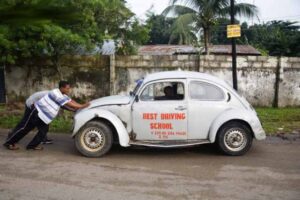
A Nigerian driving school operator
That means enforcement should be visible.
Nigeria should maintain and regularly publish an updated national register of approved driving schools and licensed instructors.
A prospective student should be able to enter a website, type the name of a driving school and immediately know:
● whether the school is accredited;
● when its accreditation expires;
● whether its instructors are certified;
● how many vehicles it has;
● whether the vehicles are roadworthy;
● whether the school has been sanctioned.
Transparency would help drive bad operators out of the industry.

The examiner must be independent
There is another reform worth serious consideration.
The person who teaches a candidate should not be the person whose word alone determines that the candidate is ready for an unrestricted licence.
Nigeria needs a strong, independent and standardised practical examination.
The test should assess actual competence, including:
● vehicle control;
● reversing;
● parking;
● lane discipline;
● turning;
● signalling;
● mirror use;
● speed management;
● safe overtaking;
● traffic-light compliance;
● pedestrian awareness;
● hazard perception;
● emergency braking;
● interaction with motorcycles and commercial vehicles.
And the examination should be digitally recorded.
Why?
Because once the examination is recorded, an applicant can challenge an unfair result and authorities can investigate suspicious patterns.
If one examiner passes virtually everyone, that should trigger an audit.
If another examiner fails almost everyone, that should also trigger an audit.
Technology can make the licensing system more transparent.
The problem is not only drivers
We must also resist the temptation to blame every road crash entirely on motorists.
Road safety is a system.
The driver matters.
The vehicle matters.
The road matters.
Traffic enforcement matters.
Emergency medical services matter.
Urban planning matters.
Road signs and markings matter.
Public transport regulation matters.
A competent driver can still encounter a mechanically defective truck.
A careful motorist can still meet a dangerously designed intersection.
A pedestrian can still be exposed to a road without adequate crossing facilities.
And a crash victim’s chances of survival can depend on how quickly emergency medical assistance arrives.
Consequently, Nigeria needs a comprehensive road-safety strategy rather than periodic enforcement campaigns.
Speed is not a small matter
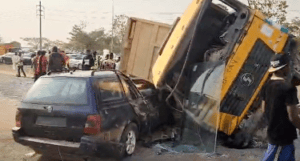
One of the most dangerous behaviours on Nigerian roads is excessive speed.
At high speed, the driver has less time to react and the vehicle requires a greater distance to stop.
The consequences of a collision are also more severe.
Nigeria should therefore expand intelligent speed enforcement.
Speed cameras and red-light cameras can complement human enforcement.
But technology must be transparent.
There must be proper calibration.
There must be reliable evidence.
There must be procedures for challenging erroneous penalties.
And enforcement should be designed primarily around saving lives, not generating revenue.
We need to know where crashes are happening
Nigeria also needs better public crash data.
The 2025 FRSC figures tell us the national picture, but policymakers need much more.
Every serious crash should produce a standardised record showing, where available:
● location;
● time;
● road condition;
● vehicle type;
● driver age;
● licence status;
● training status;
● estimated speed;
● weather;
● road design;
● injuries;
● fatalities;
● vehicle condition;
● suspected impairment;
● emergency response time.
FRSC already operates a Road Safety Observatory and has identified high-risk locations from its crash database.
The country should build on that work.
If a particular junction produces repeated fatal crashes, authorities should not simply erect another sign and move on.
They should ask:
What exactly is wrong with this location?
Is it the road design?
The speed?
Poor visibility?
Pedestrian movement?
Lack of traffic control?
Illegal parking?
Poor lighting?
The answer should determine the intervention.
Road safety should begin in school
We also need to change the culture before young Nigerians become motorists.
Screenshot
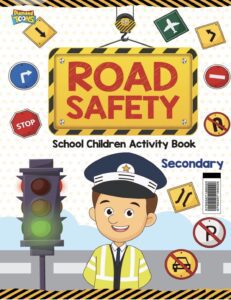
Road safety education should become a serious part of secondary-school education.
Young people should understand:
● road signs;
● pedestrian safety;
● seat belts;
● speed;
● distracted driving;
● alcohol and drugs;
● motorcycle safety;
● emergency response;
● responsible vehicle ownership.
By the time a Nigerian buys a first car, road safety should not be a new concept.
And commercial drivers need special attention
The risks associated with commercial buses, tankers and heavy trucks require particular attention.
These vehicles carry more passengers or impose greater physical force in a collision.
Commercial drivers should therefore face rigorous professional requirements, periodic medical assessments, skills testing and stronger sanctions for serious violations.
Companies operating large fleets should also be held accountable for driver working conditions.
 Pls
A driver who is pressured to drive excessively long hours without adequate rest can become a danger to himself and other road users.
Road safety therefore extends into transport-company management.
The licence should mean something
Perhaps the most important reform Nigeria can make is cultural.
We must restore the meaning of a driver’s licence.
A licence should be evidence that the holder has demonstrated:
knowledge + practical competence + road awareness + responsibility.
It should not simply be evidence that an application was processed.
Nigeria already has the foundation.
The FRSC’s licensing portal requires first-time applicants to complete driving school. The official framework provides for testing, and FRSC operates a standardisation system for driving schools. (Nigeria Driver’s Licence)
The challenge is to make those requirements real, consistent, transparent and difficult to circumvent.
The way out
Nigeria does not need another slogan telling motorists:
“Drive safely.”
We have heard that for years.
What Nigeria needs is a system that makes competent driving a requirement rather than an aspiration.
A person buying a first car should be encouraged—not embarrassed—to learn properly.
A learner should display the appropriate identification.
A driving school should be genuinely accredited.
An instructor should be properly qualified.
A practical test should be meaningful.
An examiner should be independent.
A vehicle should be roadworthy.
A dangerous driver should face predictable consequences.
A repeat offender should face escalating sanctions.
A dangerous road should be redesigned.
And every serious crash should teach the authorities something that can prevent the next one.
The statistics demand action.
Nigeria recorded 10,446 road crashes in 2025, with 5,289 people killed and 33,400 injured, according to FRSC figures reported by the News Agency of Nigeria. (Nan News)
But behind those numbers is something more profound.
Every road user is somebody’s child.
Somebody’s parent.
Somebody’s spouse.
Somebody’s friend.
Somebody’s employee.
Somebody’s future.
The ultimate question, therefore, is not whether Nigeria can reduce the number of road crashes.
It is whether Nigeria is prepared to change the way it thinks about driving.
Because a driver’s licence should never be merely a document that says:
“This person is legally allowed to drive.”
It should also give the public reasonable confidence that:
“This person has demonstrated that he or she knows how to drive.”

Until that confidence exists, every Nigerian who enters a vehicle is entitled to ask a difficult question:
Who exactly tested the person behind the wheel—and did that test really prove that the person can drive?

PETER Obi releases his full profile as more Nigerians prevail on him to do so.
NAME : Mr. Peter Gregory OBI, (CON).
CONTACT DETAILS
*22 Niger Drive, GRA, Onitsha, Anambra State, Nigeria
*Tel: 08034051000
*E-mail: poanambra@gmail.com
DATE OF BIRTH : 19th July 1961,
PLACE OF BIRTH: Onitsha, Nigeria
NATIONALITY: Nigerian
MARITAL STATUS: Married with two children
EDUCATIONAL INSTITUTIONS ATTENDED
· Christ the King College, Onitsha (W.A.S.C.)
. University of Nigeria, Nsukka (B.A. Philosophy)
· Lagos Business School, Nigeria (Chief Executive Program)
· Harvard Business School, Boston, U.S.A. (Mid to Mid Marketing)
· Harvard Business School, Boston, U.S.A. (Changing the Game)
· London School of Economics (Financial Mgmt/Business Policy)
· Columbia Business School, New York, U.S.A. (Marketing Mgmt )
· Institute for Management Development, Switzerland (Senior Executive Program)
· Institute for Management Development, Switzerland (Break-Through Program for CEOs)
· Kellogg Graduate School of Management, U.S.A. (Advanced Executive Program)
· Kellogg School of Management U.S.A. (Global Advanced Mgmt Program)
. Oxford University: Said Business School, (Advanced Mgmt& Leadership Program)
. Cambridge University: George Business School (Advanced Leadership Program)
PREVIOUS POSITIONS
· Governor, Anambra State of Nigeria (2006-2014)
· Honorary Special Adviser to the President on Finance (till May, 2015)
· Member, Presidential Economic Management Team (till May, 2015)
· Vice-Chairman, Nigeria Governors’ Forum (2008-2014)
· Chairman, South-East Governors’ Forum (2006-2014)
. Former Chairman: Board of Securities and Exchange Commission (SEC)
· Former Chairman: Fidelity Bank Plc.
· Former Chairman: Guardian Express Mortgage Bank, Ltd.
· Former Chairman: Future Views Securities, Ltd.
· Former Chairman: Paymaster Nigeria Plc.
· Former Chairman: Next International (Nigeria) Ltd
· Former Director: Guardian Express Bank Plc.
· Former Director: Chams Nigeria Plc.
· Former Director: Emerging Capital Ltd
· Former Director: Card Centre Plc
MEMBERSHIP OF PROFESSIONAL ASSOCIATIONS/ORGANIZATIONS
· Member, Nigerian Economic Summit Group (NESG)
· Member, Nigerian Chartered Institute of Bankers
· Member, British Institute of Directors (IOD)
MEMBERSHIP OF FEDERAL GOVERNMENT COMMITTEES
In my capacity as the Governor of Anambra State, I served as a member of:
*Federal Government Committee on Minimum Wage
*Federal Government Committee on Negotiation with Labour on Subsidy
*Federal Government Committee on Mass Transit
*Federal Government Committee on Natural Resource
*National Economic Council Committee on Power Sector Reform
*National Economic Council Committee on Sharing of MDGs Funds
*National Economic Council Committee on Accurate Data on Nigeria’s Oil Import and Export
*Agricultural Transformation Implementation Council
*Sub-Committee on Needs Analysis of Public Universities in Nigeria
*National Economic Council Review Committee on the Power Sector
AWARDS AND RECOGNITIONS
2015: Golden Jubilee Award from Catholic Archdiocese of Onitsha for outstanding contribution to quality healthcare delivery in St. Charles Borromeo Hospital in particular and Anambra State in general, on the occasion of the Golden Jubilee celebration of the hospital.
*2014: Nigerian Library Association Golden Merit Award for remarkable improvement of libraries in Anambra State, exemplified by our Government’s construction of the Kenneth Dike Digital State Library, remarkable upgrade of the Onitsha Divisional Library, and provision of library facilities in secondary schools across the State.
*2014: Champion Newspaper Most Outstanding Igbo Man of the Decade.
* 2014 The Voice Newspaper (Holand) Achievers Award for Outstanding Example in Leadership and Governance.
*2013: Silver Bird Man of the Year (with Governor Babatunde Fashola of Lagos State).
*2012: Business Hallmark Newspaper Man of the Year.
*2012: The Golden Award on Prudence – by the Methodist Church of Nigeria as the Most
Financially Prudent Governor in Nigeria.
* 2012: Leadership and Good Governance Award by The Ezeife Leadership Foundation Award for restoring peace and harmony to Anambra State.
* 2012: Best Performing Governor on Immunization in South-East Nigeria – by Bill & Melinda Gates Foundation.
* 2012: Outstanding Financial Planner and Manager – by the Church of Nigeria, Anglican Communion for my resourcefulness and creativity in governance.
*2011: Zik Leadership Prize.
*2010: ICT Governor of the Year – by the West Africa ICT Development Award.
*2009: Champion Newspaper Nigeria’s Most Trustworthy Governor Award.
*2009: Thisday Newspaper Most Prudent Governor in Nigeria.
*2007: The Sun Newspaper Man of the Year Award.
**The Nigerian MDGs Office/UNDP Best Governor in the Implementation of the MDGs in Nigeria
INTRODUCTION OF CONSTITUTIONAL AND OTHER MAJOR CHANGES IN NIGERIAN POLITICS
*He was the first gubernatorial candidate in Nigeria to legally challenge to its logical conclusion, his governorship electoral victory that was denied him. He won in the Courts and reclaimed his mandate.
*He was the first Governor in Nigeria to legally challenge his wrongful impeachment and was reinstated by the Courts.
*He was the first Governor in Nigeria to seek the interpretation of tenures of Governors when INEC allowed elections to take place in Anambra State when his tenure had not expired; the election already concluded was cancelled and he was allowed to complete his tenure.
*He was the first Governor to serve a 2nd term in both the new and old Anambra State, that is, almost 40 years after creation of the State.
*He was the first Governor, whilst still in Office, to be appointed a Special Adviser to the President.
*He was the first serving Governor to be appointed into the Presidential Economic Management Team.
*He was among the first Governors to be honoured with a National Award in 2011, while still in office.
*Though the only Governor whose political party was in government in only one State, he was elected Vice-Chairman of the Nigeria Governors’ Forum twice.
*Though the only non-PDP Governor in the South-East (made up of 5 States), he was elected by the other 4 PDP Governors as their Chairman for 8 years rather than the usual one year.
FUNDAMENTAL ACHIEVEMENTS AS GOVERNOR OF ANAMBRA STATE (PARTIAL LISTING)
1. Anambra was the first State to commence Sub-Sovereign Wealth savings, the first of its kind in Sub-Saharan Africa. At a time many other Governors were leaving huge debts, I left the equivalent of $500 million Dollars in investment as well as local and foreign currency, including $156 million in Dollar-denominated bonds.
2. For the first time in the history of Anambra State, Ambassadors and High Commissioners of notable countries such as United Stated, Britain, Russia, European Union, South Africa, Belgium, Israel, the Netherlands, Canada, among others, visited the State. Before my tenure, Anambra was practically a pariah state blacklisted by the Diplomatic Corps and international development partners.
3. Development partners such as UNDP, UNICEF, the World Bank, DFID, the European Union etc., which hitherto were not in Anambra State started working with the State. Anambra was consistently adjudged one of the best states in development partnership and commitment to reforms for good governance.
4. He was recognised as Best Governor by the Millennium Development Goals Office (OSSAP-MDGs) and the UNDP in the implementation of their programmes in Nigeria.
5. The Nigerian Debt Management Office (DMO) rated Anambra as the least indebted state in Nigeria. In spite of visible and measurable achievements recorded in various sectors, the State under him did not borrow or raise bonds for her various projects.
6. The Senate of the Federal Republic of Nigeria rated Anambra State as the most financially stable state in the country.
7. The State’s ground-breaking return of schools to their original owners – Voluntary Agencies (Churches) on 1st January 2009, and subsequent partnership with the Agencies in Education, saw the State move from 24th position out of 36 States to Number One in National Examination Council (NECO) and West African Examination Council (WAEC) examinations for three consecutive years. This made the World Bank to commission a study, led by the renowned Prof. Paul Collier of Oxford University, on this revolutionary partnership and phenomenal achievement.
8. The State also entered into strategic partnership with the Churches in the Health sector. This symbiotic relationship resulted in a tremendous boost to health care because of the services offered by health institutions owned by Voluntary Agencies, while the State restored grants to the agencies and made available to them more than 50 million Dollars in various types of support.
10. Through partnership with the Church in the Health sector, his Government funded the transformation of -:
a: Iyienu Hospital, Ogidi;
b: Our Lady of Lourdes Hospital, Ihiala;
c: St Charles Borromeo Hospital, Onitsha;
d: Holy Rosary Hospital, Waterside, Onitsha; and
e: St. Joseph Hospital, Adazi-Nnukwu.
His Government also built the Joseph Nwilo Heart Centre in St. Joseph, Adazi-Nnukwu, where heart operations are now being performed.
11. His Government won the Bill and Melinda Gates Foundation (1 Million dollars) as the best-performing state in immunisation in the South-East. With complementary funding from our Government, they used the money to build 10 Maternal and Child Care Centres across the State, particularly in rural communities, in partnership with the Churches.
12. The State was the first to procure and distribute more than 30,000 computers to secondary schools, including 22,500 from HP. The Managing Director for Personal Systems Group HP Inc, Mr. FabriceCampoy described the deployment as the biggest of such projects in the Middle-East and Africa.
13. Anambra State Government provided Microsoft Academies to more than 500 secondary schools, which the Head of Microsoft in Nigeria (Mr. Ken Span) described as the biggest such deployment in Africa so far.
14. The State provided Internet access to more than 500 secondary schools, which the CEO of Galaxy Backbone (Mr. Gerald Ilukwe) characterized as incomparable to any in the country.
15. More than 700 buses were provided to secondary schools in the State by our Government.
16. Boreholes were provided in schools all over the State.
17. Numerous classrooms were built in all the 177 communities of the State.
18 As part of the efforts to turn around the economy of the State, a number of companies were attracted to build their facilities in the Anambra State. A case in point is SABMiller, the 2nd largest brewery in the world, which built their first Green Field facility in the State, which is today one of the most successful facilities they operate globally.
19. A number of other companies followed the SABMiller initiative and were all supported and encouraged under our Government; a good example is INNOSON Motor Manufacturing Company, from which our government bought more than 1,000 vehicles.
20. Anambra State for the first time started close collaboration with recognized government security agencies (the Police, Army, Navy, Department of State Security, Civil Defence, among others), offering them various types of support including provision of more than 500 security vehicles. The improvement in security was phenomenal, such that the former IG of Police (Abubakar Mohammed) lauded Anambra State for not witnessing any bank robbery in my last three years in office.
21. To further enhance security, Anambra State provided at least one security vehicle to each of all the 177 communities in the State as well as various organizations such as markets and Churches.
22. His Administration conceived and built, from scratch, the first state-owned Teaching Hospital, Chukwuemeka Odumegwu-Ojukwu teaching Hospital, Awka.
23. His Government commenced the planned development of the Igbariam Campus of the ChukwuemekaOdumegwu-Ojukwu University, including the fencing, construction of internal roads, electrification, construction of the Faculty of Law, Auditorium, Administrative Block, Faculty of Agriculture, Management Building, among others).
24. His Government attracted the World Bank support on erosion – National Erosion and Watershed Management Project (NEWMAP) – to Anambra State.
25. His Government was the first to do Poverty Mapping in Nigeria, as a guide for the effective implementation of our poverty-alleviation strategies.
26 His Government, for the first time, undertook the aerial mapping of Awka as well as the production of Structure Plans for Awka Capital Territory, Onitsha and Nnewi.
27. During his tenure and with his Government’s support, Anambra State became an oil producing State.
28. He built the first Secretariat Complex to house State Government Ministries that were hitherto scattered around the State.
29. His government commenced the development of the ‘Three Arms Zone’ comprising Government House/Governor’s Lodge, Legislative Building/Speakers Residence, and Judiciary Building with Chief Judge’s Residence.
30. By the end of his tenure in 2014, more than twelve (12) health institutions, including two hospitals, had secured accreditation; when we took off in 2006, no health institution in Anambra State was duly accredited.
31. Anambra State was the first to undergo national peer review, which scrutinised State Governments for good governance, through the State Peer Review Mechanism (SPRM), an initiative of the Nigerian Governors’ Forum in collaboration with the DFID.
-
 News1 day ago
APC Supporters Attacked, Campaign Vehicle Set Ablaze in Katsina
-
News3 days ago
NYSC Members’ Kidnap: How Driver, Witness Identified 5 Suspects Arrested By DSS
-
Politics2 days ago
Gunmen attack ADC guber candidate’s convoy in Sokoto, candidate escapes
-
Politics2 days ago
Don’t Be Deceived, Vote Massively for Tinubu in 2027, South-East Govs Tell Ndigbo
-
News3 days ago
Ondo bizman commits suicide, family cries foul play
-
Politics3 days ago
Enugu APC Releases Updated Campaign Council List, Says Party Getting Stronger For Victory
-
News12 hours ago
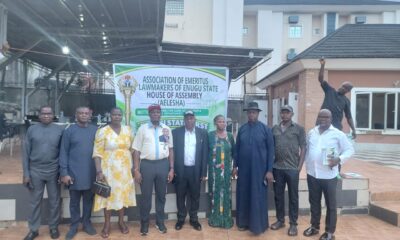
Former Enugu Lawmakers Endorse Mbah for Second Term, Back APC Candidates
-
News3 days ago
29-Year-Old Nigerian Man Dies After Tree Crushes Car in London