News
Outrage greets Nigeria’s ranking as second-most terrorized country

…Afenifere, Ohanaeze, ACF, PANDEF, MBF, LP, ADF, Osuntokun, others lament
Outrage on Friday, greeted the ranking of Nigeria as the second most terrorized and attacked country in the world after Iraq by the global Terrorism Research/ Analysis Organisation.

Groups and eminent Nigerians, who spoke on the ranking lamented the dangerous bent insecurity has taken and tasked the government on decisive action.
Those who spoke include the Afenifere; Ohanaeze Ndigbo; Middle Belt Forum, MBF; Pan NigerDelta Forum, PANDEF, Arewa Consultative Forum, ACF; the Labour Party, LP; and Chief Akin Osuntokun.
Commenting on the ranking, former National Publicity Secretary of the Arewa Consultative Forum, Mr Anthony N.Z Sani, said: “I do not have the facts to make informed comments on the rating of Nigeria as the second most terrorized nation in the world. All I can say is that the government should note the reports and double down its efforts in order to put a permanent end to insecurity posed by terrorist across the country.”

In its reaction, the pan Yoruba Socio-political organisation, Afenifere, said the ranking shows a vote of no confidence on the President Muhammaadu Buhari administration.
Afenifere’s National Publicity Secretary, Mr Jare Ajayi, said: “It’s a dangerous thing if on the negative side, Nigeria is ranked in the whole world after Iraq. As we all know, Iraq just went through a devasting war immediately after the removal of Saddam Hussein but Nigeria did not go through such.
“For that, there is no basis whatsoever why Nigeria should be in this kind of situation.
It is a negative mark on the Buhari government, which has been on in the last seven years and a vote of no confidence on his administration.
“This is what Afenifere has been saying and we have been consistent on it. We are not comfortable with it and it is a pity that the global terrorism index has ranked us on the negative side. It is sad.”
National Chairman of the Labour Party, LP, Comrade Julius Abure, and National Publicity Secretary of the party, Comrade Abayomi Oluwafemi, said the ranking was in tandem with the parlous insecurity situation in the country.
Abure said securing lives and property of the citizenry is the basic minimum duty of any government and any government that cannot provide security should not exist.
The Labour Party added that Nigeria’s position as the second most terrorized nation on earth is a clear testimony of the failure of the President Buhari-led All Progressives Congress, APC administration.
National Publicity Secretary of the party, Comrade Abayomi Oluwafemi, said: “This ignoble position we have found ourselves is a clear testimony of the failure which the APC administration has been on all fronts over the last seven years.
“It is not surprising because this is the same country where bandits over ran our foremost military officers training institution, the Nigerian Defence Academy.
“Is it not in this same country under the watch of the APC that bandits attacked the convoy of a sitting President? Is this not the same country where terrorists are killing, raping and maiming defenceless citizens?
“What about the killing of innocent worshipers at the Church in Owo? the APC is a total failure.
“That is why we appeal to Nigerians to make a better choice when voting in 2023, they can chose wisely by voting for the Obi/ Datti ticker and the Labour Party to change the narrative.”
The National Presidet of the Middle Belt Forum, MBF, Dr. Bitrus Pogu, said the classification of Nigeria as the second most terrorised country in the world was absolutely correct because it was based on happenings in the country.
Dr. Poge who spoke to to Vanguard in Makurdi, said: “I believe that they used available data to arrive at that classification. There are a lot of things happening in this country that are not reported especially in the North West. The level at which the indigenous Hausa are being attacked and wiped out is unprecedented.
“You know that in our case (Middle Belt) we have an organised system and it has worked in our favour, we have been able to make noise in some cases. But in their own case much of it is not reported. But the international community has quite some data, and it is based on that that they must have arrived at the conclusion that we are the second most terrorised country in the world.
“So it is now left to our government that whatever they are hiding, whatever they didn’t want the international community to know, is now known; and they should do the needful.
“They should put their acts together because in the long run what they are trying to cover up will come to the open; and it has started coming to the open. We pray that they change what is being done.
“I mean when Governor Samuel Ortom said that government forces are protecting terrorists and now the Federal Government is saying they should give evidence as to who revealed it to him; it is all a cover up. As far as we know Nigeria is so terrorised, you and I don’t feel safe moving on the road. We move praying that we do not fall prey to bandits.
“So that classification is correct as far as I’m concerned. And we need to do things right, so that we don’t continue to live in fools’ paradise and continue pretending that all is well while everything is not well.”
On his part, Chief Akin Osuntokun, former spokesman to former President Olusegun Obasanjo, said: “No honest observer of Nigeria can claim to find this revelation surprising. We live the daily realty of the report. But wait for the response of the presidency and the alternate reality they will concoct and you will understand why Nigeria is the way it is.
“Look, who feels it knows it. I went for the burial ceremony of the mother of my boss Nduka Obaigbena, two weeks ago in Agbor, Delta State. What pained me most was I couldn’t go by road. “Given the reality of contemporary Nigeria, it would have been insane of me to even float the idea for discussion.
You remember what the governor of kaduna state said on the security status of Nigeria. He said the government knows where these bandits are holed up and couldn’t understand why his principal, President Muhammadu Buhari was pussy footing around. He thereafter threatened to invite foreign mercenaries to come and fill the vacuum created by the incapacity of this government.
Two days ago, the Governor of Zamfara state, Mutawallen, stated he had ordered 7000 guns for the citizens to protect themselves since the government has become powerless to do anything about the security situation.”
The Pan-Niger Delta Forum, PANDEF, led by the South South leader, Chief Edwin Clark described the Global Terrorism Research/Analysis Organization ranking Nigeria as the 2nd Most Terrorized/ Attacked Country After Iraq as the stark reality.
According to PANDEF, though the ranking is appalling and quite frightening the truth must be told considering how unsafe Nigeria is following the incessant attacks and kidnapping by terrorists, massive killing and wanton destruction of property.
Speaking with Vanguard, National Publicity Secretary of PANDEF, Mr. Ken Robinson said: “The ranking of Nigeria as the second most terrorized/attacked country, coming after Iraq, and ahead of countries like Afghanistan, Somalia, Yemen, Syria, etcetera, is appalling and quite frightening, but that’s the stark reality.
“The state of insecurity is dreadful and it’s worsening by the day; innocent Nigerians are being killed daily virtually in all parts of the country by violent extremist groups and criminal gangs. It is either audacious terrorist bandits and marauding killer expansionists in some parts of the country or vicious kidnappers, unknown gunmen and sea pirates in the other parts. Suffice it to say that the country is under an existential threat.
“Unfortunately, the Police, as well as the military and other security agencies, appear to have been overwhelmed, and the situation has been exacerbated by the equivocations of the government, with reports of official complicity and even outright sabotage.
“We can only hope that the next administration would be pragmatic and decisive in dealing with the security situation.”
Also reacting, Igbo elite body, Alaigbo Development Foundation, ADF, through its Spokesman, Chief Abia Onyike, said: “It is not the yearly increases in security budgets that would defeat insecurity and terrorism in Nigeria.
The defeat of these monsters would come from a radical socio-economic transformation that would guarantee mass employment opportunities, improved educational opportunities for the citizens and a drastic national mental reformation which should place less emphasis on religious indoctrination and ethnic chauvinism.
“If these measures are not introduced and followed, no amount of ammarment build-up can eradicate the crisis of terrorism, violence and banditry in Nigeria.”
“The culture of extremism, seperatism, violence and terrorism are man-made.They reflect the internal struggles between rival factions of the ruling class and diverse regional forces for political control and hegemony. These struggles undermine patriotic commitment to nation-building.
“Unless the various ethnic and religious dichotomies are compelled to close ranks for genuine patriotism and nation-building, there can be no end to terrorism in Nigeria.”
Agreeing with the ranking, the Ohanaeze Ndigbo declared that insecurity in Nigeria would persist as long as the wrong approach is deployed to tackle it.
Ohanaeze specifically said insecurity would remain as long as the appointment of security chiefs are based on nepotism rather than on merit.
In a statement the National Publicity Secretary, Dr. Alex Ogbonnia, Ohanaeze Ndigbo said: “The insecurity in Nigeria will remain unabated so long as the wrong approach to its solution persists. In the first place, Ohanaeze Ndigbo Worldwide has raised alarm that the lopsidedness in the appointment of service chiefs in Nigeria has greatly antagonised merit.
“Ohanaeze has questioned the rationale behind the alienation of several brilliant brave military officers from the South East of Nigeria on account of nepotism. We argued that the expected morale and integrity in the armed forces will be jaundiced if ethnocentrism is elevated as a state policy among the rank and file of the army.
“The current insecurity catastrophe is the outcome of poor policy options.
“Secondly, the federal government is highly insincere in the fight against terrorism in Nigeria. It is very curious that the members of Boko Harram are treated with kid gloves even when they kill, maim and displace their victims. In other words, the Nigerian government lives in denial.
“Third, the gestapo style and precision with which terrorists overwhelmed the security operatives and picked the members of Boko Haram at the Kuje Correctional Centre leaves much questions than answers
“In sum, we do not really believe that any country is higher than Nigeria on insecurity, rather insecurity in Nigeria is underrepresented.
“This is because, while the insecurity in some other countries such as Syria and Iraq are one directional, the sources of insecurity in Nigeria are multifaceted. They include Boko Haram, Fulani herdsmen, unknown gun men, banditry, kidnappings, cultism, corruption, fetishism, night marauders and hoodlums, etc.
“Based on the above backdrop, no Nigerian is sure of the next day. It is very painful that Nigeria has degenerated so low”. – Vanguard.



News
Sanwo-Olu, Lai Mohammed, Gbenga Daniel to discuss 2027 elections, insecurity at 7th Freedom Online lecture

Challenges facing the economy and insecurity, especially associated with elections in a developing economy like Nigeria, will be the focus of discussion at the seventh yearly lecture of Freedom Online (www.freedomonline.com.ng) on September 3 in Lagos.
Freedom Online, according to a statement by its Managing Director/Editor-in-Chief, Gabriel Akinadewo, is focusing on how to tackle insecurity during the lecture “because it has become a monster, threatening to consume the nation-state called Nigeria.
“What does the future hold for Nigeria after the 2027 general elections? How will the election be conducted in a way that will be acceptable to all? Will the outcome lay a solid foundation for the future of the country?
“We believe that actions of politicians, security agents and INEC officials, before, during and after the election will, one way or the other, decide the fate of the more than 200 million Nigerians in this geographical space. Obviously, insecurity, part of which is thuggery during elections, leads to poverty, underdevelopment and other social vices. Nigeria’s political, economic and social fabric is disintegrating because of this time bomb and the outcome of the election will go a long way to decide Nigeria’s future in global affairs”.
Akinadewo said Governor Babajide Sanwo-Olu of Lagos State is the Special Guest Speaker while former Information & Culture Minister, Alhaji Lai Mohammed and former Ogun State Governor, Senator Gbenga Daniel, are the Chairman and Special Guest of Honour respectively.
The President of the Nigerian Guild of Editors (NGE) and Editor of Vanguard, Eze Anaba, is the Chief Host.
…Property Enumeration App to drive new land revenue regime
The Enugu State Internal Revenue Service (ESIRS) has announced a drastic reduction in land use charges payable by property owners across the state as part of measures to encourage tax compliance and broaden the state’s revenue base.
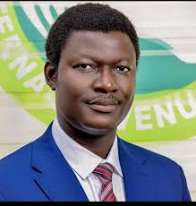
The Chairman of ESIRS, Mr Emmanuel Ekene Nnamani, disclosed this on Monday while briefing journalists on the activities and achievements of the agency in its three years under his leadership.
Under the revised arrangement, property owners in Independence Layout now pay N70,000 annually, while those in Abakpa pay N20,000. Owners of village houses, according to Nnamani, will pay N10,000 annually as land use charge.
Nnamani also announced plans to commence the implementation of a Property Enumeration App, which will facilitate the identification and enumeration of properties across the state and provide a database for the assessment and collection of land use charges.
He said students would be engaged to participate in the enumeration exercise, with each student expected to receive payment on a weekly basis, based on the number of houses enumerated.
According to him, the initiative would help ESIRS establish an accurate property register while creating opportunities for students to earn income through the exercise.
Nnamani explained that the Property Enumeration App would assign identification to properties and their owners, making it easier for the government to determine taxable properties and improve compliance.
He said the exercise was part of ESIRS’ broader strategy to expand the tax net and bring previously untapped sources of revenue into the formal revenue system.
The ESIRS chairman said the agency was also expanding its revenue collection activities to o other areas including haulage fees, land use charges, capital gains tax, stamp duties and withholding tax.
He disclosed that withholding tax would soon become operational in the state, urging individuals and organisations required to deduct the tax to ensure that the deductions were properly remitted to the government.
Giving an insight into the performance of ESIRS under his leadership, Nnamani said the agency had recorded a significant increase in internally generated revenue since 2023.
He said the state generated N37 billion in 2023, rising to N108.5 billion in 2024, while revenue increased substantially to N406.7 billion in 2025, representing tax and non-tax revenues.
Nnamani attributed the growth to the reforms introduced under Governor Peter Mbah’s administration, particularly the autonomy granted ESIRS and the deployment of technology for revenue collection.
He said the agency inherited a system characterised by poorly motivated personnel and fragmented revenue collection, but the autonomy granted by the state government enabled ESIRS to embark on fundamental reforms.
“Our Governor came with disruptive innovation and now it is time to give account,” Nnamani said.
He explained that the autonomy granted to ESIRS was backed by legislation, transforming the agency into a one-stop shop for revenue collection in the state.
According to him, ESIRS moved away from a mono-payment gateway operated through Interswitch and expanded the system to seven payment gateways, including UPS and Flutterwave.
He said taxpayers could now make payments through banks, transfers and more than 300 Point-of-Sale (POS) terminals, including from the comfort of their homes and even during weekends.
The development, he said, had significantly improved convenience and reduced opportunities for revenue leakages.
Nnamani said the agency also embarked on extensive training of its personnel and declared an emergency in which every staff member was required to have access to a laptop or tablet.
He added that ESIRS invested in reliable internet connectivity and solar energy to ensure that its operations were not disrupted by power challenges.
The ESIRS chairman said the agency had also banned cash payments as part of measures to strengthen transparency and accountability in revenue collection.
He said several revenue agencies that previously operated independently had been unbundled and brought under a centralised system, while ESIRS collaborated with relevant unions and revenue agencies to improve its operations.
According to him, the reforms were particularly significant in the informal sector, where revenues were previously paid to non-state actors before the new system was introduced.
Nnamani urged residents and businesses to familiarise themselves with the state’s tax laws, stressing that the agency was not interested in imposing arbitrary taxes but in ensuring compliance with existing legislation.
He said the law provides for certain exemptions, but taxpayers seeking exemption must undertake the required tax filing.
He noted that ESIRS was currently not implementing some provisions of the tax law to their full extent, citing the provision requiring the payment of one per cent of turnover in certain circumstances.
“We are only collecting N36,000 and people are complaining. I’m a tax collector and you have to convince me why you should not pay,” he said.
He urged taxpayers to study the tax laws and understand their obligations rather than evade payment.
The ESIRS boss further disclosed that the state was collecting Development Levy from new construction projects, noting that between 20 and 25 new buildings were being commenced daily across the state.
He said the levy was N150,000 in Enugu North Local Government Area, N100,000 each in Enugu South and Enugu East, N80,000 in Nsukka, while the rate for other local government areas stood at N50,000,”and you must pay to be permitted to commence development of the property”.
READ THIS Government Of Dr Peter Mbah Is Interested Practically, Conveniently To Relate With NUJ – _Aka Eze Aka_
He said ESIRS was also strengthening the collection of capital gains tax, particularly from property transactions, as well as stamp duty.
Nnamani maintained that the objective of the reforms was to create a sustainable and transparent revenue system capable of funding government programmes without placing undue pressure on taxpayers.
The chairman also dismissed concerns that the ongoing tax reforms were designed to frustrate businesses, particularly Igbo traders.
He said the forthcoming implementation of enhanced tax-compliance measures at both the federal and state levels should not be misconstrued as an attempt to shut down businesses.
According to him, the reforms are aimed at ensuring that individuals and businesses fulfil their statutory tax obligations.
“It is not aimed at shutting down Igbo business. People should pay their taxes and not evade it,” he said.
Nnamani said ESIRS would continue to expand the tax net while deploying technology to make payment easier, improve transparency and ensure that revenue due to the state was properly collected.
He said the agency’s ultimate objective was to build a modern revenue administration system in which taxpayers could meet their obligations conveniently while the state would accurately account for every naira collected.
-
 News3 days ago
APC Chairman slumps, dies during reconciliation meeting in Kogi
-
News2 days ago
‘Fake agency’ boss, Nwabueze, fights back with appointment letter
-
News3 days ago
Another fake agency uncovered, FG suspends three perm secs, orders arrest
-
News1 day ago
NDLEA arrests 101-year-old woman for selling cannabis in Ogun
-
News3 days ago
Tinubu unveils APC presidential campaign council, appoints self as chairman
-
News2 days ago
‘How fake federal agency tricked us’ – Anambra govt
-
News2 days ago
Four family members, dog die after eating Amala meal in Kogi
-
News3 days ago
1,844 killed in South-East in two years — Amnesty International reports