Connect with us

News

FG can borrow till eternity, says APC National Chairman

Published

on

Spread the love

The National Chairman of ruling All Progressives Congress (APC), Abdullahi Adamu, yesterday came under attacks over his comments that the federal government could borrow till eternity to fund the country’s infrastructure regeneration.

Adamu, while speaking in an interview on Trust Television late Monday, had said countries like the United States and the United Kingdom borrowed funds from international financial institutions to meet their needs.

Adamu said:  “I remember a programme we had here, I told you and I thought you believed me that I have no quarrel with government borrowing. Government can borrow from here to eternity. The American government borrows, the Canadian government borrows, the United Kingdom borrows, France borrows money from the World Bank and such other institutions.

Nigeria is no exception, what I quarrel with is if the money is not used for a purpose and the infrastructure we are developing across the country is from this source.

Maduka College Advert

“You also have to appreciate the fact of the level of revenue accruing to the government, oil is the main thing.. We want to see how best we can diversify. These issues affecting the revenue accruing to the government are not our making.  No matter how good we are, they happen.

“When some countries sneeze, we catch a cold. The Ukrainian crisis with Russia is having an impact on our economy and even in bigger economies than our own, so why do we limit ourselves in our thinking.”

His position was, however, faulted by the Nigeria Employers’ Consultative Association (NECA), Labour Party and other economy experts who noted that the nation’s debt profile had become unsustainable, in the face of dwindling revenues, stressing that there were alternative ways of funding infrastructure.

They also added at further increase in the   national debt could lead to high inflationary economic growth or no growth at all, a much higher cost of capital in the economy, and possible sovereign default and its damaging effects.

NECA said there were alternative ways of funding infrastructure, adding that debt should not be the first option.

The umbrella body for employers in the country equally expressed worry over whether the funds being borrowed would be judiciously used, considering past experiences.

The Director-General of NECA, Wale Oyerinde, said: “While we are not against government’s borrowing to fund critical “Cash-Back” infrastructures, we are, however, concerned about the propriety of the borrowing at this time when it has become expedient to drastically reduce our exposure to further debt.

‘’Of concern also is whether the funds would be judiciously used, considering past experiences.  It is no news that the nation’s cost of governance is abnormally high and overboard. Rather than borrowing being the first option in view of current economic realities, it would be reasonable for the government to realign its priorities and look inwards.

‘’There are several moribund government structures and assets that could be leased or sold off, rather than leave them in a perpetual dilapidated state.

“In the last decade, government borrowings have been to fund recurrent expenditure and expensive governance, leaving the country in huge debt with consequences for current and future generations. ‘’While experts continue to aver that our debt-to-GDP ratio is healthy, the real challenge we must address is our debt-to-revenue ratio which, according to the Minister of Finance, Budget and National Planning, is tending towards negative.”

Spokesman of Labour Party, Dr. Doyin Okupe said:   “Such statement shows the level of how myopic the ruling party can be about the future of Nigeria youths.

‘’It shows they don’t have any good plan for Nigeria. Do they want foreigners to take over Nigeria? It is high time the National Assembly sat-up and   prove to Nigerians that they are not rubber-stamps as they are being perceived by many.”

Investment expert and CEO, Wyoming Capital and Partners, Tajudeen Olayinka, said in his reaction: “I think APC chairman spoke from the position of ignorance. While a sovereign nation can borrow money from multiplicity of sources, through issuance of debt instruments to investors from all across the world, including domestic investors, or make special arrangements with bilateral or multilateral sources, the question of perpetuity of such borrowings depends largely on the capacity of the sovereign nation to refinance her matured or maturing obligations timeously.

“Interestingly, the capacity to refinance debts is a function of the ability of the sovereign nation to manage debt sustainability. Where sustainability is in doubt, it might be difficult to raise additional finances under such terms and conditions that are supportive of the country’s economy.

“In other words, debt instruments issued by a country experiencing sustainability problems could attract higher or outrageous yields, inimical to economic growth and development.

“In fact, such instruments are treated as junk bonds in the international capital market. If care is not taken, especially with the way Nigeria is beginning to have difficulty improving her revenue generation capacity, relative to her debt service obligations, the country might fall into that negative territory in no distant future.

‘’So, it is important that the government should begin to retrace its steps in good time, in order not to put the economy in a big mess. Private sector-driven economy requires much lower public debts, and could produce a better economy for all.”

On the consequences of eternity borrowing by Nigeria, Olayinka said: “The economic consequences of unsustainable debts are: high inflationary Gross Domestic Product, GDP, growth or no growth at all, a much higher cost of capital in the economy, possible sovereign default and its damaging effects, unemployment could become a major issue, persistent macroeconomic imbalances, etc.”

Reacting as well, Prof Uche Uwaleke , President, Association of Capital Market Academics and a former Finance Commissioner in Imo State, said : “The key question this raises is for what purpose are we borrowing?

“If the loans are self-liquidating, then there is no cause for alarm. But, if they are not well applied such that the country’s debt burden is aggravated, thereby mortgaging future generations, then it does not make sense to borrow.  ’In sum, borrowing is positive for Nigeria only when it advances economic growth and development.”

In his reaction, Chartered Stockbroker and Managing Director/CEO, Sofunix Investment and Communication, Sola Oni, said: “Government’s penchant for reckless borrowing signifies poor management of resources.

‘’Deployment of Ways and Means Financing, WMF, which is continuous printing of currency, has dire consequences of unsustainable payment of interest and loss of confidence in the sovereign status of such a country in the international financial market.

‘’Rather than indulging in a borrowing spree, the Federal Government should take advantage of immense opportunities for capital injection in the financial capital market to raise development funds at cheaper rates.”

President Muhammadu Buhari has been criticised for the increased borrowing of the Federal Government since the inception of the administration in 2015.

This led to N29 trillion or 67 per cent   increase in the national debt to N41.6 trillion at the end of March 31, 2022, from N12.6 trillion at the end of 2015, as the Federal Government continued reliance on borrowing to fund its annual budget.

Recently, the Minister of Finance, Zainab Ahmed, disclosed that FG had to borrow N3.09 trillion between January and April this year to fund its expenditure and service its debt during the period. During the four month period, the FG recorded revenue of N1.63 trillion, spent N4.72 trillion out of which N1.94 trillion was spent on debt service. (Vanguard)


News

ICPC exposes Payroll Scandal: Official paying 14 family members, another worker collects 13 salaries

Published

on

ICPC Chairman Musa Aliyu
Spread the love

The Independent Corrupt Practices and Other Related Offences Commission has uncovered cases of ghost workers allegedly inserted into government payrolls, including an official who enrolled 14 members of his family and another who allegedly collected 13 salaries.

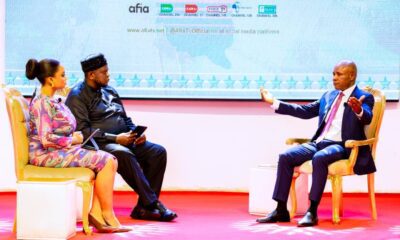
The ICPC Chairman, Musa Aliyu, disclosed this on Thursday in Abuja while delivering the keynote address at the 2026 Economic Confidential Lecture and National Spokespersons Award, organised by Image Merchants Promotions Limited.

Aliyu said the commission’s investigation into ghost workers had exposed how individuals manipulated government payroll systems to receive multiple salaries.

He said, “We discovered that one person enrolled 14 members of his family. He lived in a religious hotel, a hotel at the public office, receiving salaries.”

The ICPC chairman added that another individual allegedly enrolled his wife, daughter, son and other family members and received 13 salaries.

Maduka College Advert

“Another person enrolled his wife, his daughter, his son, and others and was receiving 13 salaries,” he said.

Aliyu said the commission had also identified about 900 suspected ghost workers and published their names, challenging them to prove that they were genuine employees.

“We now secured income of about 900 ghost workers, which we published their names in papers,” he said.

He explained that the commission subsequently spent about a year investigating the suspected ghost workers, uncovering the methods used to insert fictitious names into government payrolls.

“We spent one year, one single year, on ghost workers,” Aliyu said.

According to him, in some cases, the names of the alleged ghost workers appeared on official payrolls with email addresses, while the bank account details were linked to other individuals.

“When they insert their names, you will see their name in the payroll. You will see their email. But when you check the account number, you will see the name of the person. So, that is how these things have been done,” he explained.

Aliyu warned that the consequences of ghost workers extended beyond salaries, saying fraudulent entries could also result in ghost pensions, housing, health insurance and other benefits.

“Because, you know, once there is a ghost worker, there is ghost pension, there is ghost mortgage, there is ghost housing fund, there is ghost health insurance,” he said.

He said the commission’s intervention was aimed at protecting public resources and strengthening the economy, noting that fraudulent payroll practices imposed additional costs on the country.

The ICPC chairman also disclosed that the commission recovered more than N24bn in ghost pension funds in 2024.

“In 2024, we recovered over N24 billion ghost workers pension,” Aliyu said.

He said the commission had adopted cross-agency collaboration and other preventive measures to tackle corruption and recover government resources.

Aliyu stressed that the commission was increasingly focusing on preventing corruption and ensuring that government projects were properly executed rather than relying solely on criminal prosecution.

He said, “It is better for us to do that than to engage in filing criminal charges. How many charges can we file?”

The ICPC chairman said the commission had recovered or secured government resources through interventions in projects and other areas, stressing that the ultimate objective was to ensure that Nigerians benefited from public expenditure.

He also called for greater use of data and technology in combating corruption, saying effective communication and access to reliable information were essential to building public confidence in anti-corruption efforts.

Earlier, the Chief Executive Officer of IMPR, Yusha’u Shuaib, said the lecture was organised to promote stronger governance through transparency, accountability and professional communication.

“We are honoured to host yet another gathering of leaders, professionals, scholars, and communication experts committed to strengthening governance, promoting transparency, and advancing excellence in public communication,” Shuaib said.

Continue Reading

Health

Mbah tours 300-Bed Enugu Int’l Hospital, says ‘We’re ready to welcome the world’ (PHOTOS)

Published

on

Spread the love

…Set to launch hospital, targets large share of medical tourism

_…Facility attracts outpouring of interest from diaspora medics

Ahead of the imminent inauguration of the Enugu International Hospital, Governor Peter Mbah of Enugu State has undertaken a tour of the facility, declaring that Enugu State was ready to welcome the world.

Mbah said the hospital was now fully installed with state-of-the-art medical equipment and would help to reverse medical tourism out of the country, ensuring that the state secures a large chunk of the multibillion-dollar market.

Fielding questions from newsmen on Thursday evening after a pre-launch walkthrough of the facility situated at Rangers Avenue, Independence Layout, Enugu, Mbah said the hospital was a product of a deliberate health agenda.

“If you recall our manifesto during our campaign for office, we made it clear that we were committed to making Enugu a medical tourism hub on the continent.

Maduka College Advert

“We knew the size of that market and wanted to have a good share of that market. But we knew also that it was never going to be wished into existence.

“We knew that we needed to do things differently and build a world-class facility and, most importantly, attract top-notch professionals to provide services. We cannot wait to welcome the world to Enugu,” he stated.

Mbah regretted that there was just about one functional location for PET Scan services in the country, but noted that the hospital would now bridge the wide gap in advanced medical services in the country.

“We have quite a lot of Ndi Enugu, and Nigerians who travel to India, Turkey, the United States, and the United Kingdom to seek medical attention. So, what we are asking for is just a fraction of what they would have spent overseas for the same quality services,” he said.

“We felt that if we want to compete globally, then we must also have the ability to provide advanced oncology services. Therefore, we are not only able to give you an advanced diagnosis, but we’re also able to treat. So, both diagnostically and therapeutically, the place to come to is right here in Enugu.

“We have also received an outpouring of interest from our healthcare professionals in the diaspora. Some of them were doing well here at some point and now went overseas to practice. They are now happy to come back home and give back to the society that nurtured them. We are excited about that,” he stated.

He added that the Enugu International Hospital would equally engage in telemedicine as one of its areas of strength.

“Of course, you may be in love with the building and the equipment, but you should also engage professionals from across the globe. You see this in our commitment to telemedicine, digital and electronic medical practices and equipment,” he explained.

He emphasised that the hospital was part of his administration’s agenda for the health sector as a major part of his government’s vision to grow the state’s economy from $4.4bn to $30bn, and ensure high quality and increased life expectancy for the people.

“If you look at our intervention in the healthcare sector, from the primary healthcare to the secondary, tertiary, and now the quaternary, it is intentional.

“We are investing heavily in security and healthcare because we know that these are what investors would ask you: ‘Am I safe? If I fall sick, would I have a place where I can get quality medical attention?’” he said, adding that the hospital would also create jobs.

Speaking, the Chief Executive Officer, Prof. Sam Agwu, listed six specialty areas the hospital would provide services in once commissioned.

“We have earmarked six specialty centres here. In the Cancer Centre, we are going to provide medical, surgical, and nuclear medicine therapeutics and diagnostics.

“Then we are going to have the Heart and Vascular Centre of Excellence to deal with all heart problems and open-heart surgery, as you may know; cardiology consultation and diagnostics, electrophysiology and arrhythmia care, coronary care and acute cardiac pathways, interventional cardiology and cath-lab procedures, heart-failure and cardiac rehabilitation clinics, and of course vascular assessment and collaborative surgical care.

“We are going to have the Neurosciences Centre where we will deal with stroke, epilepsy, brain and spine tumours, neurosurgical procedures, among others.

“We are going to have a Renal and Transplant Centre of Excellence covering full kidney, chronic kidney disease clinics, early nephrology review, dialysis support and transplant assessment.

“Then, apart from all the centres of excellence, we are going to have wellness and regenerative medicine, while the usual departments that you know of – mother and child, general surgery, ENT, dental, ophthalmology, among others – will all be here.

Former Chairman of the Nigerian Medical Association, Enugu State, Dr. Sunday Nwafor, hailed the milestone, saying the hospital would promote brain gain by reversing the mass exodus of medical doctors from the country.

“Going forward, our doctors have a place of international standard where they can practice with state-of-the-art equipment and also earn well,” he said.

Mbah was accompanied by the Commissioner for Health, Prof. George Ugwu, among others.

MORE PHOTOS

Continue Reading

News

Vanguard Alumni to Unveil Book Chronicling Newspaper’s 40-Year Journey, Legacy

Published

on

Spread the love

Vanguard alumni are set to unveil a commemorative book chronicling the newspaper’s 40-year journey, evolution and distinctive newsroom culture.

Titled The Chronology of Vanguard Newspaper, the book captures the experiences, contributions and memories of journalists, editors and other professionals who helped shape the newspaper’s legacy.

The publication will be unveiled as part of activities marking Vanguard’s enduring legacy, with former staff expected to reconnect, share memories and celebrate the institution that shaped generations of media professionals.

The book project was announced during an appearance on Villa Square, a special segment of Cre8tive 9ja, a weekly tourism and culture magazine programme hosted by veteran tourism journalist Frank Meke and Bunmi Bade-Adeniji on Mainland 98.3FM.

Maduka College Advert

Speaking on the programme, members of the Vanguard Alumni Planning Committee, including Coordinator Sam Eferaro, Chairman Agnes Otsemobor and member Funmi Komolafe, reflected on their experiences at the newspaper and the enduring bond among former staff.

Eferaro said Vanguard’s distinctive work culture continued to unite former employees long after they had left the organisation.

“Vanguard has a rich work culture for its staff and there is no way you will work for Vanguard Newspaper and forget about the experience. Even after years of retirement, we still communicate together because we have a platform where we share information, interact and help each other,” he said.

According to him, the anniversary gathering would provide an opportunity for former staff to reconnect, celebrate their shared history and relive memorable moments from their years at the newspaper.

He said the book, which took several years to compile, received contributions from more than 20 editors and would serve as a valuable resource for journalists, journalism students and researchers interested in the history of the Nigerian media.

Eferaro urged young and aspiring journalists to read the publication and draw lessons from the experiences documented in it.

He also described the Vanguard newsroom as one of the most vibrant in the country, recalling the creativity, competitiveness and camaraderie that characterised the organisation in its formative years.

According to him, the newsroom culture encouraged journalists to pursue exclusive stories and develop compelling headlines that attracted readers and strengthened the newspaper’s position in the competitive media market.

Otsemobor described Vanguard Publisher, Sam Amuka-Pemu, popularly known as Uncle Sam, as a father figure whose leadership helped shape the careers of generations of journalists.

She said Amuka-Pemu created an environment in which staff developed a strong sense of belonging and responsibility towards the organisation.

“Uncle Sam Amuka-Pemu is a doyen of journalism who got all of us together. We started Vanguard from nothing, but we had this camaraderie and he made us feel like a family. He ensured everyone gave their all to the job to make sure that the paper became such a success as it is today,” she said.

Recalling her experience at Vanguard in the 1990s, Otsemobor said the publisher maintained an informal and convivial relationship with staff.

She recalled occasions when employees gathered around him during informal moments at the office, describing him as “a jolly good fellow.”

Meke, who chairs the venue committee and began his journalism career at Vanguard, said the newspaper played an important role in creating opportunities for journalists, particularly women, to develop their careers.

He said Vanguard’s influence on its former employees extended beyond the workplace.

“Vanguard is a spirit that can never get out of you as a staff. For us, the members of the Alumni body, we are just seeing ourselves for the first time in many years. I am fully committed to the Vanguard spirit and the event will be filled with fun,” Meke said.

He said the anniversary programme would feature discussions and reminiscences aimed at bringing to light some of the experiences behind Vanguard’s growth and success, particularly its distinctive newsroom culture.

Meke added that former staff would use the occasion to reconnect, share memories and celebrate the institution that played a significant role in shaping their professional lives.

Komolafe urged young journalists to remain committed to the ethics of the profession and use journalism as a tool for positive contributions to society.

She advised journalists to distinguish facts from opinions, verify information before publication and maintain balance in their reports.

“As a journalist, you have a conscience and you know what is right and wrong. Do your reporting and do not manipulate facts. Do not put out your ideas as fact because, as we used to say in journalism, when you doubt, you find out,” she said.

Komolafe further urged young journalists to remain focused, uphold professional standards and prepare themselves for the challenges of the profession.

She stressed that accuracy, fairness and integrity should remain central to journalism, noting that credibility was among the most valuable assets of a journalist.

Vanguard Media was founded by veteran journalist and publisher Sam Amuka-Pemu in 1984. The newspaper began as a weekly publication on June 3, 1984, before becoming a daily newspaper on July 3, 1984.

Over four decades, Vanguard has established itself as one of Nigeria’s major newspapers, with its motto, “Towards a better life for the people,” reflecting its longstanding focus on issues affecting ordinary Nigerians and the wider society.

The newspaper marked its 40th anniversary in 2024, prompting former editors, journalists and other members of staff to reflect on its evolution and enduring legacy.

The commemorative book project is part of efforts by the Vanguard Alumni to preserve the newspaper’s history, professional experiences and institutional memory for present and future generations.

Continue Reading

Trending

Maduka College Advert